LEICA 11504080 Microscope Halogen Lamphouse 12V 100W
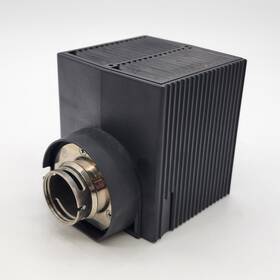
( Brand: Leica ), ( Manufacturer Part Number: 11504080 ), ( Country Of Origin: Germany )
Review LEICA Microscope 12v Halogen Lamphouse
The Leica 11504080 microscope halogen lamphouse is a precision-engineered illumination system designed to elevate the performance and clarity of optical microscopy to new heights. Engineered with Leica s signature attention to detail, this 12V, 100-watt halogen lamphouse delivers a brilliant, stable, and evenly distributed light source that enhances contrast, resolution, and overall image quality across a wide range of microscopy applications. The robust halogen bulb generates a broad spectrum of light, from ultraviolet to near-infrared, making it ideal for bright-field, phase-contrast, and differential interference contrast (DIC) microscopy. Its high luminosity ensures consistent illumination even at higher magnifications, reducing eye strain and improving the visibility of fine cellular structures, tissue samples, or microscopic specimens with intricate details.
Built to integrate seamlessly with Leica s advanced microscope systems, the 11504080 lamphouse features a compact yet durable design that minimizes space constraints while maximizing functionality. The halogen bulb is housed in a well-shielded, heat-resistant casing, ensuring longevity and safety during prolonged use. The lamphouse is equipped with a precise voltage regulator and a built-in cooling system to maintain optimal operating temperatures, preventing overheating and extending the lifespan of the bulb. Additionally, its modular construction allows for easy installation and replacement, making maintenance straightforward and efficient.
For researchers, educators, and professionals in fields such as histology, pathology, or materials science, this lamphouse offers unparalleled reliability and performance. The adjustable light intensity and color temperature settings provide flexibility for various sample types, from transparent biological slides to opaque or semi-transparent specimens. Whether used in a clinical laboratory, educational institution, or industrial research setting, the Leica 11504080 halogen lamphouse ensures that every observation is sharp, vivid, and free from distortion. With its combination of cutting-edge technology and ergonomic design, it stands as an indispensable component for anyone seeking superior illumination in their microscopy workflow.
The Leica 11504080 microscope with a 12V, 100W halogen lamp is a high-end optical microscope designed for advanced microscopy applications, particularly in research, medical diagnostics, and industrial inspection. Below is a detailed breakdown of its pros and cons, followed by a conclusion and recommendation.
---
### **Pros of the Leica 11504080 Microscope with 100W Halogen Lamp**
1. **Superior Optical Quality**
The Leica brand is renowned for precision optics, and this microscope incorporates high-quality glass elements, including apochromatic or plan-apochromatic objectives. This ensures minimal chromatic and spherical aberrations, delivering sharp, high-contrast images even at high magnifications. The use of high-index glass and multi-layer coatings further enhances resolution and light transmission.
2. **Bright and Versatile Illumination**
The 100W halogen lamp provides intense, white-light illumination, which is ideal for bright-field microscopy. The high wattage ensures sufficient light output for detailed observation, even with high-aperture objectives. The lamp s brightness can be adjusted, offering flexibility for different sample types and staining techniques. Additionally, the 12V power supply allows for stable operation without voltage fluctuations.
3. **Durability and Build Quality**
Leica microscopes are built to last, with robust mechanical components and sturdy metal frames. The lamp housing is designed to dissipate heat efficiently, reducing the risk of overheating or damage to the lamp. The overall construction is durable, making it suitable for heavy use in laboratories or industrial settings.
4. **Compatibility with Advanced Techniques**
This microscope is often part of a modular system that can be upgraded with additional components such as phase contrast, polarization, fluorescence, or differential interference contrast (DIC) accessories. The robust design allows for the integration of these options, expanding its utility for specialized applications like cell biology, histology, or material science.
5. **Precision Mechanics**
Leica microscopes feature fine mechanical adjustments, including coarse and fine focus knobs, as well as precise stage movements. The stage is typically large and stable, accommodating large or heavy slides without wobbling. The mechanical drawtube and infinity-corrected optics ensure compatibility with a wide range of objectives and eyepieces.
6. **High-Resolution Imaging**
The combination of high-quality optics and bright illumination allows for the observation of fine details, such as cellular structures, micro-organisms, or fine textures in materials. This makes it suitable for tasks requiring high resolution, such as pathology or materials analysis.
7. **Long-Term Value**
Leica microscopes are known for their longevity and resale value. Investing in this model can be cost-effective in the long run, as it may retain its value better than lower-end brands. Additionally, Leica offers excellent customer support and service, ensuring that the microscope remains functional for decades with proper maintenance.
8. **Compatibility with Digital Imaging**
While not included by default, this microscope can be easily adapted for digital imaging by adding a camera adapter or a digital camera. Leica s ecosystem often integrates seamlessly with digital imaging software, making it a future-proof investment for laboratories transitioning to digital workflows.
---
### **Cons of the Leica 11504080 Microscope with 100W Halogen Lamp**
1. **High Initial Cost**
The primary drawback of the Leica 11504080 microscope is its high purchase price. It is significantly more expensive than entry-level or mid-range microscopes from other brands. This cost may be prohibitive for small laboratories, educational institutions with limited budgets, or individual researchers who cannot justify the expense.
2. **Maintenance and Repair Costs**
Leica microscopes, while durable, require specialized maintenance and repairs. Parts and servicing can be costly, and repairs may need to be performed by authorized Leica service centers. This can add to the overall ownership cost over time, especially if the microscope is used intensively.
3. **Complexity for Beginners**
The advanced features and precise mechanics of the Leica microscope can be overwhelming for beginners or users with minimal microscopy experience. The learning curve for operating the microscope effectively, particularly with advanced techniques like DIC or fluorescence, may require additional training.
4. **Bulky and Heavy Design**
The robust construction of the microscope makes it heavy and somewhat bulky. This can be a drawback in settings with limited bench space or where portability is required. Moving the microscope between locations may require additional effort or equipment.
5. **Halogen Lamp Lifespan and Cost**
The 100W halogen lamp, while bright, has a limited lifespan (typically around 200 hours). Replacing the lamp can be expensive, especially if the microscope is used frequently. Additionally, halogen lamps generate heat, which may require additional cooling or ventilation in the workspace.
6. **Limited Color Temperature Consistency**
Halogen lamps provide a broad spectrum of light, but their color temperature can vary slightly over time, potentially affecting the consistency of image color, especially in applications like histology where color accuracy is critical. LED or xenon lamps may offer more stable color output.
7. **Dependence on Power Supply**
The 12V power supply for the lamp requires a stable electrical connection. Fluctuations in voltage or power outages can affect the lamp s performance or lifespan. This may necessitate the use of a backup power supply or voltage stabilizer in some settings.
8. **Potential for Overkill in Some Applications**
For basic teaching or routine laboratory tasks, the advanced features of the Leica microscope may be unnecessary. In such cases, a simpler or lower-cost microscope could suffice without sacrificing performance for the specific use case.
---
### **Conclusion**
The Leica 11504080 microscope with a 100W halogen lamp is a high-performance instrument that excels in applications requiring superior optics, bright illumination, and durability. It is particularly well-suited for research laboratories, medical diagnostics, materials science, and other fields where precision and reliability are critical. The investment in this microscope is justified for users who prioritize long-term value, high resolution, and the ability to upgrade with advanced accessories.
However, the high upfront and maintenance costs, along with its complexity and bulkiness, make it less ideal for budget-conscious users, beginners, or settings where advanced features are not necessary. The decision to purchase this microscope should be based on the specific needs of the user, the intended applications, and the available budget.
---
### **Recommendation**
**Purchase the Leica 11504080 microscope if:**- You are working in a research laboratory, medical facility, or industrial setting where high-resolution imaging and durability are essential.
- Your budget allows for the initial investment and potential long-term maintenance costs.
- You anticipate needing advanced microscopy techniques (e.g., phase contrast, DIC, fluorescence) in the future and want a microscope that can accommodate these upgrades.
- You value the brand reputation for precision, longevity, and resale value.
**Consider an alternative if:**- Your application does not require the highest level of optical performance, and a mid-range microscope from brands like Nikon, Olympus, or Zeiss would suffice.
- You are working with a limited budget and cannot justify the cost of Leica s premium features.
- You are a beginner or require a simpler microscope for basic teaching or routine tasks.
- Your workspace has limited space or requires portability, as the Leica microscope is heavy and bulky.
For users who need a balance between performance and cost, exploring Leica s used or refurbished models could be a viable option, as they may offer significant savings while retaining much of the original quality. Additionally, if advanced illumination is not a priority, considering a microscope with an LED lamp (which offers longer lifespan and lower heat output) might be a more cost-effective alternative.
Details:
In excellent condition. This product is offered by Microscope Marketplace, a Monday Scientific Company. Leica Microscope 12V 100W Halogen Lamphouse, Item is tested and working properly.
part #: 11504080 prices
- $295.00-$750.00
specifications microscopepartzo:
- brand: Leica
- mpn: 11504080
- country of origin: Germany
payments microscopepartzo:
- wallet: Apple-pay
- credit card: Diners-club
- other
general microscopepartzo:
- Medical/Lab Equipment Attachments Accessories > Microscope Parts Accessories > Other Microscope Parts Accessories
- condition: Used
returns microscopepartzo:
- method: Money back
- time: 14 Days
- policy: Returns Accepted
- paid by: Buyer
seller microscopepartzo:
- # reviews: 4205
- city: Sanford, North Carolina
- rating: 100.0%
shipping microscopepartzo:
- class: Standard
- transit: 3-7 Days
- service: UPS Ground
- cost: $20.00
- carrier: UPS
- type: Fixed
offer microscopepartzo:
- availability: In Stock
- quantity: 1
- sold: 0
- options: Ship-to-home
- started: February 17, 2026
Leica 11504080 Is Similar To:
- Microscope Plan Long-barrel 1x Achromat 0.025 Iris Infinity Leica Objective (26.8% similar) Make sure your microscope will truly accommodates very long lens that measures 55MM vertically. 706, conforming to the RMS standard, with aperture iris, and is infinity corrected. The objective has a mounting thread 20. Leica 1x plan achromatic iris infinity long barrel microscope objective Leica 1x...(January 25th, 2015)
- Leica Microscope Tube Photo 0.66x mount 2 35mm Trinocular Efocus Adapter Port (36.9% similar) This adapter is suited for 1/2 and 1/3 image sensor chips microscope picture using is capture. 66X Leica ex focus microscope camera port para focal adapter to 35MM photo tube c mount. The head attached to a modified microscope base. The device is designed to insert to any microscope which contains a...(January 26th, 2015)
- 4x Parts 0.67x Head Leica Block Microscope Gz6 Focus Repair (40.7% similar) ...(February 12th, 2015)
- 0.502.29553 Leica New Microscope Pressure Plate (42.4% similar) O microscope pressure plate b: RP inventory location: MF3 6-2 this offer is for a new Leica. A non-paying bidder case will automatically be initiated after this time. Please prior to sale for an accurate shipping quote. A credit card purchase is only shipped when the money transferred from ...(November 20th, 2018)
- 020-507.010 Leitz Leica Biomed Microscope Includes Objectives (37.2% similar) Leica LTZ boomed. 90 condenser eff LTZ OBJECTIVE4. 17 eff LTZ OBJECTIVE10 microscope wit Periclean 10X 18 eyepiece objective includes everything you see in the listing. 17 eff LTZ OBJECTIVE40 oil microscope pair of 10X 18 Periclean eyepieces stage with A0. You are buying on a working great condition...(April 2nd, 2018)
- 020-654.092-000 Leica Microsystems Microscope Beamsplitter (41.8% similar) Leica micro systems microscope misapplied...(July 18th, 2017)
- 090-132.103 Leica Dm Irb Microscope Frame Sold For Parts As Is (36.8% similar) This is my: a Leica Dem orb microscope frame sold for parts as. Pin to plug into the power supply are bent and receptacle is missing gone. Cases count against me even if they are resolved. Didn't try to power this up. Sold as is for parts. I am not overjoyed with whats happening, but have to roll it...(April 8th, 2018)
- 373450 Camera Heerbrugg Wild Leica Microscope 093-032.010 Film Leitz (41.7% similar) 010 film back cosmetic 8 as pictured. You are purchasing exactly what you see in the pictures. Glass optic clean glass with some minor cleaning marks. Mechanical problem none offer includes LTZ microscope camera...(February 9th, 2015)
- Adapter 0.5x Leica 1.0xlens Leitz Microscope 3 2 Camera Iso38 Olympus Nikon M4 (41.5% similar) Assembly pieces minus. The adapter uses a standard ISO 38MM x c mount LTZ Leica wild ISO 38. The device is designed to insert into any microscope which contains a 38MM photo port bottom lower portion of picture. 0x port adapter see picture below for separate parts. 0x with f mount. 54 5, 31, 6, 49 ...(February 13th, 2015)
- 10246634 Leica Wild 246634 Coaxial Microscope Illuminator (38.5% similar) 25X when installed. I will describe the item best as can based on visual inspection and my knowledge of. This unit is in excellent cosmetic and working condition has been tested on my microscope. The wild coaxial Illuminati has a magnification factor of a lamp is included. Cosmetics are clean and ...(February 26th, 2018)
- 10382162 Leica Microscope Objective Lens (45.7% similar) Priced for fast sale. 50 for continental USA. You are buying on a Leica microscope objective lens f 200MMPART 10382162THE is in new condition. Shipping and handling 18...(April 6th, 2018)
