LEICA 11561053 Slide Holder
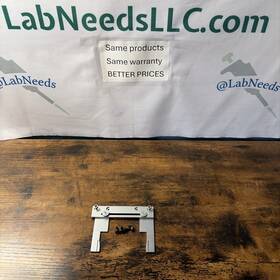
( Brand: Leica ), ( Manufacturer Part Number: 11561053 ), ( Part Type: Slide Holder ), ( Country Of Origin: Germany )
Review LEICA Slide Holder Ind
The **Leica 11561053 Slide Holder** is a precision-engineered accessory designed to elevate the efficiency and accuracy of microscopic examination in both clinical and research laboratories. Crafted from high-quality, durable materials, this slide holder is built to withstand rigorous daily use while maintaining the integrity of delicate glass slides and cover slips. Its ergonomic, contoured design ensures a secure grip, allowing users to handle slides with confidence, even when working with large batches or under time constraints. The holder s smooth, non-slip surface prevents accidental drops, a critical feature in environments where sample integrity must be preserved at all costs.
What truly sets the Leica 11561053 apart is its compatibility with a wide range of Leica microscopes, including those in the Leica DM, Leica DMX, and Leica DM IL series, as well as other high-end optical systems. The holder s standardized dimensions and precise alignment mechanism ensure seamless integration with slide carriers, autofocus systems, and motorized stages, minimizing manual adjustments and reducing operator fatigue. This level of precision is particularly valuable in applications requiring high-throughput analysis, such as histology, cytology, or materials science, where consistency and repeatability are paramount.
Beyond its functional advantages, the Leica 11561053 slide holder is engineered with attention to detail that reflects Leica s reputation for excellence in optical instrumentation. Its sleek, minimalist design complements the aesthetic of modern laboratory setups while its robust construction often featuring corrosion-resistant coatings ensures longevity even in environments with varying humidity or chemical exposure. The holder s modular nature allows for easy customization, accommodating different slide sizes and thicknesses, which is essential for laboratories that work with diverse sample types, from thin tissue sections to thick tissue blocks.
For researchers and technicians who demand reliability and performance, the Leica 11561053 slide holder represents a small yet indispensable component in the pursuit of precision. Whether used in routine diagnostic work or cutting-edge scientific discovery, its ability to streamline workflows, reduce errors, and enhance user comfort makes it an invaluable tool. By combining ergonomic innovation with engineering precision, Leica has created a slide holder that not only meets the demands of today s laboratories but also sets a benchmark for future advancements in microscopic imaging technology.
The Leica 11561053 is a high-quality slide holder designed for use with Leica microscopes, particularly those in research, pathology, or clinical settings. Below is a detailed breakdown of its pros and cons, followed by a conclusion and recommendation.
### **Pros of the Leica 11561053 Slide Holder**
1. **Compatibility and Precision**
The slide holder is specifically engineered for Leica microscopes, ensuring seamless integration with the microscope s mechanics. This compatibility minimizes misalignment issues, which is critical for high-resolution imaging and consistent results in microscopy. The precise fit reduces the risk of accidental slide movement during observation, which is especially important in diagnostic pathology where accuracy is paramount.
2. **Durability and Build Quality**
Leica is known for its robust and long-lasting equipment, and this slide holder reflects that reputation. Constructed from high-quality materials, it is designed to withstand frequent use without warping or degrading. The sturdy construction also reduces the likelihood of damage from accidental drops or heavy handling, which is common in busy laboratory environments.
3. **Ergonomic Design**
The slide holder is designed with user comfort in mind. It typically features a smooth, non-slip surface to securely hold slides in place without requiring excessive force. This reduces hand fatigue during prolonged use, which is beneficial for technicians or researchers who spend extended periods at the microscope. Some models may also include ergonomic grips or adjustable mechanisms for better control.
4. **Consistency in Slide Positioning**
One of the most significant advantages of this slide holder is its ability to maintain consistent slide positioning. This is crucial for repeatable measurements, imaging, and analysis, particularly in quantitative research or automated microscopy systems. Consistent positioning also enhances the reliability of digital imaging workflows, such as those used in whole-slide imaging (WSI) systems.
5. **Compatibility with Advanced Microscopy Techniques**
The slide holder is often designed to work with advanced microscopy techniques, including fluorescence, phase contrast, and differential interference contrast (DIC). This versatility makes it suitable for a wide range of applications, from basic cell biology to complex tissue analysis. It may also integrate with motorized stages or automated systems, further expanding its utility in high-throughput laboratories.
6. **Easy Cleaning and Maintenance**
Leica products are generally designed with hygiene and maintenance in mind. The slide holder s smooth surfaces and lack of complex crevices make it relatively easy to clean, which is essential in clinical or research settings where contamination must be avoided. Regular cleaning ensures optimal performance and extends the lifespan of the holder.
7. **Support for High-Resolution Imaging**
For applications requiring high magnification or resolution, such as electron microscopy or super-resolution techniques, a stable slide holder is indispensable. The Leica 11561053 is likely designed to minimize vibrations and ensure that the slide remains perfectly aligned during high-magnification imaging, which is critical for obtaining clear and detailed images.
---
### **Cons of the Leica 11561053 Slide Holder**
1. **High Cost**
Leica equipment is renowned for its quality, but this comes at a premium price. The slide holder is no exception, and its cost may be prohibitive for individuals, small laboratories, or educational institutions with limited budgets. The expense could be a significant drawback for users who are already investing heavily in microscopy systems and need to allocate resources carefully.
2. **Limited Compatibility with Non-Leica Systems**
While the slide holder is perfectly suited for Leica microscopes, it may not be compatible with other brands or models. This lack of cross-compatibility can be a limitation if a user operates multiple microscope brands or plans to upgrade their equipment in the future. In such cases, purchasing multiple slide holders for different systems could become costly.
3. **Potential for Overkill in Basic Applications**
For users who primarily engage in low-to-moderate magnification work, such as basic cell culture observation or simple tissue analysis, the advanced features of the Leica slide holder may be unnecessary. In these scenarios, a simpler or more affordable slide holder from another manufacturer might suffice, offering similar functionality at a lower cost.
4. **Maintenance and Replacement Parts**
While Leica products are durable, they may require specialized maintenance or replacement parts over time. If a user is not familiar with Leica s service network or lacks access to authorized repair centers, addressing issues with the slide holder could be challenging. Additionally, the cost of replacement parts or servicing might be higher than for generic alternatives.
5. **Learning Curve for New Users**
Some Leica products, including slide holders, may have unique features or operating mechanisms that require familiarization. New users, particularly those transitioning from other brands, might experience a slight learning curve in optimizing the use of the slide holder for their specific applications. This could temporarily reduce productivity until they become accustomed to its operation.
6. **Weight and Bulk**
High-quality slide holders, including the Leica model, are often heavier and bulkier than their cheaper counterparts. While this contributes to their stability, it may also make them less portable or cumbersome to handle during frequent adjustments. Users who frequently move their microscope or work in space-constrained environments might find this a minor inconvenience.
7. **Dependence on Leica s Support and Warranty**
Purchasing a Leica slide holder ties the user to Leica s support network, warranty terms, and potential software or firmware updates. If a user prefers to rely on third-party support or open-source alternatives, this dependency could be a drawback. Additionally, warranty coverage may not extend indefinitely, and users must ensure they comply with Leica s terms to maintain coverage.
---
### **Conclusion**
The Leica 11561053 slide holder is a high-performance accessory that excels in precision, durability, and compatibility with Leica microscopy systems. Its advantages are particularly evident in research, clinical, or high-magnification applications where stability, consistency, and ergonomics are critical. The investment in this slide holder is justified for users who prioritize reliability, long-term performance, and seamless integration with their existing Leica equipment.
However, the high cost, limited compatibility with non-Leica systems, and potential overkill for basic applications may deter some users. Additionally, the need for specialized maintenance and the learning curve for new users could pose challenges in certain settings. For users who are already committed to Leica s ecosystem and require the highest standards of microscopy, the slide holder is an excellent choice. Conversely, those on a tight budget or working with non-Leica systems may find more affordable alternatives that meet their needs without the premium price tag.
---
### **Recommendation**
**Purchase the Leica 11561053 slide holder if:**- You are already using or plan to use Leica microscopes and require a high-quality, compatible accessory.
- Your work involves high-resolution imaging, pathology, or research applications where precision and stability are non-negotiable.
- You prioritize durability, ergonomics, and long-term reliability over cost savings.
- You have access to Leica s support network and are willing to invest in a premium product for critical microscopy tasks.
**Consider alternative slide holders if:**- You are working with a limited budget or non-Leica microscopy systems, where generic or third-party slide holders may offer comparable functionality at a lower cost.
- Your applications are basic and do not require the advanced features of the Leica model.
- You prefer flexibility in maintenance or support and are comfortable with third-party alternatives.
Ultimately, the decision should align with your specific needs, budget, and long-term goals in microscopy. For most professional or high-end research settings, the Leica slide holder is a worthwhile investment. For casual or budget-conscious users, exploring other options may be more practical.
Details:
part #: 11561053 prices
- $49.00-$105.00
specifications microscopepartzo:
- brand: Leica
- mpn: 11561053
- part type: Slide Holder
- country of origin: Germany
payments microscopepartzo:
- credit card: Diners-club
- other
- wallet: Paypal
shipping microscopepartzo:
- carrier: USPS
- transit: 3-8 Days
- class: Standard
- service: USPS Ground Advantage
- cost: $10.00
- type: Fixed
general microscopepartzo:
- condition: Used
- Medical/Lab Equipment Attachments Accessories > Microscope Parts Accessories > Other Microscope Parts Accessories
returns microscopepartzo:
- policy: Returns Accepted
- paid by: Buyer
- method: Money back
- time: 14 Days
offer microscopepartzo:
- sold: 0
- options: Ship-to-home
- availability: In Stock
- quantity: 1
- best offers: True
- started: March 17, 2026
seller microscopepartzo:
- rating: 100.0%
- city: Baltimore, Maryland
- # reviews: 1173
Leica 11561053 Is Similar To:
- 14047533750 Leica Slide Rack Plastic Unit Pack Of Germany (35.6% similar) Leica slide rack 30 plastic unit pack of 1 Germany - box in distress item is new however packaging may be distressed or missing see photos for details on...(March 10th, 2019)
- Arm 76.5mm Leica Holder Standard Gz6 Block Pin Focus Nice Mount Microscope 107 (27% similar) Please feel free to inquire with any and all questions. 5MM diameter opening for the microscope head and a standard adjustable tilting 5/8 pin mount. Remember, the requirement cannot be greater than classic and rare mineral treks P2047675. Review the images and judge for yourself. 5MM this Leica ...(February 24th, 2015)
- Leitz 520-219 Leica Microscope Adjustable Holder Cat (39.5% similar) Up for offer is a Leica LTZ microscope adjustable holder. This is used stock in very good condition...(November 8th, 2023)
- Leica 11513908 Microscope Lambda Plate In Holder (51.9% similar) Leica microscope lambda plate in holder, item is in excellent condition...(September 26th, 2024)
- Leica 513677 Leitz Microscope Fluorescence Filter Cube 513683 With Holder (35.8% similar) Leica LTZ microscope fluorescence filter cube 513683 w/holder 513677, free ship...(October 28th, 2024)
- Leica 513708 Microscope Lambda Plate In Holder 11513708 (44.4% similar) Leica microscope lambda plate in holder 513708 / 11513708...(October 31st, 2024)
- Leica 555002 Ic p Analyzer For Dmr Microscope With Holder (42.2% similar) Leica 555002 ic/p analyzer for Dr microscope with holder...(December 1st, 2024)
- Leica 551033 Microscope Stage Carrier With Condenser Holder (51.1% similar) Leica damp stage carrier with condenser holder...(January 1st, 2025)
- Leica Dmlb2 Right Handed Mechanical Stage With Slide Holder For Dmlb Series Microscope (35.3% similar) Leica right handed mechanical stage w/ slide holder for Dolby series microscope microscope. Good condition, movement works fine in both directions. Leica right handed mechanical stage with slide holder for Dolby series microscopes...(February 28th, 2025)
- Leica 501168 Leitz Germany Dmrb Table Holder Microscope Part As Pictured T5-a-13 (37.2% similar) Leica LTZ germany drab 501168 table holder microscope part as pictured T5-A-13...(July 13th, 2025)
- Leica 555053 Microscope Dic Ict Prism Holder Turret For Series Dmrb Dmre Dmr (38.5% similar) Leica microscope Dick Oct prism holder turret for series drab demure Dr 555053...(September 8th, 2025)
