FISCHIONE INSTRUMENTS 13079F Cryo Sem 190
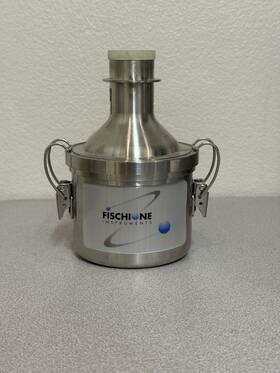
( Brand: Fischione Instruments ), ( Manufacturer Part Number: 13079F )
Review FISCHIONE INSTRUMENTS Model 190 Cryo can Sem
The Fischione Instruments Model 13079F 190 Cryo-Can Scanning Electron Microscope (SEM) system represents a cutting-edge solution for high-resolution imaging and material analysis in cryogenic conditions, designed to preserve the native structure of delicate, temperature-sensitive specimens with unparalleled precision. This advanced cryo-preparation system is engineered to seamlessly integrate with scanning electron microscopes, enabling researchers to study frozen-hydrated samples such as biological tissues, polymers, or nanomaterials without the artifacts introduced by traditional drying or fixation techniques. The 190 series cryo-can features a robust, vacuum-sealed chamber with a high-performance cryogenic cooling system capable of maintaining temperatures as low as -190 C, ensuring that ice crystals do not form and that the specimen s original morphology remains intact throughout the preparation and imaging process. Its modular design incorporates a precision transfer system, allowing for the efficient and contamination-free transfer of samples from liquid nitrogen storage to the SEM s specimen stage, minimizing exposure to atmospheric conditions. The system s automated control interface simplifies operation, offering real-time monitoring of temperature, pressure, and vacuum levels, while its compatibility with Fischione s proprietary cryo-planing and cryo-fracturing tools further enhances the ability to prepare ultra-thin sections or cross-sections of complex materials. Whether used for structural biology, materials science, or nanotechnology research, the 13079F 190 Cryo-Can SEM system delivers exceptional resolution and fidelity, making it an indispensable tool for investigators seeking to unlock the microscopic secrets of fragile or cryo-sensitive specimens.
### Pros and Cons of buying a Fischione 13079F 190 Cryo-Can SEM
#### **Pros**
1. **High-Resolution Imaging at Low Temperatures**
The Fischione 13079F 190 Cryo-Can is designed for cryogenic scanning electron microscopy (cryo-SEM), allowing for high-resolution imaging of hydrated or frozen samples without dehydration artifacts. This is critical for biological, material science, and pharmaceutical research where sample integrity must be preserved.
2. **Preservation of Sample Structure**
Cryo-SEM prevents sample collapse or distortion that often occurs during traditional SEM preparation methods (e.g., critical point drying or freeze-fracturing). The cryo-stage maintains samples in a near-native state, making it ideal for studying delicate structures like cells, polymers, or frozen biological tissues.
3. **Versatility in Sample Types**
The system can handle a wide range of samples, including:- Biological specimens (e.g., cells, tissues, viruses)
- Soft materials (e.g., gels, foams, polymers)
- Frozen fractures (e.g., for studying internal structures)
- Thin films and coatings
This versatility makes it valuable for interdisciplinary research.
4. **Integration with Existing SEM Systems**
The 13079F is designed to be compatible with most modern SEM platforms (e.g., FEI, Zeiss, Thermo Fisher). It can be retrofitted to existing SEM setups, reducing the need for a complete overhaul of laboratory infrastructure.
5. **Automation and Ease of Use**
The system includes automated features such as:- Precise temperature control (down to cryogenic levels)
- Vacuum compatibility for seamless transfer between stages
- User-friendly software for sample preparation and imaging
This reduces the technical expertise required for operation compared to manual cryo-preparation methods.
6. **Minimized Contamination Risk**
Since samples are kept frozen throughout the process, there is less risk of contamination from drying agents or chemical fixatives, which can alter sample properties.
7. **Support for Advanced Techniques**
The cryo-can can be used in conjunction with other SEM techniques, such as:- Backscattered electron imaging (for compositional analysis)
- Energy-dispersive X-ray spectroscopy (EDS) for elemental mapping
- Electron backscatter diffraction (EBSD) for crystallographic studies
8. **Long-Term Sample Stability**
Frozen samples remain stable for extended periods, allowing for batch processing or delayed analysis without degradation.
9. **Compliance with Research Standards**
Cryo-SEM is widely recognized as a gold standard for certain types of biological and material science research, making it attractive for publications and grant applications.
10. **Reduced Sample Preparation Time**
Compared to traditional SEM sample prep (e.g., sputter coating, carbon coating, or dehydration), cryo-SEM often requires less time and fewer steps, improving workflow efficiency.
---
#### **Cons**
1. **High Initial Cost**
The Fischione 13079F 190 Cryo-Can is a specialized piece of equipment with a significant upfront cost, often ranging from **$50,000 to $100,000 **, depending on configuration and additional accessories. This can be prohibitive for smaller labs or institutions with limited budgets.
2. **Maintenance and Operational Expenses**
Cryo-SEM systems require:- Regular maintenance of cryogenic components (e.g., liquid nitrogen or helium cooling systems)
- Replacement of consumables (e.g., cryo-transfer holders, cooling shields)
- Potential calibration and servicing by trained technicians
These ongoing costs can add up over time.
3. **Complexity and Training Requirements**
Operating a cryo-SEM system effectively requires specialized training. Users must understand:- Cryogenic sample handling (e.g., vitrification, fracture techniques)
- SEM operation and imaging parameters
- Troubleshooting vacuum leaks or temperature fluctuations
This may necessitate hiring trained personnel or outsourcing services, increasing labor costs.
4. **Limited Sample Size and Shape Constraints**
The cryo-can has size limitations for samples. Very large or irregularly shaped specimens may not fit within the chamber, requiring additional preparation steps (e.g., sectioning) that could introduce artifacts.
5. **Dependency on External Cryogenic Supplies**
The system relies on a continuous supply of liquid nitrogen or other cryogens, which must be sourced and stored on-site. Disruptions in supply (e.g., delivery delays) can halt operations.
6. **Potential for Sample Contamination During Transfer**
Even with cryo-transfer holders, there is a risk of contamination or ice crystal formation if samples are not properly vitrified or if the transfer process is not executed carefully.
7. **Compatibility Issues with Older SEM Systems**
While the 13079F is designed to be retrofittable, older SEM models may lack the necessary infrastructure (e.g., high-vacuum compatibility, stage integration) to support cryo-SEM effectively. Retrofitting may require additional modifications, increasing costs.
8. **Limited Availability of Spare Parts**
As a specialized piece of equipment, Fischione Instruments may not always have immediate access to spare parts or may charge premium prices for replacements. This could lead to downtime if critical components fail.
9. **Space and Infrastructure Requirements**
Cryo-SEM systems require dedicated space with proper ventilation, electrical, and cryogenic infrastructure. Labs may need to renovate or expand facilities to accommodate the equipment, adding to the overall cost.
10. **Learning Curve for New Techniques**
Researchers may need to adapt their workflows to accommodate cryo-SEM, which can involve learning new sample preparation techniques (e.g., plunge freezing, freeze-fracturing) and interpreting cryo-specific artifacts.
11. **Potential for Artifacts in Imaging**
While cryo-SEM minimizes distortion, artifacts can still occur, such as:- Ice crystal formation during freezing
- Charge buildup on non-conductive samples
- Shadowing effects from uneven surfaces
Users must be trained to recognize and mitigate these issues.
12. **Limited Portability**
The system is not designed for field use or portable applications. It must remain in a controlled laboratory environment, limiting its utility for on-site or remote research.
---
### **Conclusion**
The Fischione 13079F 190 Cryo-Can SEM is a powerful and highly specialized tool that offers unparalleled advantages for researchers requiring high-resolution imaging of frozen or hydrated samples. Its ability to preserve sample integrity, support a wide range of applications, and integrate with existing SEM platforms makes it invaluable for biological, material science, and pharmaceutical studies. However, the high cost, maintenance requirements, and technical expertise needed to operate the system present significant challenges, particularly for smaller labs or those with limited resources.
For institutions with the budget, infrastructure, and personnel to support cryo-SEM, the investment can yield transformative research outcomes. Conversely, labs with tight budgets, limited space, or minimal experience in cryogenic techniques may find the system impractical or overly complex.
---
### **Recommendation**
**Buy the Fischione 13079F 190 Cryo-Can SEM if:**- Your research involves delicate or hydrated samples where traditional SEM preparation methods would introduce artifacts.
- You have an existing SEM system that can be retrofitted with the cryo-can.
- Your institution has the financial resources to cover both the initial purchase and ongoing maintenance costs.
- You have access to trained personnel or are willing to invest in training for your team.
- The system aligns with your long-term research goals and funding opportunities (e.g., grants that support cryo-SEM technology).
**Avoid purchasing the Fischione 13079F 190 Cryo-Can SEM if:**- Your budget is constrained, and alternative sample preparation methods (e.g., critical point drying, freeze-fracturing) are sufficient for your needs.
- Your SEM system is outdated or incompatible with cryo-SEM requirements, and retrofitting would be cost-prohibitive.
- Your lab lacks the space, infrastructure, or expertise to maintain and operate the system effectively.
- Your research does not heavily rely on cryogenic imaging, and other techniques (e.g., light microscopy, transmission electron microscopy) would suffice.
**Alternative Considerations:**- If budget is a concern, explore used or refurbished cryo-SEM systems from reputable suppliers, as they may offer significant cost savings.
- Consider leasing or partnering with a core facility that already has a cryo-SEM system to access the technology without full ownership.
- Evaluate whether a lower-cost cryo-stage or simpler cryo-preparation system (e.g., a plunge freezer for vitrification) could meet your needs before investing in a full cryo-can SEM setup.
Ultimately, the decision should be based on a careful assessment of your research priorities, financial capacity, and long-term goals. For labs where cryo-SEM is a critical tool, the Fischione 13079F 190 is a robust and reliable choice. For others, alternative approaches may be more practical.
Details:
Helps eliminate chamber contamination in electron microscopes. Great condition used for scanning electron microscopes Provides a clean, cryogenic environment SEM sample imaging and analysis.
part #: 13079f price
- $5000.00
specifications microscopepartzo:
- brand: Fischione Instruments
- mpn: 13079f
general microscopepartzo:
- condition: Used
- Medical/Lab Equipment Attachments Accessories > Microscope Parts Accessories > Other Microscope Parts Accessories
offer microscopepartzo:
- sold: 0
- options: Ship-to-home
- quantity: 1
- started: April 23, 2026
- best offers: True
- availability: In Stock
shipping microscopepartzo:
- service: USPS Ground Advantage
- cost: $53.93
- type: Calculated
- carrier: USPS
- class: Standard
- transit: 5-11 Days
seller microscopepartzo:
- # reviews: 5
- rating: 100.0%
- city: Bangs, Texas
payments microscopepartzo:
- credit card: Mastercard
- other
- wallet: Google-pay
returns microscopepartzo:
- policy: No Returns
