LEICA 1421-032-50 Tcs Confocal Detector Imaging 1421-032/50 SP5 S/n 14213-002/00
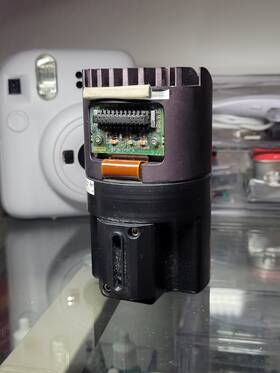
( Brand: Leica ), ( Manufacturer Part Number: 1421-032/50 ), ( Part Type: Detector )
Review LEICA 1421-032/50 Tcs Sp5 Confocal Detector Imaging S/n 14213-002/00
The Leica TCS SP5 Confocal Detector (Model 1421-032/50, Serial Number 14213-002/00) represents the pinnacle of advanced optical imaging technology, meticulously engineered to deliver unparalleled precision, versatility, and performance for scientific research and biomedical applications. Part of Leica Microsystems renowned TCS series, this confocal microscope system is equipped with a sophisticated hybrid detector configuration, combining a high-sensitivity HyD (Hybrid Detector) array with traditional photomultiplier tubes (PMTs) to ensure optimal signal detection across a broad spectrum of fluorescence intensities and wavelengths. The SP5 platform leverages cutting-edge scanning technology, including resonant and galvanometric scanning modes, to achieve rapid, high-resolution imaging with minimal photobleaching, making it ideal for dynamic cellular processes, live-cell studies, and deep-tissue imaging. Its modular design allows seamless integration with a variety of excitation sources, including tunable white-light lasers, diode lasers, and argon/krypton lasers, enabling researchers to tailor the system to their specific experimental needs. The confocal detector module itself is optimized for high quantum efficiency, low noise, and exceptional spatial resolution, ensuring that even faint fluorescence signals are captured with clarity and accuracy. Whether employed for fluorescence resonance energy transfer (FRET) studies, super-resolution techniques like STED (Stimulated Emission Depletion), or advanced multiphoton imaging, this system excels in delivering high-contrast, three-dimensional reconstructions with submicron precision. The robust mechanical and optical architecture, coupled with Leica s intuitive LAS AF (Leica Application Suite Advanced Fluorescence) software, provides researchers with intuitive control over imaging parameters, automated acquisition workflows, and sophisticated post-processing capabilities. This combination of technological sophistication and user-friendly functionality makes the Leica TCS SP5 an indispensable tool for laboratories seeking to push the boundaries of biological and materials science research.
The Leica 1421-032/50 TCS SP5 Confocal Detector (serial number 14213-002/00) is a high-end imaging system used primarily in research laboratories for advanced fluorescence microscopy. Below is a detailed analysis of its pros and cons, followed by a concluding recommendation.
---
### **Pros**
1. **High-Resolution Imaging**
The TCS SP5 confocal microscope is known for its superior optical resolution, enabling clear visualization of fine cellular and subcellular structures. Its confocal design minimizes out-of-focus light, resulting in sharper images compared to widefield microscopy.
2. **Versatile Detection Capabilities**
The system supports multiple detection channels, allowing simultaneous imaging of multiple fluorophores with minimal cross-talk. This is particularly useful for co-localization studies, where researchers track the interaction between different proteins or molecules within a sample.
3. **Advanced Laser Technology**
The SP5 is equipped with high-power lasers (e.g., Argon, DPSS 405, HeNe) that provide precise excitation for a wide range of fluorophores. The ability to tune laser power and wavelength ensures optimal imaging conditions for various applications, including live-cell imaging.
4. **Super-Resolution Options**
While not inherently super-resolution, the SP5 can be configured with optional modules (e.g., STED or SOFI) to achieve resolutions beyond the diffraction limit. This extends its utility for studying ultra-fine structures, such as synaptic connections or chromatin organization.
5. **Robust Software Suite**
Leica s LAS AF software offers powerful image acquisition, processing, and analysis tools. Features like time-lapse imaging, 3D reconstruction, and quantitative analysis enhance workflow efficiency and data interpretation.
6. **Compatibility with Advanced Techniques**
The system supports techniques such as FRAP (Fluorescence Recovery After Photobleaching), FLIM (Fluorescence Lifetime Imaging Microscopy), and TIRF (Total Internal Reflection Fluorescence), which are essential for dynamic cellular studies.
7. **Durability and Reliability**
Leica microscopes are renowned for their build quality and longevity. The SP5, in particular, has a proven track record in research environments, with robust mechanical and optical components that reduce downtime.
8. **Resale Value and Market Demand**
Given Leica s reputation and the specialized nature of confocal microscopy, this model retains significant resale value. It remains in demand in academic and industrial research settings, making it a sound long-term investment.
9. **Support and Service Network**
Leica has a global network of service centers and trained technicians, ensuring timely maintenance, repairs, and software updates. This support is critical for maintaining the microscope s performance over time.
10. **Compatibility with Modern Workflows**
The SP5 can integrate with other laboratory systems (e.g., automated stage systems, sample preparation robots) and software platforms, making it adaptable to evolving research needs.
---
### **Cons**
1. **High Initial Cost**
The upfront purchase price of a Leica TCS SP5 is substantial, often exceeding $200,000, depending on configurations and accessories. This can be a significant barrier for smaller labs or individual researchers.
2. **Maintenance and Operating Expenses**
Confocal microscopes require regular maintenance, including laser alignment, detector calibration, and software updates. These costs, along with consumables (e.g., objectives, filters, and fluorophores), can add up over time. Leica s proprietary components may also incur higher replacement costs.
3. **Complexity and Learning Curve**
The SP5 s advanced features come with a steep learning curve. Operators must undergo extensive training to fully utilize its capabilities, which can slow down initial productivity. Misuse of settings (e.g., laser power, pinhole size) can also damage samples or degrade image quality.
4. **Depreciation**
While Leica microscopes retain value, they do depreciate over time. Newer models with improved resolution, automation, or software may render older systems less competitive in the long run.
5. **Space and Infrastructure Requirements**
Confocal microscopes require a stable, vibration-free environment with controlled temperature and humidity. The SP5 may also need dedicated space for sample preparation, storage, and associated equipment, which can be a constraint in crowded labs.
6. **Software Dependency**
The reliance on Leica s proprietary software (LAS AF) can be limiting. Compatibility issues with other analysis tools or the need for third-party plugins may require additional investment in time or software licenses.
7. **Limited Upgrade Path**
While the SP5 is a powerful system, Leica s newer models (e.g., TCS SP8 or SP10) incorporate significant advancements in optics, detectors, and automation. Upgrading to a newer model may eventually be necessary, which can be costly.
8. **Sample Preparation Constraints**
Confocal microscopy often requires thin or transparent samples to avoid light scattering. Preparing samples for optimal imaging (e.g., sectioning, clearing) can be time-consuming and may not be feasible for all biological tissues.
9. **Technical Support Delays**
While Leica s support network is strong, delays in troubleshooting or receiving replacement parts can occur, particularly if the microscope is under warranty but not yet serviced.
10. **Alternative Technologies**
Emerging technologies such as light-sheet microscopy or expanded microscopy offer unique advantages (e.g., faster imaging, deeper penetration) that may better suit certain research applications. Shifting to these alternatives could require retraining and reconfiguration of workflows.
---
### **Conclusion**
The Leica TCS SP5 confocal detector (1421-032/50) is a powerful and versatile tool for advanced fluorescence imaging, particularly in research settings where high resolution, multi-channel imaging, and quantitative analysis are critical. Its strengths lie in its reliability, optical performance, and compatibility with a wide range of imaging techniques. However, the high cost, maintenance requirements, and complexity make it a significant investment that may not be feasible for all users.
This microscope is best suited for:- **Research laboratories** with dedicated funding and technical staff.
- **Applications requiring high-resolution imaging** (e.g., cellular biology, neuroscience, material science).
- **Users who prioritize Leica s reputation** for durability and support over cutting-edge features found in newer models.
For **individual researchers, smaller labs, or those on a tighter budget**, alternatives such as used or refurbished systems, lower-cost confocal models (e.g., Zeiss LSM 700), or emerging technologies (e.g., light-sheet microscopy) may be more practical. Additionally, leasing or purchasing through institutional funding pools could mitigate the upfront financial burden.
### **Recommendation**
If the budget and infrastructure are available, the Leica TCS SP5 remains a **strong, long-term investment** for labs that require a robust, high-performance confocal microscope. Prioritize purchasing from a reputable dealer with warranty support and ensure that the system is compatible with your specific research needs. For users who may outgrow the system in a few years or require more advanced features, exploring newer models or alternative technologies should be considered as part of a phased upgrade strategy.
Ultimately, the decision should balance immediate needs with future scalability, ensuring the microscope aligns with both current and evolving research goals.
Details:
I am not sure if it works or not, open to offers. Confocal detector. Good cosmetic condition, untested.
part #: 142103250 prices
- $85.00-$315.00
specifications microscopepartzo:
- brand: Leica
- mpn: 1421-032/50
- part type: Detector
general microscopepartzo:
- condition: Used
- Medical/Lab Equipment Attachments Accessories > Microscope Parts Accessories > Other Microscope Parts Accessories
offer microscopepartzo:
- best offers: True
- started: March 29, 2026
- sold: 0
- options: Ship-to-home
- availability: In Stock
- quantity: 1
payments microscopepartzo:
- other
- credit card: Mastercard
- wallet: Apple-pay
seller microscopepartzo:
- city: Sugar Land, Texas
- # reviews: 116
- rating: 100.0%
returns microscopepartzo:
- policy: No Returns
shipping microscopepartzo:
- carrier: USPS
- transit: 5-11 Days
- class: Standard
- cost: $10.50
- service: USPS Ground Advantage
- type: Calculated
Leica 1421-032-50 Is Similar To:
- 159330193 Leica Microsystems True Confocal Scanner Spectrophotometer Tcs Sp (38.4% similar) Leica micro systems true confocal scanner tcs sp physical condition: unit has scuffing, scratches, dents, discoloration and paint chipping from average use...(May 30th, 2018)
- 35091-001 Leica Power Supply Board From Confocal Microscope Controller Crate (34% similar) Assembly number, board 001MANUFACTURED in 1996...(March 28th, 2019)
- 35095-001 Leica Ddc Module From Confocal Microscope Controller Crate (34.5% similar) Model's DC and module 2, part number 001DAUGHTERBOARDS 002MANUFACTURED in 1996...(March 28th, 2019)
- 36005-001 Leica Gsa Module From Confocal Microscope Controller Crate (34.5% similar) ...(March 29th, 2019)
- 78071-002 Leica Gsa Module From Confocal Microscope Controller Crate (34.5% similar) Model z gs abase board 002MANUFACTURED in 1996...(March 29th, 2019)
- 78111-002 Leica Gal Board From Confocal Microscope Controller Crate (33.3% similar) ...(March 28th, 2019)
- Argon Leica Laser Confocal Millennia Irbe Tsunami Dm Spectra Krypton Physics Vs (34.7% similar) All of this is being sold as is for parts or repair. This unit was removed because of a problem with the laser power supply. Leica Dem ire confocal fluorescence microscope and spectra physics millennia vs, tsunami laser argon krypton laser setup with 3955 controller, slab chiller, etc. Everything ...(January 30th, 2015)
- De50lzc Spot Imaging Leica 0.50x (40.8% similar) 50X Leica stereo microscope c-mount m-stereo photo port. Box opened for picture taking purposes only. Part: DE50LZC msrp: 749. Brand new spot imaging...(October 1st, 2017)
- 50x-400x Vz700 Leica Vz80 Rc Zoom Lens Plus Attachments Mot Hd Digital Imaging (30.9% similar) This offer is for the Leica VZ80 RC zoom lens plus attachments. Leica VZ80 RC zoom lens 50X 400X this item is in original package. Please review all photos...(July 24th, 2016)
- Tcs-sp2 Leica Microsystems Tcs Sp2 (26.7% similar) This item came from government surplus offer I couldn't test it out because of lack knowledge or don't know nothing about the items comes with everything you see in photos including power supply please what that's exactly gonna get extra less I'm selling as is sold...(April 3rd, 2017)
- 153612302 Leica Position Mirror Arsape Motors Tcs Laser Microscope (23.4% similar) Due to the nature of photography, shelf wear, shipping and handling, items received may appear differently than what is shown. If it is not pictured, included. States only. Please view our offers for plenty more equipment. If the or photos are not clear, please let us know. For tcs SP2 laser ...(June 14th, 2020)
