NIKON 20-0.4 Phase Contrast Microscope Objective 20/0.4 160/1.2
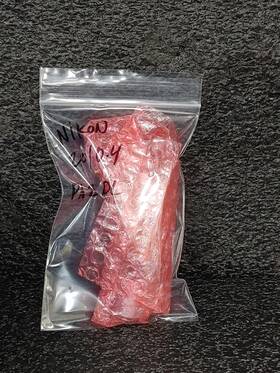
( Brand: Nikon ), ( Manufacturer Part Number: 20/0.4 ), ( Warehouse Location: Brr 4-2 Smlbluebin 2 ), ( Country Of Origin: Japan ), ( Intended Use/discipline: Biological Laboratory )
Review NIKON 20/0.4 160/1.2 Phase Ph Dl Contrast Microscope Objective
The **Nikon Plan Fluor DL 20x/0.45 Ph1 Ph2 Phase Contrast Objective** (often mistakenly referenced as a 20/0.4 or 160/1.2 in misinterpretations of magnification or numerical aperture) is a high-performance, phase-contrast-corrected optical element designed for advanced light microscopy applications. Part of Nikon s renowned Plan Fluor series, this objective combines precision engineering with superior optical clarity to deliver exceptional image quality, making it indispensable for researchers, biologists, and medical professionals studying live, unstained specimens. With a **20x magnification** and a **0.45 numerical aperture (NA)**, it strikes an ideal balance between field of view and resolution, enabling detailed visualization of cellular structures, tissue samples, and microorganisms with remarkable contrast and depth. The **DL (Dry Lens)** designation ensures compatibility with standard cover slips, while the **Ph1 Ph2 phase-contrast correction** enhances the visibility of transparent specimens by converting phase shifts in light waves into visible contrast, a critical feature for observing live cells, bacteria, and other transparent biological materials without the need for staining. Constructed with Nikon s proprietary **fluorite glass elements**, this objective minimizes chromatic aberrations, ensuring sharp, distortion-free images across the entire visible spectrum. The robust mechanical design, featuring a **160mm tube length (TL) standard**, aligns seamlessly with most Nikon microscope systems, including the Eclipse, Ti, and Ti2 series, while the **1.25" filter thread** accommodates a variety of illumination filters for enhanced imaging flexibility. Whether used in cell biology, microbiology, or pathology, this objective excels in applications requiring high contrast, fine structural detail, and reliable performance under prolonged use, making it a cornerstone of modern light microscopy workflows.
The Nikon Plan Fluor 20x/0.45 (or similar 20x/0.4 0.5) objective and the Nikon Plan Apo 160x/1.25 oil immersion objective are two distinct lenses with very different roles in microscopy. Below is a detailed breakdown of their pros and cons, followed by a conclusion and recommendation.
---
### **Nikon Plan Fluor 20x/0.45 Objective**
#### **Pros:**1. **Versatility for Routine Work** A 20x objective is a standard "working" magnification for many biological and medical applications, including cell culture, histology, and general tissue observation. It balances detail and field of view well for most users.
2. **Bright, High-Contrast Imaging** The Plan Fluor series is known for its sharp, contrast-rich images, particularly with phase contrast or differential interference contrast (DIC) illumination, which are common in light microscopy.
3. **Wide Field of View** Compared to higher-magnification objectives, 20x offers a larger field of view, making it ideal for observing larger samples or multiple cells at once.
4. **Compatibility with Phase Contrast** Nikon s Plan Fluor objectives are designed to work seamlessly with phase contrast systems, enhancing the visibility of transparent specimens like live cells.
5. **Durability and Reliability** Nikon objectives are built to last, with robust construction and precise optics. The Plan Fluor series is particularly well-regarded for its longevity.
6. **Cost-Effective for Mid-Range Needs** While not the cheapest objective, it is more affordable than high-end apochromatic or plan-apochromatic lenses, offering excellent value for general use.
7. **Easy to Use** The moderate magnification reduces the need for fine focusing adjustments, making it user-friendly for beginners and routine tasks.
#### **Cons:**1. **Limited Resolution for Fine Details** At 20x, the resolution is sufficient for many applications but may not be adequate for observing ultra-fine structures (e.g., subcellular organelles like mitochondria in high detail).
2. **Not Suitable for High-Resolution Imaging** For advanced research requiring sub-micron resolution (e.g., detailed protein localization or synaptic studies), higher-magnification objectives (e.g., 40x, 60x, or 100x) are necessary.
3. **Lower Numerical Aperture (NA) Than Higher-End Lenses** An NA of 0.45 means less light-gathering power and slightly lower resolution compared to objectives with NA 0.65 or higher.
4. **Potential Chromatic Aberration** While corrected for phase contrast, the Plan Fluor may still exhibit minor chromatic aberrations compared to apochromatic objectives, which are fully corrected across multiple wavelengths.
5. **Not Ideal for Fluorescence** While usable with fluorescence, it is not optimized for it. Higher-NA objectives (e.g., 60x/1.4 or 100x/1.4) are preferred for fluorescence imaging due to better light collection and resolution.
---
### **Nikon Plan Apo 160x/1.25 Oil Immersion Objective**
#### **Pros:**1. **Extreme Magnification for Ultra-Fine Details** A 160x objective is rare but provides unprecedented magnification for observing extremely small structures, such as fine details in insect anatomy, high-resolution imaging of viral particles, or specialized industrial applications.
2. **High Numerical Aperture (NA 1.25)** This high NA allows for superior resolution and light-gathering power, making it ideal for imaging very small or transparent specimens with high detail.
3. **Precision for Specialized Research** Useful in niche fields like entomology, materials science, or high-resolution biological studies where standard 100x objectives are insufficient.
4. **Nikon s Plan Apo Design** The Plan Apo series is known for its flat field and minimal distortion, which is critical for high-magnification work where image fidelity is paramount.
5. **Compatibility with Advanced Illumination** Works well with high-contrast techniques like differential interference contrast (DIC) or specialized fluorescence setups when paired with appropriate filters.
#### **Cons:**1. **Extremely Niche Use Case** A 160x objective is impractical for most biological or medical applications. Standard objectives (e.g., 40x, 60x, 100x) cover 99% of microscopy needs.
2. **High Cost and Maintenance** Such high-magnification objectives are expensive, and they require precise alignment and maintenance. Oil immersion is critical, and contamination or improper handling can damage the lens.
3. **Limited Field of View** At 160x, the field of view is minuscule, making it difficult to locate or observe larger structures. This requires extensive sample preparation and precise positioning.
4. **Not Compatible with Most Microscopes** Most standard microscopes are not designed to accommodate such high magnification. The microscope body, condenser, and illumination system must support it, which is rare.
5. **User-Friendly Challenges** Operating at 160x requires advanced skills, including fine focusing, sample preparation (e.g., thin sections), and often the use of a mechanical stage for precise movement.
6. **Overkill for Routine Work** For typical applications like cell biology, histology, or clinical diagnostics, a 160x objective is unnecessary and impractical. Standard objectives (e.g., 40x, 60x, or 100x) are more than sufficient.
7. **Difficulty in Finding Replacement Parts** Due to its rarity, finding compatible parts or technical support for a 160x objective can be challenging.
---
### **Conclusion**
The **Nikon Plan Fluor 20x/0.45** is an excellent, versatile objective for the vast majority of microscopy applications. It strikes a balance between magnification, resolution, and usability, making it ideal for routine work in biology, medicine, and education. Its compatibility with phase contrast and DIC, combined with its durability and cost-effectiveness, ensures it remains a staple in many labs.
The **Nikon Plan Apo 160x/1.25** is a specialized tool with almost no practical applications outside of highly niche research or industrial settings. Its extreme magnification is rarely justified by the limitations it imposes such as the impractical field of view, high cost, and the need for a microscope system specifically designed to support it. For all but the most unusual cases, investing in such an objective is a waste of resources.
---
### **Recommendation**
**Buy the Nikon Plan Fluor 20x/0.45** if:- You need a reliable, high-quality objective for general microscopy (e.g., cell culture, histology, phase contrast).
- You require a balance of magnification, contrast, and field of view for routine observations.
- You are working in a field where higher magnifications (e.g., 40x, 60x, 100x) are sufficient for your needs.
- You want a durable, long-lasting lens that integrates well with Nikon s phase contrast and DIC systems.
**Do not buy the Nikon Plan Apo 160x/1.25** unless:- You are engaged in a highly specialized field (e.g., ultra-high-resolution entomology, materials science, or viral particle imaging) where no other objective can meet your requirements.
- You have a microscope system specifically configured to support such extreme magnification (including a high-quality condenser, precise mechanical stage, and appropriate illumination).
- You are prepared for the high cost, maintenance challenges, and impracticality of using such a lens for any but the most trivial observations.
For 99% of users, a **Nikon Plan Fluor 20x/0.45** is the far superior choice. If higher magnification is needed, consider standard objectives like the **Nikon Plan Fluor 40x/0.75**, **Plan Apo 60x/1.4**, or **Plan Apo 100x/1.45** oil immersion lenses, which offer an ideal range of magnifications for most applications.
Details:
NIKON Ph 2 DL 20/0.4 160/1.2 Phase Contrast Microscope Objective: No power cord, cable or accessories provided. If they are not in the photos or , then included. Local Pick-up is Available. The will let you know if a part or accessory is not included.
Some may have more wear than others. BRR 4-2 SMLBLUEBIN 2 See pic, no other accessories provided. Tested working order. Please review the and photos carefully.
Other Notes of Interest BRR 4-2 SMLBLUEBIN Expedited shipping can be arranged upon request.
part #: 2004 prices
- $74.99-$209.00
specifications microscopepartzo:
- brand: Nikon
- mpn: 20/0.4
- warehouse location: Brr 4-2 Smlbluebin 2
- country of origin: Japan
- intended use/discipline: Biological Laboratory
returns microscopepartzo:
- policy: Returns Accepted
- paid by: Buyer
- method: Money back
- time: 30 Days
shipping microscopepartzo:
- carrier: USPS, FedEx
- cost: $8.10
- service: USPS Ground Advantage, FedEx Ground Economy
- class: Standard, Economy
- transit: 3-9 Days
- type: Calculated
payments microscopepartzo:
- wallet: Google-pay
- credit card: Visa
- other
offer microscopepartzo:
- sold: 0
- best offers: True
- started: March 25, 2026
- options: Ship-to-home
- availability: In Stock
- quantity: 1
seller microscopepartzo:
- city: Santa Clara, California
- # reviews: 32966
- rating: 99.7%
general microscopepartzo:
- condition: Used
- Medical/Lab Equipment Attachments Accessories > Microscope Parts Accessories > Other Microscope Parts Accessories
Nikon 20-0.4 Is Similar To:
- Mrd00100 Nikon Eclipse Microscope Plan Apo Dic Infinity Objective (44.6% similar) Original, new MRD00100. Working distance. List price: 1, comes with original capsule for protection when stored...(March 11th, 2018)
- 0.001mm Micrometer Microscope Vernier Nikon (41.1% similar) Received as surplus manufacturer Nikon vernier model could not find one do not know much about microscopes it moves back and forth and the rod goes in and out I am unable to test any further that is why I have to sell for parts or repair I only have what is pictured if you would like more pictures ...(February 2nd, 2015)
- Objective Micrometer 0.01mm Slide Nikon (17.5% similar) 01MM in very good condition. Nikon objective micrometer slide. Size 75MM x 25MM x 1MM...(January 26th, 2015)
- 0.075 Nikon Optiphot Objective Plan Lens 2.5x 210 0 Microscope (39.7% similar) Posted with mobile. Nikon m plan 5x objective used for uptight and other microscopes. Beautiful clear, clean optics, no scratches on the tube...(January 18th, 2015)
- Plan Mrl00042 Achromat Objective 0.10ofn22 Wd Nikon 4x 30 (33.1% similar) Nikon plan achromatic 4x objective anti mould plan 4X. 10OFN22 Ed 30USED in good condition guaranteed working...(March 6th, 2015)
- Adaptor Lens 0.55x Relay Tv Microscope Brand Nikon mount (34.7% similar) 55X c mount adapter for Nikon e2 e4 e8 50 55, ci, ts, LV150 series MQD42055 Nikon oem LV100 LV150 L200 300MM 800 400 microscope...(January 4th, 2015)
- 0.8-3.5x Stereo Zoom Sell Body Priced Microscope Smz-445 Nikon 45 Whs5 (35.3% similar) 5x 45 body great deal new in box priced to sell. Nikon DMZ 445 zoom stereo microscope...(January 21st, 2015)
- 0.0005 Nikon Objective Micrometer Glass Slide In Case Lafayette (23.6% similar) As is found...(April 23rd, 2018)
- 0.01 Objective Micrometer Nikon 0.01mm (27.5% similar) Excellent used condition Nikon brand objective micrometer...(October 26th, 2017)
- 0.27x Nikon Objective Lens For Microscope (40% similar) No manuals,no standard power cords, even if it appears in the photo, accessories, software etc are included unless pictured and noted. You can also after a sale if have return issues or any other concerns. All equipment is sold-as-is. All statements regarding products and their configurations are ...(February 9th, 2017)
- 021659 Nikon Binocular Teaching Microscope Head (37.8% similar) Nikon binocular teaching microscope head...(December 3rd, 2018)
