ZEISS 2435000180 Aim Optical Camera Imaging Module Hour
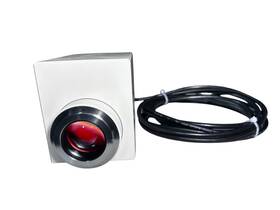
( Brand: Zeiss ), ( Manufacturer Part Number: 2435000180 ), ( Part Type: Camera Module )
Review ZEISS Aim system Optical Camera Imaging Module Excellent Condition Low Hour
The **Zeiss 2435000180 AIM-System Optical Camera Imaging Module** represents the pinnacle of precision engineering and optical excellence, meticulously crafted for applications demanding uncompromising clarity, reliability, and performance. Part of the renowned **AIM-System** series, this module is designed to integrate seamlessly into advanced imaging systems, offering a robust solution for high-resolution optical capture across a spectrum of industrial, scientific, and medical applications. At its core, the module features a **highly optimized optical design** engineered by Carl Zeiss, a brand synonymous with cutting-edge optics and unparalleled image quality. The system leverages **aspheric and multi-element lens configurations**, meticulously corrected for aberrations such as spherical distortion, chromatic aberration, and field curvature, ensuring razor-sharp imaging across the entire field of view. This optical precision is complemented by a **wide dynamic range**, allowing the module to capture fine details in both high-contrast and low-light scenarios with exceptional fidelity.
The **2435000180** module is built with **industrial-grade durability**, incorporating materials and construction techniques that withstand harsh environments, including temperature fluctuations, vibration, and moisture. Its robust housing is engineered to meet stringent mechanical and environmental standards, ensuring long-term reliability in demanding operational conditions. The module s **compact yet versatile form factor** makes it ideal for integration into automated inspection systems, medical imaging devices, or high-speed industrial cameras, where space efficiency and performance are critical. Inside, the module houses a **high-sensitivity image sensor**, likely optimized for either visible or specialized spectral ranges, depending on the application, with features such as **low noise performance** and **high quantum efficiency** to maximize signal capture.
One of the standout features of this module is its **modular and scalable design**, allowing for easy customization and integration with various sensor types, interfaces, and control systems. The AIM-System architecture supports **plug-and-play compatibility** with existing imaging setups, reducing development time and enhancing flexibility for OEMs and researchers. Additionally, the module is equipped with **advanced signal processing capabilities**, including digital gain control, dynamic range extension, and real-time image correction, further enhancing its adaptability to diverse imaging challenges. Whether deployed in **automated defect detection**, **microscopic analysis**, **biometric scanning**, or **high-speed documentation**, the Zeiss 2435000180 delivers consistent, high-fidelity results with minimal latency, making it an indispensable component for next-generation imaging solutions.
Beyond its technical specifications, the **2435000180** embodies the legacy of **Carl Zeiss s commitment to innovation and quality**, backed by decades of expertise in optical science. The module s development reflects rigorous testing and calibration processes, ensuring that every unit meets the highest standards of optical performance and reliability. For engineers, researchers, and manufacturers seeking a **premium imaging solution** that balances precision, versatility, and durability, this module stands as a testament to the fusion of art and science in optical engineering a tool that elevates the boundaries of what is possible in visual capture and analysis.
The **Zeiss 2435000180 AIM-System Optical Camera Imaging Module** is a high-end industrial imaging module designed for precision applications such as machine vision, medical imaging, and scientific research. Below is a detailed analysis of its pros and cons, followed by a conclusion and recommendation.
---
### **Pros**
1. **Superior Optical Performance**
The module incorporates Zeiss optics, known for their exceptional image quality, sharpness, and minimal distortion. This makes it ideal for applications requiring high-resolution imaging, such as microscopy, industrial inspection, or medical diagnostics.
2. **High Sensitivity and Dynamic Range**
Zeiss imaging modules often feature advanced sensor technologies that offer high sensitivity, allowing for clear imaging in low-light conditions. The dynamic range is typically wide, ensuring accurate representation of both bright and dark areas in a single image.
3. **Precision and Reliability**
As a component from Zeiss, the module is built to industrial standards, ensuring durability, stability, and long-term reliability. This is critical in automated systems where consistency is paramount.
4. **Compatibility with Advanced Software**
Zeiss imaging modules are often designed to integrate seamlessly with machine vision software, allowing for real-time processing, calibration, and analysis. This compatibility extends to platforms like HALCON, MATLAB, or custom applications.
5. **Customization and Modularity**
The AIM-System series is modular, meaning it can be configured with different lenses, sensors, and interfaces to suit specific applications. This flexibility allows users to adapt the module to evolving needs without replacing the entire system.
6. **High Resolution and Pixel Density**
Depending on the sensor used, this module can deliver extremely high resolution, which is essential for detailed inspections, defect detection, or high-precision measurements.
7. **Thermal Stability**
Many Zeiss imaging modules are designed with thermal management features to minimize image drift caused by temperature fluctuations, ensuring consistent performance in varying environmental conditions.
8. **Support for High-Speed Imaging**
Depending on the model and sensor, the module may support high frame rates, making it suitable for applications requiring real-time monitoring or fast-moving object detection.
9. **Backward and Forward Compatibility**
Zeiss often maintains support for older models and provides updates, ensuring that the module remains relevant over time.
10. **Brand Reputation**
Zeiss is a trusted name in optics, particularly in industries where precision is non-negotiable. The brand s reputation can be a significant factor in ensuring long-term support and parts availability.
---
### **Cons**
1. **High Cost**
Zeiss imaging modules are premium products, and the **2435000180 AIM-System** is no exception. The upfront cost can be prohibitive for small businesses or startups with limited budgets. The price may also include additional expenses for lenses, mounts, or software licenses.
2. **Complexity in Setup and Calibration**
High-end imaging systems often require specialized knowledge for proper setup, calibration, and integration. Users may need to invest in training or hire experts to maximize the module s potential, adding to the overall cost.
3. **Limited Off-the-Shelf Availability**
As a specialized industrial component, the module may not be readily available from all suppliers. Purchasing may require ordering directly from Zeiss or authorized distributors, which could introduce delays.
4. **Sensor and Lens Dependencies**
The performance of the module is heavily dependent on the choice of sensor and lens. Poorly matched components can degrade image quality, and upgrading parts may require additional investment.
5. **Maintenance and Repair Costs**
While Zeiss modules are durable, repairs or replacements of components (e.g., sensors, lenses, or electronics) can be expensive due to proprietary parts or specialized labor requirements.
6. **Learning Curve for Software Integration**
Integrating the module with custom or third-party software may require programming expertise, particularly if real-time processing or complex algorithms are involved. This can be a barrier for users without technical resources.
7. **Overkill for Low-Demand Applications**
For applications that do not require the highest possible resolution or precision (e.g., simple object detection in well-lit environments), the module may offer unnecessary capabilities, leading to wasted resources.
8. **Potential for Obsolescence**
While Zeiss maintains compatibility, rapid advancements in imaging technology could render certain features or interfaces outdated over time. Users must ensure long-term support or plan for future upgrades.
9. **Physical Size and Integration Challenges**
The module s size and form factor may pose challenges in compact or space-constrained systems. Custom mounting solutions may be required, adding to development time and cost.
10. **Licensing and Software Costs**
If the module requires proprietary software (e.g., Zeiss own tools or third-party vision software), additional licensing fees may apply, increasing the total cost of ownership.
---
### **Conclusion**
The **Zeiss 2435000180 AIM-System Optical Camera Imaging Module** is a high-performance, reliable, and precise imaging solution that excels in demanding applications where image quality, sensitivity, and stability are critical. Its strengths lie in its optical excellence, modularity, and integration capabilities, making it ideal for industries such as medical imaging, semiconductor inspection, or advanced machine vision.
However, the module s high cost, complexity, and potential overkill for simpler applications make it less suitable for budget-conscious or low-demand projects. Additionally, the need for specialized expertise in setup, calibration, and software integration may pose challenges for users without technical resources.
---
### **Recommendation**
**Buy the Zeiss 2435000180 AIM-System if:**- You are working in a high-precision field (e.g., medical imaging, microscopy, or industrial inspection) where image quality and reliability are non-negotiable.
- Your budget allows for a premium investment in imaging technology, and you can justify the cost based on long-term ROI.
- You have access to or can invest in the necessary expertise for setup, calibration, and software integration.
- Your application requires high resolution, low-light performance, or thermal stability that off-the-shelf alternatives cannot provide.
- You value the brand s reputation for durability and support, ensuring long-term compatibility and serviceability.
**Avoid the Zeiss 2435000180 AIM-System if:**- Your application does not require the highest level of precision (e.g., basic object detection in well-lit environments).
- Your budget is constrained, and you can achieve similar results with a lower-cost alternative (e.g., other industrial cameras with comparable sensors).
- You lack the technical resources or expertise to properly integrate and maintain the module.
- The module s size or form factor does not fit within your system s constraints.
- You anticipate rapid technological changes that may render the module outdated quickly, and you prefer more flexible or upgradeable solutions.
**Alternatives to Consider:**- If cost is a concern, explore other high-quality industrial cameras from brands like **FLIR, Basler, or Allied Vision**, which offer comparable performance at lower prices.
- For applications requiring extreme low-light performance, consider modules with **EMCCD or sCMOS sensors** from manufacturers like **Andor or Hamamatsu**.
- If modularity is key but budget is tight, evaluate **DIY solutions** using off-the-shelf sensors (e.g., CMOS or CCD) paired with custom optics.
Ultimately, the Zeiss 2435000180 AIM-System is a **strong choice for professionals who prioritize performance and reliability** but may not be the best fit for cost-sensitive or low-complexity projects. Conduct a thorough cost-benefit analysis and assess your long-term needs before making a purchase.
Details:
No major defects observed during inspection. The optical assembly is exceptionally clean with excellent glass clarity and no noticeable scratches, haze, or fungus observed during inspection. Markings:Zeiss AIM-SYSTEM. Manufacturer Information: Manufacturer: Carl Zeiss.
Condition: Excellent cosmetic condition with extremely minimal signs of use. No guarantees are made regarding software compatibility, licensing, driver availability, or manufacturer support. Applications: Zeiss microscope systems. Due to lack of a complete compatible system, no advanced functional testing was performed beyond visual inspection and connector verification.
Designed for Zeiss imaging systems and automation platforms. Industrial machine vision. Includes attached factory cabling and connectors as shown. Included: Zeiss AIM-System optical module.
Research and development. This unit appears to be part of a Zeiss automated imaging / microscopy platform and is ideal for laboratory imaging, machine vision integration, scientific optics applications, or replacement within compatible AIM-System setup. Attached connectors. Exactly as shown in photos.
Precision machined optical mount. Automated imaging systems. Integrated factory cable assembly. High-quality precision optical assembly.
Optics: The front optical element is clean and clear with excellent coating appearance. Factory integrated shielded cabling. System: AIM-System. Unit appears lightly used and well cared for in a clean laboratory environment.
Precision optical integration.
part #: 2435000180 price
- $1295.00
specifications microscopepartzo:
- brand: Zeiss
- mpn: 2435000180
- part type: Camera Module
shipping microscopepartzo:
- cost: $11.68
- type: Calculated
- service: USPS Ground Advantage, UPS Ground Saver, FedEx Ground / FedEx Home Delivery, FedEx 2Day
- transit: 4-7 Days
- carrier: USPS, UPS, FedEx
- class: Standard, Economy, Expedited
offer microscopepartzo:
- availability: In Stock
- sold: 0
- best offers: True
- quantity: 1
- options: Ship-to-home
- started: May 16, 2026
returns microscopepartzo:
- policy: No Returns
payments microscopepartzo:
- wallet: Google-pay
- other
- credit card: Discover
general microscopepartzo:
- condition: Used
- Medical/Lab Equipment Attachments Accessories > Microscope Parts Accessories > Other Microscope Parts Accessories
seller microscopepartzo:
- city: Mercer Island, Washington
- rating: 100.0%
- # reviews: 62
Zeiss 2435000180 Is Similar To:
- Carl Planapo Good Objective 4x 0.14 Rare Very Microscope Condition Zeiss (31.1% similar) 2MM thread sizes RMS royal microscope society standard. Made in west Germany. 14 numerical aperture microscope objective, part number. This objective designed for bright field and dark field applications for 160MM microscope tube. This is a rare Carl Zeiss Plano 4X. This Plano 4x microscope ...(February 1st, 2015)
- 1 6x 1072-464 Carl Zeiss Microscope Camera Assembly (25.9% similar) This is a Carl Zeiss 1,6X 457 microscope camera assembly unit was removed from service in good working and physical condition...(February 12th, 2019)
- Tessovar 47 Cine 10-9901 0.5x 0.4x Carl Zeiss 1x Num Camera Adapter 60 Part (24.5% similar) 4x camera adapter part numb electrical untested shipping is 22. 5x Tessa 1x cine...(January 26th, 2015)
- 1043-758 Carl Zeiss Video Cable Camera Microscope Medical Surgical (37.7% similar) Carl Zeiss video cable new old stock. Safely tucked away in out clinic...(July 19th, 2018)
- 1046-274 Carl Zeiss Reflector Module Axio Cube (34.3% similar) Zeiss reflector modules cube, excellent condition...(March 26th, 2018)
- 1048-728 Zeiss Lsm Pascal Electronic Control Module Ecu (37.8% similar) See our photos for best information of item and package condition...(December 26th, 2018)
- 1050-958 Carl Zeiss Analyzer Module (29.3% similar) This listing is for the following item: 1 analyzer module c Carl Zeiss part condition like new as mentioned in title, no signs of scratches, scuffs, external damages or any internal optical defects. Please see photos for further details of condition...(April 30th, 2017)
- 1058-431 Zeiss Transmitted Light Channel Excellent (29% similar) See our photos for best information of item and package condition...(December 26th, 2018)
- 1080hd Trio 610 Camera Microscope Zeiss (32.6% similar) Lightly used 1080 HD microscope camera. Cost new 20, works perfectly and has the longer extended cord. This camera has a built in video objective lens...(March 3rd, 2015)
- Accessories 1095-490 Adapter Ring 2 Axioplan System Aim Carl Zeiss (31.2% similar) Carl Zeiss model attachments this is a switching device which controls inputs from either the left or right side. Use the cord shown to control the desired input. One of the tubes has a removable glass piece that can be install in any or taken out completely. I'm happy to combine shipping and ...(February 9th, 2015)
- 1106-041 Zeiss Scan Module For Lsm Pascal Vario Two Good (30.6% similar) See our photos for best information of item and package condition...(December 26th, 2018)
