CARL ZEISS 435230-9021 Planapo Objective Smartzoom Fwd 0.5X /0.03 78MM
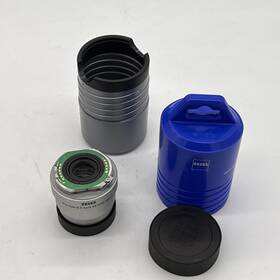
( Brand: Carl Zeiss ), ( Manufacturer Part Number: 435230-9021 ), ( Model: 0.5X ), ( Unit Type: Unit ), ( Country Of Origin: Germany ), ( Intended Use/discipline: Biological Laboratory )
Review CARL ZEISS Planapo0.5x /0.03 Objective Smartzoom Fwd 78mm
The **Carl Zeiss Planapo 0.5x/0.03 Objective (SmartZoom FWD, 78mm)** is a precision-engineered optical component designed to elevate the performance of advanced microscopy systems, particularly those requiring wide-field imaging, low-magnification observation, or specialized applications in fields such as materials science, semiconductor inspection, or large-area sample analysis. This objective exemplifies Zeiss s commitment to optical excellence, combining a unique **0.5x magnification** with an exceptionally low numerical aperture (NA) of **0.03**, which enables it to capture expansive views of samples while maintaining remarkable clarity and minimal distortion. The **SmartZoom FWD (Forward Zoom)** technology incorporated into this lens allows for seamless, motorized adjustment of the working distance and magnification range, providing researchers and engineers with unparalleled flexibility in adapting to diverse sample types from flat substrates to slightly curved surfaces without compromising image quality. With a **78mm free working distance**, the Planapo 0.03x objective is particularly well-suited for applications where access to the sample is limited or where the need to observe large areas without physical obstruction is critical, such as in the inspection of wafers, thin films, or biological specimens mounted on slides. Constructed with **high-index glass elements and proprietary coatings**, this objective minimizes chromatic aberrations, flare, and ghosting, ensuring sharp, high-contrast images across a broad spectrum of wavelengths, from ultraviolet to near-infrared. Its robust mechanical design, featuring a durable **78mm thread mount** compatible with most standard microscope tubes, ensures compatibility with a wide range of Zeiss and third-party microscope systems, including those equipped with infinity-corrected optics. Whether integrated into a high-end research microscope, a production-line inspection system, or a specialized imaging platform, the Planapo 0.5x/0.03 objective delivers a harmonious blend of optical precision, ergonomic functionality, and adaptability, making it an indispensable tool for professionals demanding the highest standards in low-magnification imaging.
### **Pros and Cons of the Carl Zeiss Planapo 0.5x/0.03 SmartZoom Objective (435230-9021)**
#### **Pros**
1. **Wide Field of View** The 0.5x magnification provides a significantly broader field compared to standard 1x objectives, making it ideal for low-magnification imaging and large-sample observation. This is particularly useful for applications like brightfield microscopy of entire tissue sections, small organisms, or low-resolution imaging of large samples.
2. **SmartZoom Technology** The objective incorporates a unique **SmartZoom** mechanism, allowing seamless transition between 0.5x and 1x magnification without physically changing objectives. This reduces handling time and potential misalignment, improving workflow efficiency in automated or semi-automated systems.
3. **High Numerical Aperture (NA) at 1x** When used in 1x mode, the objective achieves an NA of 0.03, which, while low, still provides better light transmission and resolution than many standard long-working-distance objectives. This can be useful for certain low-magnification imaging tasks.
4. **Long Working Distance (78mm)** The extended working distance (78mm) allows for imaging of thick samples, live specimens, or samples in liquid without the need for coverslips. This is advantageous for biological, materials, or industrial applications where sample preparation is limited.
5. **Compatibility with Standard Microscopes** The 78mm free working distance and 1.25" filter thread make it compatible with most standard upright microscopes, including those with long working-distance condensers.
6. **Durability and Precision** Carl Zeiss objectives are known for their high-quality optics, mechanical stability, and long-term performance, reducing the risk of misalignment or degradation over time.
7. **Useful for Low-Magnification Imaging** Ideal for applications such as:- **Brightfield imaging of large samples** (e.g., whole mounts, small organisms).
- **Macro-level documentation** (e.g., plant pathology, materials science).
- **Automated screening** (e.g., high-content imaging where rapid field changes are needed).
- **Live-cell imaging** (due to the long working distance and lack of coverslip requirement).
---
#### **Cons**
1. **Limited Magnification Range** The objective is **only useful for very low magnification (0.5x 1x)**. For higher magnifications (e.g., 4x, 10x, 40x), you would still need additional objectives, making it a niche tool rather than a versatile one.
2. **Low Resolution at 0.5x** The 0.5x magnification provides minimal detail, making it unsuitable for fine structural analysis. The resolution is comparable to a **10x objective on some lower-end microscopes**, meaning it lacks the precision needed for cellular or subcellular imaging.
3. **Potential Light Loss** While the NA is low, the SmartZoom mechanism may introduce some **light scattering or vignetting** when switching between magnifications, especially if not perfectly aligned with the microscope s optics.
4. **Cost Relative to Utility** At a high price point (typically **$1,500 $2,500 **), this objective may be **overkill for basic low-magnification work**. Cheaper alternatives (e.g., **Leica M Plan Apo, Nikon Plan Fluor 0.5x**) may offer similar functionality at a fraction of the cost.
5. **Not Suitable for High-Resolution Imaging** If your work requires **fluorescence, phase contrast, or high-resolution brightfield**, this objective is **not a replacement** for standard high-NA objectives (e.g., 40x/1.3 oil immersion).
6. **Compatibility Issues with Some Microscopes** While it fits most upright microscopes, **inverted microscopes** (common in cell biology) may struggle with the long working distance, as they often require shorter objectives for proper sample positioning.
7. **Maintenance Sensitivity** Like all high-end optics, it requires **careful cleaning and handling** to avoid dust or scratches, which could degrade performance over time.
---
### **Conclusion**
The **Carl Zeiss Planapo 0.5x/0.03 SmartZoom objective** is a **specialized tool** best suited for **low-magnification, wide-field imaging** where a **seamless zoom function** and **long working distance** are critical. It excels in applications like:
- **Whole-mount tissue imaging** (e.g., histology, pathology).
- **Live specimen observation** (e.g., small invertebrates, plant pathology).
- **Automated screening systems** where rapid field changes are needed.
- **Macro-level documentation** (e.g., industrial inspection, materials science).
However, it is **not a replacement for standard high-magnification objectives** (e.g., 10x, 40x) and may be **too expensive** for basic low-magnification needs. If your primary requirement is **low magnification with zoom capability**, it is a **high-quality choice**. If you need **versatility across multiple magnifications**, investing in a **range of standard objectives** (e.g., 1x, 4x, 10x) may be more practical.
---
### **Recommendation**
**Buy this objective if:**You need **seamless 0.5x 1x magnification switching** (e.g., for automated imaging).
Your work involves **large samples, live specimens, or thick specimens** that require a long working distance.
You already own a **Carl Zeiss microscope** and want **consistent optics** across objectives.
You prioritize **Zeiss s reputation for durability and precision** in low-magnification imaging.
**Avoid this objective if:**You need **high-resolution imaging** (e.g., cellular or subcellular details).
Your budget allows for **cheaper alternatives** (e.g., Leica M Plan Apo, Nikon Plan Fluor 0.5x).
You primarily work with **inverted microscopes** (may not fit well).
You require **multiple magnification levels** (consider a **standard set of objectives instead**).
**Alternative Considerations:**- If **budget is a concern**, the **Leica M Plan Apo 0.5x** or **Nikon Plan Fluor 0.5x** offer similar functionality at a lower cost.
- If you need **higher magnification flexibility**, invest in a **1x, 4x, and 10x objective** instead.
- If **fluorescence or phase contrast** is required, ensure the microscope supports these modes with this objective (some may not work optimally).
**Final Verdict:**This is a **premium, niche objective** best justified for **specialized low-magnification applications**. For most researchers, it is **not a core purchase** but rather a **valuable addition** to a microscope system where its unique features are needed.
Details:
Good condition as seen comes with case.
part #: 4352309021 prices
- $3000.00-$5500.00
specifications microscopepartzo:
- brand: Carl Zeiss
- mpn: 435230-9021
- model: 0.5x
- unit type: Unit
- country of origin: Germany
- intended use/discipline: Biological Laboratory
general microscopepartzo:
- condition: Used
- Medical/Lab Equipment Attachments Accessories > Microscope Parts Accessories > Other Microscope Parts Accessories
shipping microscopepartzo:
- class: Standard
- transit: 4-10 Days
- type: Fixed
- cost: $10.00
- service: USPS Ground Advantage
- carrier: USPS
seller microscopepartzo:
- # reviews: 1386
- city: Plano, Texas
- rating: 100.0%
offer microscopepartzo:
- quantity: 1
- options: Ship-to-home
- best offers: True
- started: May 29, 2026
- availability: In Stock
- sold: 0
returns microscopepartzo:
- time: 30 Days
- policy: Returns Accepted
- method: Money back
- paid by: Buyer
payments microscopepartzo:
- credit card: Diners-club
- wallet: Apple-pay
- other
Carl Zeiss 435230-9021 Is Similar To:
- 460705 460705 Carl Zeiss F 40x-0.65 (27.3% similar) Only pictured items are included - cables and other accessories not unless explicitly stated shown in pictures. This is in good physical condition overall minor wear and tear expected on used items. Carl Zeiss f 40X. 65 microscope objective clean lens this has been tested and it is in good working ...(November 2nd, 2017)
- Carl Planapo Good Objective 4x 0.14 Rare Very Microscope Condition Zeiss (39.5% similar) 2MM thread sizes RMS royal microscope society standard. Made in west germany. 14 numerical aperture microscope objective, part number. This objective designed for bright field and dark field applications for 160MM microscope tube. This is a rare Carl Zeiss planapo 4X. This planapo 4x microscope ...(February 1st, 2015)
- 000000-1108-667 Carl Zeiss Microscope Lamp Power Supply Used Working (28.2% similar) For lift gate service and 45. The bureaus of us. Pictured test equipment is not included or available for sale. Specifications part no: 667 sale details item condition: used working, 90 day warranty estimated packed shipping dimensions: l x W14 X14 7 lbs. Only items pictured are included: if a part ...(April 26th, 2018)
- 000000-1374-896 Carl Zeiss Vg Green Filter Microscope (25.2% similar) New with no signs of normal wear and tear. Carl Zeiss VG 9 green FILTER32X2MM item number: 896 filter, 32X2MM for contrast enhancement phase and b w image recording unused - with box excellent condition. This item is unused and untested...(March 31st, 2018)
- Case Storage 000000-1766-630 Cube Reflector Carl Zeiss (15.6% similar) Carl Zeiss reflector cube storage case Carl Zeiss reflector cube storage case condition good condition...(January 6th, 2015)
- 000129 Zeiss Carl Interface-control Program (20.5% similar) Posted by: ht shelf location: B13. Defects not known shown listed may exist. The zip code of origin is 97333. Local pick-up is available...(October 3rd, 2017)
- 031794 Carl Zeiss Laboratory Photomicroscope (28.8% similar) If in doubt, please before purchasing. DOA stands for dead on arrival, meaning that the item did not function properly when it arrived. Your satisfaction is extremely important to us. All pictures are taken in house. This unit has been used. Please by sending a message through or calling. Minimum ...(April 15th, 2017)
- 0428-273 Carl Zeiss Fluorescent Epi Illuminator Axiostar Fl Reflected Microscope (32.5% similar) Pei illumination attachment for Zeiss Acosta microscope excellent shape with all components polarizing filter included. Both sliders...(May 8th, 2018)
- 1 6x 1072-464 Carl Zeiss Microscope Camera Assembly (28.8% similar) This is a Carl Zeiss 1,6X 457 microscope camera assembly unit was removed from service in good working and physical condition...(February 12th, 2019)
- 1.2-1.4 Carl Zeiss Apl 0.63 (31.7% similar) Item: Carl Zeiss alp. 63 phase contrast condenser nose piece alp 20MM diameter thread condition: good - working condition clear optics thread to listing includes: main unit pictured...(October 24th, 2017)
- Tessovar 47 Cine 10-9901 0.5x 0.4x Carl Zeiss 1x Num Camera Adapter 60 Part (24.2% similar) 4x camera adapter part numb electrical untested shipping is 22. 5x Tessa 1x cine...(January 26th, 2015)
