ZEISS 446313 Dic Filter Slider Analyzer Polarizer Wave
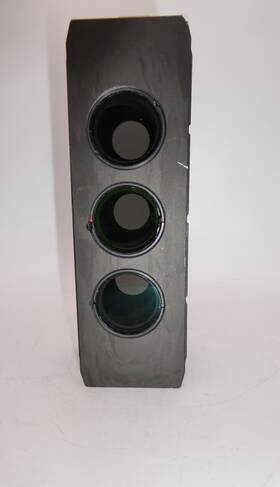
( Brand: Zeiss ), ( Manufacturer Part Number: 446313 ), ( Part Type: Filter Analyzer ), ( Country Of Origin: Germany )
Review ZEISS Dic Filter Slider Analyzer Polarizer Pol Full Wave
The **Zeiss 446313 DIC (Differential Interference Contrast) Filter Slider Analyzer Polarizer Wave Plate** is a precision-engineered optical accessory designed to elevate the performance of polarized light microscopy, particularly in applications requiring high-contrast visualization of transparent specimens. This sophisticated component is meticulously crafted to integrate seamlessly with Zeiss s advanced microscope systems, offering researchers, biologists, and materials scientists an unparalleled tool for enhancing the structural details of thin, colorless samples. The slider mechanism allows for effortless adjustment of the wave plate s position, enabling fine-tuning of the interference contrast to reveal subtle variations in refractive index that would otherwise remain invisible under conventional brightfield illumination. Constructed from high-quality optical glass and precision-machined components, this analyzer polarizer combines a polarizing filter with a quarter-wave plate, ensuring consistent and repeatable results across a wide range of magnifications. Its robust yet ergonomic design minimizes parallax errors, while the durable mounting ensures stability during extended use. Ideal for applications in cell biology, crystallography, and material science, this filter slider enhances the visibility of fine cellular structures, protein folding patterns, and crystalline formations by converting phase differences into visible contrast, thereby bridging the gap between transparency and discernibility. Whether used in routine laboratory work or cutting-edge research, the Zeiss 446313 DIC Filter Slider Analyzer Polarizer Wave Plate exemplifies the brand s commitment to optical excellence, delivering clarity and precision where it matters most.
The Zeiss 446313 DIC (Differential Interference Contrast) Filter Slider Analyzer Polarizer Wave Plate is a specialized optical accessory designed for advanced microscopy, particularly for enhancing contrast in transparent or unstained samples. Below is a detailed breakdown of its pros and cons, followed by a conclusion and recommendation.
---
### **Pros:**1. **Enhanced Contrast and Detail:** The DIC system significantly improves the visibility of fine structural details in transparent specimens, such as cells, tissues, or crystals, by converting phase shifts into visible contrast. This is particularly useful for unstained samples where traditional brightfield microscopy fails to provide adequate detail.
2. **Non-Destructive Imaging:** Unlike staining techniques, DIC does not require chemical treatment of the sample, preserving its natural state and integrity. This is especially valuable for live-cell imaging or delicate specimens.
3. **Depth Perception:** DIC microscopy creates a pseudo-3D effect, allowing users to perceive the depth and topography of the sample more clearly than with standard brightfield microscopy.
4. **Compatibility with Zeiss Microscopes:** This filter slider is designed specifically for Zeiss microscopes, ensuring seamless integration with the optical path and consistent performance. It is compatible with a range of Zeiss models equipped with DIC capabilities.
5. **Versatility:** The analyzer and polarizer components can be adjusted or swapped out, offering flexibility for different imaging modes or experiments. The wave plate can be fine-tuned to optimize contrast for specific samples.
6. **High-Quality Optics:** Zeiss is known for its precision optics, and this filter slider is no exception. The components are likely to be of high optical quality, minimizing aberrations and ensuring sharp, clear images.
7. **Durability and Build Quality:** Zeiss products are generally robust and built to last, reducing the likelihood of frequent replacements or maintenance issues.
8. **Research and Educational Value:** For researchers or educators working in fields such as biology, materials science, or geology, DIC microscopy is an invaluable tool for detailed structural analysis.
---
### **Cons:**1. **High Cost:** Optical accessories like this are expensive, especially when compared to basic filters or polarizers. The price may be prohibitive for individuals or institutions with limited budgets.
2. **Complex Setup and Learning Curve:** DIC microscopy requires careful alignment of the polarizer, analyzer, and wave plate. Users may need training or practice to achieve optimal results, which can be time-consuming.
3. **Limited Compatibility:** While this slider is designed for Zeiss microscopes, it will not work with non-Zeiss systems unless they have compatible DIC components. This lack of cross-platform compatibility can be a drawback for users with mixed microscope setups.
4. **Maintenance Requirements:** Optical components can accumulate dust or scratches over time, which may affect image quality. Regular cleaning and maintenance are necessary to ensure consistent performance.
5. **Not Suitable for All Samples:** DIC is best for transparent or semi-transparent samples. For highly opaque or fluorescent samples, other microscopy techniques (e.g., brightfield, fluorescence, or phase contrast) may be more appropriate.
6. **Space and Installation Constraints:** Installing a DIC slider may require modifications to the microscope setup, such as adjusting the condenser or adding additional components. This could limit the flexibility of the microscope for other imaging modes.
7. **Potential for Misalignment:** If the polarizer, analyzer, or wave plate is not properly aligned, the contrast may be poor or the image may appear distorted. This can be frustrating for users who are not experienced with DIC microscopy.
---
### **Conclusion:**The Zeiss 446313 DIC Filter Slider Analyzer Polarizer Wave Plate is a high-quality, specialized tool that offers significant advantages for users engaged in detailed, contrast-enhanced microscopy of transparent samples. Its ability to provide pseudo-3D imaging, non-destructive sample analysis, and superior detail makes it an invaluable asset for research, education, and advanced imaging applications. However, the high cost, complexity of setup, and limited compatibility with non-Zeiss systems may pose challenges, particularly for users with budget constraints or those unfamiliar with DIC microscopy.
For individuals or institutions with the financial resources and need for high-contrast, detailed imaging of transparent samples, this accessory is highly recommended. It is particularly well-suited for researchers, educators, or professionals working in fields such as cell biology, materials science, or geology. Conversely, users with simpler imaging needs or those working with opaque or fluorescent samples may find other microscopy techniques more cost-effective and practical.
---
### **Recommendation:** Purchase the Zeiss 446313 DIC Filter Slider Analyzer Polarizer Wave Plate if:- You are a researcher, educator, or professional requiring advanced contrast and detail in transparent samples.
- You already own or plan to invest in a Zeiss microscope compatible with DIC microscopy.
- You have the budget to accommodate the high cost and are willing to invest in training or resources to master DIC techniques.
- Your work involves live-cell imaging or other applications where sample preservation is critical.
Avoid purchasing this accessory if:- Your microscopy needs are basic and do not require the advanced contrast provided by DIC.
- You work primarily with opaque, fluorescent, or stained samples where other techniques (e.g., brightfield, fluorescence, or phase contrast) would suffice.
- You are operating on a tight budget and cannot justify the expense of a specialized DIC system.
- You do not have access to a Zeiss microscope or lack the technical expertise to align and maintain the DIC components effectively.
For users on a budget or those who may not need DIC capabilities full-time, consider exploring alternative options such as used equipment, lower-cost DIC systems from other manufacturers, or renting the accessory for specific projects. Additionally, investing in training or consulting with experienced microscopists can help maximize the utility of this tool.
Details:
India Pakistan. Items marked as: For Parts or Repair /or As Is are not covered by the 30 day warranty. This specifically applies to items marked as: New, New Open Box and Used These are covered by our 30 Day Warranty. The items in the order will have their warranty found null and void.
part #: 446313 prices
- $479.95-$599.99
specifications microscopepartzo:
- brand: Zeiss
- mpn: 446313
- part type: Filter Analyzer
- country of origin: Germany
payments microscopepartzo:
- other
- credit card: Discover
- wallet: Paypal
seller microscopepartzo:
- # reviews: 13188
- rating: 99.8%
- city: Burnsville, Minnesota
shipping microscopepartzo:
- type: Calculated
- class: Standard
- transit: 2-6 Days
- service: USPS Ground Advantage, FedEx Ground / FedEx Home Delivery, UPS Ground
- cost: $6.68
- carrier: USPS, FedEx, UPS
offer microscopepartzo:
- sold: 0
- availability: In Stock
- options: Ship-to-home
- started: February 24, 2026
- quantity: 1
- best offers: True
general microscopepartzo:
- Medical/Lab Equipment Attachments Accessories > Microscope Parts Accessories > Other Microscope Parts Accessories
- condition: Used
returns microscopepartzo:
- time: 30 Days
- paid by: Seller
- method: Money back
- policy: Returns Accepted
Zeiss 446313 Is Similar To:
- 000000-1170-901 Zeiss Microscope Dic Slider Ec Epn And Hr Objective (38.5% similar) 90 hr with plastic cover to protect slider. Unconditional money back guarantee item code: A338 Zeiss microscope dic slider for EC Pen 50X. Condition: new. Zeiss microscope dic slider for EC Pen 50X 100X. 90 hr objectives: Zeiss dic slider item number: 901 compatible with these prisms: EC Pen 50X...(June 8th, 2018)
- 000000-1170-902 Zeiss Microscope Dic Slider Ec Epn (33.6% similar) Unconditional money back guarantee item code: A335 Zeiss microscope dic slider EC Pen 100X condition: new. Zeiss microscope dic slider for EC Pen 100X: item number: 902 compatible with these objectives prisms: and HX LED 50X fluorescence microscopes the solution to your microscopy needs. 80 HX LED ...(June 15th, 2018)
- 000000-1374-896 Carl Zeiss Vg Green Filter Microscope (34.5% similar) New with no signs of normal wear and tear. Carl Zeiss VG 9 green FILTER32X2MM item number: 896 filter, 32X2MM for contrast enhancement phase and b w image recording unused - with box excellent condition. This item is unused and untested...(March 31st, 2018)
- 05-9902 Microscope Slider Axiomat 47 Zeiss Magazine Dic Phase 57 Adjustable (34.8% similar) USPS or ups ground. Save packaging for carrier claim. Standard shipping prices are only good for the lower 48 states. An image to Zeiss axiom at adjustable microscope magazine dic phase slider P/N this unit appears to be fully functional knobs spin freely lens is in good condition scratches are ...(February 3rd, 2015)
- Slider Polarizer 47 57 Axiomat Analyzer 10-9902 Zeiss Aperture Diaphragm Iris (30% similar) All parts, accessories, cables, etc. Your satisfaction is extremely important to us. Cash is only accepted for will calls. All pictures are taken in house. Minimum handling charge is 75 onto a standard pallet and increases for custom pallet's. Please review images thoroughly before purchasing. If in...(January 23rd, 2015)
- Slider Iii Neofluar 1033-912 Zeiss 40x 1.30 Prism Plan Nomarski Dic Microscope (27% similar) Mechanically and optically in excellent condition. For use with transmitted light dic with Zeiss axiom series microscopes. 14 day money back guarantee if you're not satisfied for any reason...(February 27th, 2015)
- 1050-958 Carl Zeiss Analyzer Module (38.8% similar) This listing is for the following item: 1 analyzer module c Carl Zeiss part condition like new as mentioned in title, no signs of scratches, scuffs, external damages or any internal optical defects. Please see photos for further details of condition...(April 30th, 2017)
- 1105-156 Zeiss Axio Pol Bertrand (29.5% similar) Equipment is tested to power up and basic functions only. Photos accurately show the condition of item. Zeiss axiom pol Bertrand system module cube c new: new, see pictures for condition. Some equipment is available with warranty, training and installation. We combine shipping charges when possible...(October 23rd, 2017)
- 2-fl Zeiss Microscope Fluorescence Filter Cube (33% similar) In great condition...(December 16th, 2018)
- 304752 427.00 Carl Zeiss Jena Microscope Fluorescence Filter Nos (28.3% similar) Zeiss Jean microscope fluorescence filter 20MM B427 BG18: 427. Nos new old stock - from a lot of verb Carl Zeiss Jean filters...(February 17th, 2019)
- 4 0.1 Pol 8 0.2 Pol Carl Zeiss 2 Epiplan 4-0.1 (20.2% similar) ...(January 3rd, 2017)
