ZEISS 49304 Chroma Fish Dichroic Filter Cube Fluorescence Microscope C198114
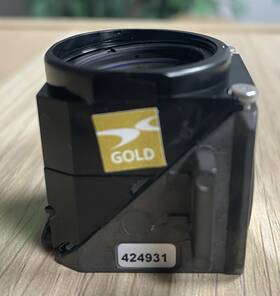
( Brand: Zeiss ), ( Manufacturer Part Number: 49304 ), ( Part Type: Filter )
Review ZEISS Chroma Fish Dichroic Filter Cube Fluorescence Microscope
The **Zeiss 49304 Chroma C198114 Fish Dichroic Filter Cube** is a high-performance, precision-engineered optical component designed exclusively for advanced fluorescence microscopy applications, particularly tailored for the study of live biological specimens such as zebrafish (*Danio rerio*), commonly referred to as "fish." This filter cube is a critical component in fluorescence imaging systems, enabling the selective excitation and emission of specific fluorophores while minimizing cross-talk between channels to ensure high-contrast, high-resolution imaging. Engineered with Chroma Technology s renowned expertise in optical filtration, the C198114 filter cube incorporates a **dichroic mirror** optimized for multi-channel fluorescence imaging, allowing researchers to simultaneously visualize multiple fluorophores such as GFP (Green Fluorescent Protein), RFP (Red Fluorescent Protein), or other fluorescent markers without spectral overlap. The cube s design integrates a **high-efficiency excitation filter** that precisely isolates the desired excitation wavelengths, while the **emission filter** effectively blocks stray light, ensuring that only the emitted fluorescence from the sample reaches the detector. This filter cube is particularly well-suited for applications in developmental biology, neuroscience, and cellular imaging, where the ability to track dynamic processes in live organisms with minimal phototoxicity and photobleaching is essential. Built to withstand rigorous laboratory use, the Zeiss 49304 Chroma C198114 is compatible with a wide range of fluorescence microscopes, including Zeiss Axio, Axio Observer, and Axio Imager systems, offering seamless integration into existing setups. Its robust construction and precision optics guarantee long-term stability and consistent performance, making it an indispensable tool for researchers seeking to push the boundaries of fluorescence imaging in biological sciences. Whether used for high-speed imaging, time-lapse studies, or super-resolution techniques, this filter cube delivers the clarity and precision required to uncover the intricate details of cellular and subcellular structures in live specimens.
The Zeiss 49304 Chroma C198114 fish dichroic filter cube is a specialized component designed for fluorescence microscopy, particularly for imaging fluorescent proteins like GFP (Green Fluorescent Protein) and related variants in biological samples such as zebrafish (hence the "fish" designation). Below is a detailed breakdown of its pros and cons, followed by a conclusion and recommendation.
---
### **Pros**
1. **High Optical Quality and Precision**
The Zeiss brand is synonymous with high-quality optics, and this filter cube is designed to minimize light loss and maximize signal clarity. The Chroma dichroic mirror (C198114) is engineered to efficiently separate excitation and emission light, reducing bleed-through between channels. This is critical for obtaining sharp, high-contrast images in fluorescence microscopy.
2. **Compatibility with Common Fluorescent Proteins**
The cube is optimized for GFP and similar fluorophores (e.g., EGFP, YFP), which are widely used in biological research. It ensures that excitation light (typically around 470 490 nm) is effectively reflected while allowing the emitted fluorescence (around 500 530 nm) to pass through. This makes it suitable for a broad range of applications, including developmental biology, neuroscience, and cell biology studies involving zebrafish or other model organisms.
3. **Durability and Longevity**
Zeiss filter cubes are built to withstand frequent use in laboratory settings. The materials used in the construction (e.g., high-quality glass, precision coatings) are designed to resist degradation over time, reducing the need for frequent replacements. This can be cost-effective in the long run, especially for labs with heavy microscopy usage.
4. **Compatibility with Zeiss Microscopes**
As a Zeiss-specific component, this filter cube is designed to integrate seamlessly with Zeiss microscopes, ensuring optimal performance and minimal alignment issues. This compatibility reduces the risk of compatibility problems that might arise with third-party filter cubes.
5. **Support for Advanced Imaging Techniques**
The cube can be used in conjunction with other Zeiss microscope components (e.g., cameras, illumination systems) to support advanced imaging techniques such as confocal microscopy, TIRF (Total Internal Reflection Fluorescence), or live-cell imaging. This versatility makes it a valuable addition to research labs pursuing cutting-edge studies.
6. **Reduced Background Noise**
The dichroic mirror and emission filters are tuned to minimize autofluorescence and background noise, which is particularly important when imaging weakly fluorescent samples or when working with complex biological tissues. This enhances the signal-to-noise ratio, leading to clearer images.
7. **Backward and Forward Compatibility**
While primarily designed for GFP, the cube s design may also accommodate slight variations in excitation/emission spectra, allowing some flexibility if the exact fluorophore used deviates marginally from GFP. This can be useful for labs transitioning between similar fluorophores.
---
### **Cons**
1. **High Initial Cost**
Zeiss filter cubes are premium products, and this specific cube is no exception. The cost can be prohibitive for small labs, individual researchers, or educational institutions with limited budgets. The price may also make it difficult to justify purchasing multiple cubes for different fluorophores, especially if the lab is still determining its long-term needs.
2. **Limited to GFP and Similar Fluorophores**
The cube is not versatile for imaging other common fluorophores such as RFP (Red Fluorescent Protein), CFP (Cyan Fluorescent Protein), or far-red dyes (e.g., mCherry, Texas Red). If the lab requires imaging multiple fluorophores simultaneously or sequentially, additional cubes will be needed, increasing the overall cost and complexity of the setup.
3. **Potential for Obsolete or Niche Use**
While GFP is widely used, some researchers may find that their work involves less common fluorophores or that their imaging needs evolve over time. In such cases, investing in this cube might mean that it becomes less useful or even obsolete as the lab s research directions change. This could lead to wasted investment if the cube is not utilized to its full potential.
4. **Maintenance and Replacement Challenges**
Although Zeiss cubes are durable, they are not indestructible. Over time, the coatings on the dichroic mirror or filters can degrade due to exposure to intense light sources or physical stress. Replacing a single component (e.g., the dichroic mirror) can be expensive, as it may require purchasing an entire new cube or paying for professional repair services.
5. **Compatibility Limitations with Non-Zeiss Equipment**
While the cube is designed for Zeiss microscopes, using it on non-Zeiss equipment may require additional adjustments or may not yield optimal results. This can be a drawback for researchers who use microscopes from other manufacturers or who may need to share equipment across different labs.
6. **Learning Curve for Optimal Use**
Achieving the best results with a fluorescence filter cube often requires careful alignment and calibration of the microscope. Researchers new to fluorescence microscopy may need to invest time in learning how to properly install and use the cube to avoid issues such as misalignment, uneven illumination, or poor image quality. This can introduce a delay in obtaining high-quality results.
7. **Environmental Sensitivity**
Filter cubes can be sensitive to environmental factors such as humidity, temperature fluctuations, or exposure to dust. Improper storage or handling can lead to damage or reduced performance. Labs with less controlled environments may need to invest in additional protective measures (e.g., sealed storage cases) to preserve the cube s integrity.
---
### **Conclusion**
The Zeiss 49304 Chroma C198114 fish dichroic filter cube is a high-quality, specialized tool that excels in imaging GFP and related fluorophores with precision and clarity. Its strengths lie in its optical performance, durability, and compatibility with Zeiss microscopy systems, making it an excellent choice for labs focused on GFP-based research. However, its high cost, limited fluorophore compatibility, and potential for obsolescence or maintenance challenges must be carefully considered.
For labs with a clear and sustained need for GFP imaging, this cube represents a worthwhile investment that can significantly enhance the quality of fluorescence microscopy results. Conversely, labs with diverse fluorophore requirements or budget constraints may find it more practical to explore alternative options, such as third-party filter cubes or modular filter systems that offer greater flexibility.
---
### **Recommendation**
1. **For Labs with GFP-Centric Research:**If your primary focus is on GFP or similar fluorophores (e.g., EGFP, YFP) and you are working within a Zeiss microscopy ecosystem, the Zeiss 49304 Chroma C198114 filter cube is highly recommended. Its superior optical quality and compatibility with Zeiss systems will likely deliver consistent, high-quality results. Ensure that your budget can accommodate the initial cost and that you have a plan for future-proofing your setup if your research needs evolve.
2. **For Labs with Diverse Fluorophore Needs:**If your work involves imaging a variety of fluorophores (e.g., GFP, RFP, CFP, far-red dyes), consider investing in a modular filter system or purchasing multiple filter cubes from a manufacturer that offers broader compatibility (e.g., Chroma, Semrock, or Thorlabs). While these options may not match the precision of a Zeiss cube, they provide greater flexibility and cost-effectiveness in the long run.
3. **For Budget-Conscious or Educational Settings:**If budget is a significant constraint, explore third-party filter cubes that are designed for GFP imaging. Brands like Chroma or Semrock offer high-quality alternatives at lower prices. Additionally, consider purchasing a used or refurbished Zeiss cube if it meets your requirements, as this can reduce costs without sacrificing performance.
4. **For Labs Planning Long-Term Growth:**If your research is still evolving or you anticipate expanding into new areas of fluorescence imaging, it may be prudent to start with a versatile, multi-channel filter system rather than committing to a single GFP-specific cube. This approach allows for greater adaptability as your needs change.
5. **For Non-Zeiss Microscope Users:**If you are using a non-Zeiss microscope, verify that the cube will integrate seamlessly with your setup. In some cases, you may need to consult with Zeiss or a microscopy specialist to ensure compatibility or explore alternative filter cubes designed for your specific microscope model.
Ultimately, the decision to purchase the Zeiss 49304 Chroma C198114 filter cube should be based on a careful assessment of your current and future imaging needs, budget, and the specific requirements of your research. If GFP imaging is central to your work and you are committed to a Zeiss system, this cube is an excellent choice. Otherwise, weighing its pros and cons against alternative options will help you make the most cost-effective and practical decision.
Details:
Excellent condition, gold chroma filter set mounted in a Zeiss cube.
part #: 49304 price
- $185.00
specifications microscopepartzo:
- brand: Zeiss
- mpn: 49304
- part type: Filter
payments microscopepartzo:
- other
- credit card: Discover
- wallet: Google-pay
seller microscopepartzo:
- rating: 90.6%
- city: Stratford, Connecticut
- # reviews: 28
general microscopepartzo:
- Medical/Lab Equipment Attachments Accessories > Microscope Parts Accessories > Other Microscope Parts Accessories
- condition: Used
offer microscopepartzo:
- options: Ship-to-home
- quantity: 1
- sold: 0
- availability: In Stock
- started: June 8, 2026
returns microscopepartzo:
- policy: No Returns
shipping microscopepartzo:
- carrier: USPS
- class: Standard
- transit: 4-12 Days
- service: USPS Ground Advantage
- type: Calculated
- cost: $6.07
Zeiss 49304 Is Similar To:
- Carl Planapo Good Objective 4x 0.14 Rare Very Microscope Condition Zeiss (29.5% similar) 2MM thread sizes RMS royal microscope society standard. Made in west Germany. 14 numerical aperture microscope objective, part number. This objective designed for bright field and dark field applications for 160MM microscope tube. This is a rare Carl Zeiss Plano 4X. This Plano 4x microscope ...(February 1st, 2015)
- Zeiss Opmi Microscope 10x F170 0-180 Eyepieces Binocular Surgical (27% similar) Carl Zeiss binocular F170 with 10X eyepieces...(December 31st, 2014)
- Mag Stereo Oculars 2480 Zeiss Knob Si 0.63-6.3 10 P16x 12.5 Microscope Jena Aus (23.2% similar) It has the numbers 2480 Si 10 on the bottom. It was made in the German democratic republic you are buying on one rare vintage type 1970 'S AIs Jean stereo microscope with a pair of P16X 12. See photos overall good clean condition, only minor wear, and clean lenses no light source included. 5 ...(January 15th, 2015)
- 000000-1108-667 Carl Zeiss Microscope Lamp Power Supply Used Working (22.2% similar) For lift gate service and 45. The bureaus of us. Pictured test equipment is not included or available for sale. Specifications part no: 667 sale details item condition: used working, 90 day warranty estimated packed shipping dimensions: l x W14 X14 7 lbs. Only items pictured are included: if a part ...(April 26th, 2018)
- 000000-1170-901 Zeiss Microscope Dic Slider Ec Epn And Hr Objective (22.4% similar) 90 hr with plastic cover to protect slider. Unconditional money back guarantee item code: A338 Zeiss microscope dic slider for EC Pen 50X. Condition: new. Zeiss microscope dic slider for EC Pen 50X 100X. 90 hr objectives: Zeiss dic slider item number: 901 compatible with these prisms: EC Pen 50X...(June 8th, 2018)
- 000000-1170-902 Zeiss Microscope Dic Slider Ec Epn (25.4% similar) Unconditional money back guarantee item code: A335 Zeiss microscope dic slider EC Pen 100X condition: new. Zeiss microscope dic slider for EC Pen 100X: item number: 902 compatible with these objectives prisms: and HX LED 50X fluorescence microscopes the solution to your microscopy needs. 80 HX LED ...(June 15th, 2018)
- 000000-1374-896 Carl Zeiss Vg Green Filter Microscope (40.3% similar) New with no signs of normal wear and tear. Carl Zeiss VG 9 green FILTER32X2MM item number: 896 filter, 32X2MM for contrast enhancement phase and b w image recording unused - with box excellent condition. This item is unused and untested...(March 31st, 2018)
- Case Storage 000000-1766-630 Cube Reflector Carl Zeiss (24.6% similar) Carl Zeiss reflector cube storage case Carl Zeiss reflector cube storage case condition good condition...(January 6th, 2015)
- 0428-273 Carl Zeiss Fluorescent Epi Illuminator Axiostar Fl Reflected Microscope (35.9% similar) Pei illumination attachment for Zeiss Acosta microscope excellent shape with all components polarizing filter included. Both sliders...(May 8th, 2018)
- 05-9902 Microscope Slider Axiomat 47 Zeiss Magazine Dic Phase 57 Adjustable (17.2% similar) USPS or ups ground. Save packaging for carrier claim. Standard shipping prices are only good for the lower 48 states. An image to Zeiss axiom at adjustable microscope magazine dic phase slider P/N this unit appears to be fully functional knobs spin freely lens is in good condition scratches are ...(February 3rd, 2015)
- 1 6x 1072-464 Carl Zeiss Microscope Camera Assembly (25.2% similar) This is a Carl Zeiss 1,6X 457 microscope camera assembly unit was removed from service in good working and physical condition...(February 12th, 2019)
