ZEISS 5.4.3.0002 Iol Master
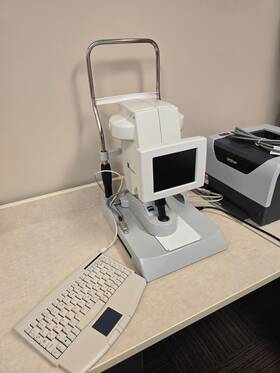
( Brand: Zeiss ), ( Manufacturer Part Number: 5.4.3.0002 ), ( Intended Use/discipline: Ophthalmology )
Review ZEISS Iol Master 5.4 Used And In Good Working Order
The **ZEISS IOL Master 7** (model designation **5.4.3.0002**) represents the pinnacle of ocular biometry innovation, engineered to deliver unparalleled precision, efficiency, and clinical versatility in the measurement of anterior and posterior segment parameters essential for modern cataract and refractive surgery. This state-of-the-art device builds upon ZEISS s decades of expertise in optical coherence technology, integrating advanced Scheimpflug imaging and partial coherence interferometry (PCI) to produce highly accurate axial length, keratometry, corneal topography, and intraocular lens (IOL) power calculations with minimal operator intervention. The IOL Master 7 s compact yet robust design ensures seamless integration into any clinical environment, from busy outpatient clinics to specialized refractive centers, while its intuitive touchscreen interface and automated workflow streamline data acquisition, reducing the potential for human error and accelerating patient throughput. At its core, the device employs a proprietary **PCI-Scheimpflug** technology, which combines the high-resolution depth profiling of partial coherence interferometry with the cross-sectional imaging capabilities of Scheimpflug photography, enabling simultaneous measurement of corneal curvature, anterior chamber depth, lens thickness, and vitreous chamber depth with sub-micrometer precision. This dual-modality approach not only enhances the reliability of axial length measurements critical for minimizing postoperative refractive surprises but also provides comprehensive corneal analysis, including keratometry, astigmatism mapping, and pachymetry, all of which are indispensable for personalized IOL selection and surgical planning. The IOL Master 7 s **ZEISS IOLMaster Software 5.4** offers an extensive library of IOL calculation formulas, including the latest iterations of Haigis, SRK/T, and Holladay 2, along with proprietary algorithms like the **ZEISS IOLMaster Formula**, which accounts for individual patient-specific optical properties to optimize refractive outcomes. Additionally, the system s **automated segmentation algorithms** ensure accurate differentiation between corneal layers, crystalline lens, and vitreous humor, even in challenging cases such as high myopia, keratoconus, or post-refractive surgery eyes. Beyond its core biometric capabilities, the IOL Master 7 excels in **preoperative assessment and surgical planning**, offering integrated tools for anterior segment analysis, including detection of corneal ectasia via **corneal topography and elevation maps**, as well as advanced features like **pupillometry** and **biometry of aphakic or pseudophakic eyes**. The device s **wireless connectivity** and compatibility with ZEISS s **Clarity Suite** platform further enhance its clinical utility, enabling seamless data transfer, integration with electronic health records (EHRs), and remote monitoring capabilities for quality assurance. Whether used for routine cataract surgery, advanced refractive procedures like SMILE or LASIK, or specialized cases such as corneal transplants or complex IOL implants, the IOL Master 7 sets a new standard for ocular biometry, combining cutting-edge technology with clinical rigor to empower surgeons with the confidence of data-driven decision-making. Its compact yet powerful design, coupled with its ability to deliver **repeatable, high-resolution measurements in under 30 seconds**, makes it an indispensable tool for modern ophthalmic practice, ensuring optimal patient outcomes while minimizing procedural risks.
### **Pros and Cons of buying a Zeiss IOL Master 700 (Model 5.4.3.0002)**
#### **Pros**
1. **Advanced Biometry Capabilities**
The IOL Master 700 is a next-generation device that combines partial coherence interferometry (PCI) with optical low-coherence reflectometry (OLCR) for highly accurate measurements. This allows for precise axial length, keratometry, anterior chamber depth, and lens thickness assessments, which are critical for cataract surgery, refractive lens exchange (RLE), and corneal procedures.
2. **Wavefront Aberrometry**
Unlike earlier models, the IOL Master 700 includes integrated wavefront aberrometry, enabling the assessment of higher-order aberrations (HOAs). This is particularly useful for patients requiring premium IOLs (e.g., multifocal, toric, or extended depth of focus lenses), as it helps optimize outcomes by identifying and correcting aberrations that could affect visual quality.
3. **Improved User Interface and Software (Version 5.4.3.0002)**
The software has been refined for better usability, including:- Enhanced automation for faster and more consistent measurements.
- Better integration with surgical planning tools (e.g., Zeiss own IOLMaster Analysis software or third-party platforms).
- Reduced patient movement artifacts due to improved tracking algorithms.
- Support for newer IOL formulas (e.g., Haigis-L, Barrett Universal II, and others), allowing for more accurate IOL power calculations.
4. **Compatibility with Advanced Surgical Planning**
The device works seamlessly with Zeiss surgical planning software, such as **IOLMaster Analysis**, which provides real-time feedback and customizable reports. This is beneficial for surgeons who need to fine-tune IOL selection based on individual patient anatomy.
5. **Compact and Ergonomic Design**
The IOL Master 700 is more compact than its predecessor (IOL Master 700 vs. the older 500 series), making it easier to integrate into smaller clinics or operating rooms. The design also reduces patient discomfort during measurements.
6. **Reduced Measurement Time**
The combination of PCI and OLCR allows for quicker scans, reducing the time patients spend in the device. This is particularly advantageous in busy clinical settings.
7. **Research and Clinical Applications**
Beyond cataract surgery, the IOL Master 700 can be used for:- Corneal topography and pachymetry (though not as detailed as specialized corneal analyzers).
- Glaucoma assessment (by measuring anterior chamber parameters).
- Post-surgical evaluation (e.g., checking IOL positioning or axial length changes).
8. **Long-Term Reliability**
Zeiss has a strong reputation for durability and software updates. The IOL Master 700 is built to last, with minimal downtime due to its robust hardware and regular firmware updates.
---
#### **Cons**
1. **High Initial Cost**
The IOL Master 700 is significantly more expensive than older models (e.g., the IOL Master 500 or 700 s predecessor). Prices typically range between **$80,000 and $120,000**, depending on regional pricing and bundled software. This makes it a substantial investment for smaller clinics or private practitioners.
2. **Limited Corneal Topography Data**
While the device provides keratometry readings, it does not offer the same level of corneal mapping detail as dedicated corneal topography systems (e.g., Pentacam, Galilei, or Orbscan). Surgeons requiring detailed corneal analysis for procedures like keratoconus management or refractive surgery may need to supplement it with another device.
3. **Learning Curve for Wavefront Aberrometry**
The wavefront analysis feature, while powerful, requires training to interpret correctly. Surgeons or technicians unfamiliar with aberrometry may need additional education to maximize its benefits, which could introduce variability in early use.
4. **Software Dependency**
The accuracy of IOL calculations relies heavily on the software and the formulas used. Misconfigurations or outdated formulas can lead to errors. Clinics must ensure staff are trained in proper software handling and stay updated on Zeiss recommendations.
5. **Maintenance and Service Costs**
Like all high-end medical devices, the IOL Master 700 requires regular maintenance, calibration, and potential repairs. Zeiss service contracts can add to the long-term operational costs, especially if the device is used intensively.
6. **Space Requirements**
While more compact than some alternatives, the IOL Master 700 still requires dedicated space in a clinic or OR. The setup includes the main unit, a patient positioning system, and a computer workstation, which may not fit in very small facilities.
7. **Potential Overkill for Basic Cataract Surgery**
If a clinic primarily performs standard cataract surgery with monofocal IOLs, the advanced features of the IOL Master 700 (e.g., wavefront aberrometry) may not be fully utilized. In such cases, a lower-cost biometry device (e.g., Lenstar LS 900 or Aladdin) might suffice.
8. **Data Security and Compliance**
As with all digital medical devices, there are concerns about data security, HIPAA/GDPR compliance, and cybersecurity risks. Clinics must ensure robust IT infrastructure to protect patient data stored or processed by the IOL Master 700.
---
### **Conclusion**
The **Zeiss IOL Master 700 (Model 5.4.3.0002)** is a state-of-the-art biometry device that offers significant advantages for clinics performing advanced cataract surgery, refractive lens exchange, or procedures requiring precise IOL calculations. Its integration of wavefront aberrometry, improved software, and compact design makes it a strong choice for surgeons seeking to optimize visual outcomes with premium IOLs. However, the high upfront cost, limited corneal mapping capabilities, and the need for specialized training are notable drawbacks.
For **high-volume cataract centers, refractive surgeons, or clinics investing in premium IOLs**, the IOL Master 700 is a worthwhile purchase due to its accuracy, versatility, and long-term reliability. For **smaller practices or those primarily using monofocal IOLs**, the cost may not justify the advanced features, and a more budget-friendly alternative might be preferable.
### **Recommendation**
- **Buy the IOL Master 700 if:**- Your clinic performs a high volume of cataract or refractive surgeries with premium IOLs (toric, multifocal, or extended depth of focus).
- You need accurate wavefront data to optimize patient outcomes.
- You have the budget and space for a high-end device with long-term value.
- You plan to integrate it with Zeiss surgical planning software for seamless workflow.
- **Consider alternatives if:**- Your practice primarily uses monofocal IOLs and does not require wavefront analysis.
- Budget constraints make the IOL Master 700 unaffordable, and you can opt for a more cost-effective biometry device (e.g., Lenstar LS 900, Aladdin, or NIDEK ZEMAX).
- You need detailed corneal topography, in which case supplementing with a Pentacam or similar device may be necessary.
Ultimately, the IOL Master 700 is best suited for **specialized eye care providers** who demand precision and advanced biometry for complex surgeries. For others, a balanced assessment of clinical needs and financial feasibility is essential.
Details:
It comes with the printer we were using. No known issues with this unit. Patient information has been removed and our provided have deleted. Well maintained and used by our practice until Feb, 2026 when it was replaced a newer model.
part #: 5430002 prices
- $1500.00-$8700.00
specifications microscopepartzo:
- brand: Zeiss
- mpn: 5.4.3.0002
- intended use/discipline: Ophthalmology
seller microscopepartzo:
- rating: 100.0%
- city: Saint Louis, Missouri
- # reviews: 41
returns microscopepartzo:
- policy: No Returns
offer microscopepartzo:
- started: March 9, 2026
- availability: In Stock
- best offers: True
- options: Ship-to-home
- quantity: 1
- sold: 0
payments microscopepartzo:
- wallet: Apple-pay
- credit card: Mastercard
- other
general microscopepartzo:
- Medical/Lab Equipment Attachments Accessories > Microscope Parts Accessories > Other Microscope Parts Accessories
- condition: Used
shipping microscopepartzo:
- carrier: FedEx
- service: FedEx Ground / FedEx Home Delivery
- cost: $106.64
- transit: 3-9 Days
- class: Standard
- type: Calculated
Zeiss 5.4.3.0002 Is Similar To:
- Carl Planapo Good Objective 4x 0.14 Rare Very Microscope Condition Zeiss (20.7% similar) 2MM thread sizes RMS royal microscope society standard. Made in west Germany. 14 numerical aperture microscope objective, part number. This objective designed for bright field and dark field applications for 160MM microscope tube. This is a rare Carl Zeiss Plano 4X. This Plano 4x microscope ...(February 1st, 2015)
- 000000-1108-667 Carl Zeiss Microscope Lamp Power Supply Used Working (36.9% similar) For lift gate service and 45. The bureaus of us. Pictured test equipment is not included or available for sale. Specifications part no: 667 sale details item condition: used working, 90 day warranty estimated packed shipping dimensions: l x W14 X14 7 lbs. Only items pictured are included: if a part ...(April 26th, 2018)
- 000000-1170-901 Zeiss Microscope Dic Slider Ec Epn And Hr Objective (32.6% similar) 90 hr with plastic cover to protect slider. Unconditional money back guarantee item code: A338 Zeiss microscope Dick slider for EC Pen 50X. Condition: new. Zeiss microscope Dick slider for EC Pen 50X 100X. 90 hr objectives: Zeiss Dick slider item number: 901 compatible with these prisms: EC Pen 50X...(June 8th, 2018)
- 1106-041 Zeiss Scan Module For Lsm Pascal Vario Two Good (32.2% similar) See our photos for best information of item and package condition...(December 26th, 2018)
- 1277-220 1277-220 Carl Zeiss Lamp And (22% similar) New never used 300 watt lamp and housing for Zeiss opium Pinter surgical microscope oem...(March 16th, 2017)
- 48mm Surgical Microscope 250mm Objective Lens Good Carl Zeiss (32% similar) It is an f 250, 48MM, part, made in made in west Germany. F 250MM good condition. Zeiss surgical microscope lens. This is a Carl Zeiss objective lens for a surgical microscope. Comes in case and is in fine condition. I also have an f 300MM lens and 2 wild hearthrug lenses currently for sale...(February 5th, 2015)
- 300mm Zeiss 48mm Surgical Microscope Lens Carl Good Objective (40% similar) I also have an f 250MM lens and 2 wild hearthrug lenses currently for sale. Zeiss surgical microscope lens. Comes in case and is in fine condition. This is a Carl Zeiss objective lens for a surgical microscope. F 300MM good condition. It is an f 3/4 8MM, part, made in made in west Germany...(February 5th, 2015)
- 42-55-01 Zeiss Microscope Trinocular Body And Lens (32.1% similar) This optical body is in great condition. Push pull shutter rod functions well. Shipped with USPS medium flat rate to Cronus only. For a total of 2,002. Note the Bono head is not included. In the 2012 Zeiss catalog, was listed at 1, and triangular body photo tube, for AX10 microscope or some other ...(June 4th, 2019)
- 426944-0000-000 Zeiss Microscope Dic Slider Iii For Ec Pn And Fluar (27.9% similar) Condition: new. Iii objectives: Zeiss Dick slider item number: 000 compatible with these prisms: EC pn 40X 30 iii, pa 40X oil iii flair iii with plastic cover to protect slider. 30 oil iii pa 40X unconditional money back guarantee item code: A339 Zeiss microscope Dick slider for EC pn and flair 40X...(June 15th, 2018)
- 432035-9151 Zeiss Stage And Speciman Holder Spot (34.5% similar) ...(January 10th, 2019)
- 44 26 90 Carl Zeiss Microscope Objective Used (26.2% similar) Specifications part no: model poplin- 150X. The bureaus of us. The physical condition is good, but there are signs of previous use and handling. For lift gate service and law. Carl Zeiss poplin- microscope objective 150X. Pictured test equipment is not included or available for sale. Serial numbers ...(May 8th, 2018)
