LEICA 501159 Oil Phase Contrast Microscope Condenser 0.90/1.25 S1 1/2
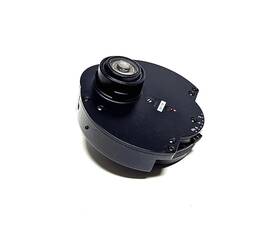
( Brand: Leica ), ( Manufacturer Part Number: 501159 ), ( Part Type: Oil Condenser )
Review LEICA 0.90/1.25 Oil S1 Ph 1/2 Df Bf Phase Contrast Microscope Condenser
The **Leica 501159 0.90/1.25 Oil S1 BF Phase Contrast Microscope Condenser** is a precision-engineered optical component designed to elevate the performance of phase contrast microscopy, enabling researchers and scientists to visualize transparent and unstained biological specimens with unprecedented clarity and contrast. This high-quality condenser is meticulously crafted to deliver superior illumination and phase shifting capabilities, making it an indispensable tool for cellular and microbiological studies. The dual-aperture design, featuring a **0.90 NA (numerical aperture) for brightfield illumination** and a **1.25 NA for phase contrast**, ensures optimal light transmission and phase shifting, allowing users to observe fine structural details in living cells, thin tissue sections, and other delicate specimens without the need for staining. The **S1 phase ring** is optimized for K hler illumination, providing a sharp, even field of view and minimizing halo effects, which is critical for accurate morphological analysis. Constructed with Leica s signature attention to optical precision, this condenser incorporates high-quality glass elements and anti-reflective coatings to maximize light efficiency and minimize aberrations, ensuring long-term reliability and consistent performance. Its robust, durable build is complemented by a threaded mount compatible with most standard microscope stands, making it a versatile addition to any laboratory setup. Whether used in educational, clinical, or research environments, the Leica 501159 condenser enhances the resolution and contrast of phase contrast microscopy, empowering users to explore the intricate details of biological specimens with confidence and precision.
The Leica 501159 0.90/1.25 oil S1 BF Phase Contrast Microscope Condenser is a high-quality optical component designed for advanced microscopy applications, particularly in biological and medical research. Below is a detailed analysis of its pros and cons, followed by a conclusion and recommendation.
---
### **Pros**
1. **Superior Phase Contrast Performance**
The condenser is optimized for phase contrast microscopy, which enhances the visibility of transparent and unstained specimens by converting phase shifts in light waves into amplitude differences. This is particularly useful for observing live cells, thin tissue sections, and other transparent biological samples where staining would be detrimental.
2. **High Numerical Aperture (NA) Range**
The condenser offers a numerical aperture range of 0.90 to 1.25, which allows for high-resolution imaging. A higher NA (1.25) improves resolution and contrast, making it suitable for detailed observations of fine cellular structures. The adjustable NA range provides flexibility for different sample types and magnification levels.
3. **Oil Immersion Compatibility**
The condenser is designed for use with immersion oil, which reduces light scattering and increases resolution and contrast. This is essential for high-magnification work where maximum detail is required.
4. **Brightfield (BF) Compatibility**
The "S1 BF" designation indicates that the condenser is also compatible with brightfield illumination, offering versatility for different imaging techniques. This dual functionality allows users to switch between phase contrast and brightfield modes without needing additional hardware.
5. **Durability and Precision Engineering**
Leica is known for its high-quality optical components, and this condenser is built to precise tolerances. The materials and construction are designed to minimize aberrations and ensure long-term stability, which is critical for research applications where consistency is paramount.
6. **Compatibility with Leica Microscopes**
As a Leica product, this condenser is engineered to work seamlessly with Leica microscopes, ensuring optimal performance and integration with other components in the system. This compatibility reduces the risk of alignment issues and maximizes the microscope s capabilities.
7. **Enhanced Contrast for Thin Specimens**
Phase contrast is particularly effective for thin specimens where traditional brightfield imaging may fail to provide sufficient contrast. This condenser excels in such scenarios, making it invaluable for cytology, histology, and cell biology research.
8. **Minimal Light Loss**
High-quality phase contrast condensers are designed to minimize light loss, ensuring that the specimen remains well-illuminated even at high magnifications. This is important for maintaining image clarity and reducing the need for excessive illumination, which can damage samples.
9. **Adjustable Phase Ring**
The condenser likely includes an adjustable phase ring, which allows fine-tuning of the phase shift to optimize contrast for different samples. This flexibility is crucial for achieving the best possible results across a variety of applications.
10. **Long-Term Value**
Given Leica s reputation for durability and performance, this condenser is likely to remain functional and effective for many years, even with heavy use. This makes it a cost-effective investment in the long run, especially for research labs or educational institutions.
---
### **Cons**
1. **High Cost**
Leica products are generally expensive, and this condenser is no exception. The price may be prohibitive for individual researchers, small labs, or educational institutions with limited budgets. The cost must be justified by the specific needs of the user s work.
2. **Specialized Use Case**
While versatile, this condenser is primarily designed for phase contrast and brightfield microscopy. If the user s work does not heavily rely on these techniques, the investment may not be fully utilized. Specialized condensers like this are less versatile than universal condensers that support multiple illumination modes (e.g., phase contrast, DIC, fluorescence).
3. **Requires Compatible Microscope**
The condenser is optimized for use with Leica microscopes, which may limit its compatibility with non-Leica systems. Users with existing microscopes from other manufacturers may need to invest in additional adapters or consider compatibility issues, potentially adding to the overall cost.
4. **Maintenance and Calibration**
High-precision optical components like this condenser require careful handling and occasional calibration to maintain optimal performance. Users must be prepared to invest time and resources into maintenance, which may include cleaning, alignment, and occasional servicing by a professional.
5. **Learning Curve**
Phase contrast microscopy has a learning curve, particularly in terms of adjusting the phase ring and condenser settings to achieve the best contrast for a given sample. New users may require training or practice to fully utilize the condenser s capabilities, which could temporarily reduce productivity.
6. **Limited Availability of Spare Parts**
While Leica is a reputable brand, the availability of spare parts or replacements for older models may be limited over time. This could pose a challenge if the condenser requires repairs or upgrades in the future, potentially leading to downtime or increased costs.
7. **Overkill for Basic Applications**
For users who primarily work with stained samples, fluorescence, or other imaging techniques, the features of this condenser may be unnecessary. In such cases, a more general-purpose condenser or a different type of illumination system (e.g., fluorescence condenser) might be more appropriate.
8. **Alignment Sensitivity**
Phase contrast condensers can be sensitive to misalignment, which may affect image quality if not properly set up. This requires careful initial installation and periodic re-alignment, adding an extra layer of complexity to the user experience.
9. **Not Suitable for All Magnifications**
While the condenser s NA range is high, it may not be optimal for very low magnification work (e.g., below 10x). Users working across a wide range of magnifications may need to pair this condenser with other components to achieve consistent performance.
10. **Environmental Sensitivity**
Optical components like this condenser can be sensitive to environmental factors such as temperature fluctuations, humidity, and dust. Proper storage and handling are required to prevent damage, which may add to the operational overhead.
---
### **Conclusion**
The Leica 501159 0.90/1.25 oil S1 BF Phase Contrast Microscope Condenser is a high-performance optical component that excels in phase contrast and brightfield microscopy. Its strengths lie in its superior resolution, contrast enhancement, and compatibility with high-magnification work, making it an excellent choice for researchers, medical professionals, and educators who rely on these techniques. The condenser s precision engineering, durability, and versatility for different sample types further reinforce its value in specialized applications.
However, the high cost, specialized nature, and potential maintenance requirements may not align with the needs of all users. It is particularly well-suited for labs or individuals whose work heavily involves live cell imaging, cytology, or other phase contrast applications where maximum contrast and resolution are critical. For users with broader imaging needs or tighter budgets, alternative condensers or illumination systems may be more practical.
---
### **Recommendation**
**Purchase this condenser if:**- Your primary microscopy work involves phase contrast or brightfield imaging of transparent or unstained specimens (e.g., live cells, thin tissue sections).
- You are using or plan to use a Leica microscope, as compatibility is crucial for optimal performance.
- Your budget allows for a high-quality, specialized optical component that will provide long-term value and high-resolution imaging.
- You require the flexibility of adjustable NA and phase ring settings to optimize contrast for different samples.
- You are working in a research, medical, or educational setting where precision and durability are non-negotiable.
**Avoid purchasing this condenser if:**- Your microscopy needs are primarily focused on other techniques (e.g., fluorescence, differential interference contrast, or electron microscopy).
- You are working with stained samples or applications where phase contrast is not essential.
- Your budget is constrained, and you can achieve similar results with a more affordable, multi-purpose condenser.
- You do not have access to a Leica microscope or are unwilling to invest in additional adapters for compatibility.
- You lack the expertise or resources to properly maintain and align the condenser.
**Alternative Considerations:** If the cost or specialized nature of this condenser is a concern, consider the following alternatives:- **Universal Condensers:** These support multiple illumination modes (e.g., phase contrast, brightfield, DIC) and may offer better value for users with diverse needs.
- **Budget-Friendly Phase Contrast Condensers:** Brands like Olympus, Nikon, or Zeiss offer high-quality phase contrast condensers at lower prices, though they may not match Leica s precision.
- **Used or Refurbished Options:** Leica condensers can sometimes be found pre-owned in good condition at a reduced cost, though this requires careful inspection for damage or misalignment.
- **Condensers with Lower NA:** If your work does not require the highest resolution, a condenser with a lower NA range (e.g., 0.65 1.0) may suffice while reducing costs.
Ultimately, the Leica 501159 condenser is a premium choice for users who prioritize performance and are working within its optimal use case. For others, a more versatile or cost-effective alternative may be a better fit.
Details:
LEICA 0.90/1.25 OIL S1 PH 1,2,3,DF,BF PHASE CONTRAST MICROSCOPE CONDENSER 501159, Clean. In Very Good Condition.
specifications microscopepartzo:
- brand: Leica
- mpn: 501159
- part type: Oil Condenser
seller microscopepartzo:
- # reviews: 4899
- rating: 100.0%
- city: Peoria, Arizona
general microscopepartzo:
- Medical/Lab Equipment Attachments Accessories > Microscope Parts Accessories > Other Microscope Parts Accessories
- condition: Used
returns microscopepartzo:
- policy: No Returns
offer microscopepartzo:
- quantity: 1
- sold: 0
- started: February 4, 2026
- options: Ship-to-home
- availability: In Stock
payments microscopepartzo:
- wallet: Apple-pay
- credit card: Mastercard
- other
shipping microscopepartzo:
- transit: 3-7 Days
- cost: $0.00
- type: Fixed
- class: Economy
- service: Economy
Leica 501159 Is Similar To:
- Microscope Plan Long-barrel 1x Achromat 0.025 Iris Infinity Leica Objective (18.1% similar) Make sure your microscope will truly accommodates very long lens that measures 55MM vertically. 706, conforming to the RMS standard, with aperture iris, and is infinity corrected. The objective has a mounting thread 20. Leica 1x plan achromatic iris infinity long barrel microscope objective Leica 1x...(January 25th, 2015)
- Leica Microscope Tube Photo 0.66x mount 2 35mm Trinocular Efocus Adapter Port (27.8% similar) This adapter is suited for 1/2 and 1/3 image sensor chips microscope picture using is capture. 66X Leica ex focus microscope camera port para focal adapter to 35MM photo tube c mount. The head attached to a modified microscope base. The device is designed to insert to any microscope which contains a...(January 26th, 2015)
- 4x Parts 0.67x Head Leica Block Microscope Gz6 Focus Repair (34% similar) ...(February 12th, 2015)
- 0.502.29553 Leica New Microscope Pressure Plate (31.5% similar) O microscope pressure plate b: RP inventory location: MF3 6-2 this offer is for a new Leica. A non-paying bidder case will automatically be initiated after this time. Please prior to sale for an accurate shipping quote. A credit card purchase is only shipped when the money transferred from ...(November 20th, 2018)
- 020-507.010 Leitz Leica Biomed Microscope Includes Objectives (35.5% similar) Leica LTZ boomed. 90 condenser eff LTZ OBJECTIVE4. 17 eff LTZ OBJECTIVE10 microscope wit Periclean 10X 18 eyepiece objective includes everything you see in the listing. 17 eff LTZ OBJECTIVE40 oil microscope pair of 10X 18 Periclean eyepieces stage with A0. You are buying on a working great condition...(April 2nd, 2018)
- 020-654.092-000 Leica Microsystems Microscope Beamsplitter (37.7% similar) Leica micro systems microscope misapplied...(July 18th, 2017)
- 090-132.103 Leica Dm Irb Microscope Frame Sold For Parts As Is (31% similar) This is my: a Leica Dem orb microscope frame sold for parts as. Pin to plug into the power supply are bent and receptacle is missing gone. Cases count against me even if they are resolved. Didn't try to power this up. Sold as is for parts. I am not overjoyed with whats happening, but have to roll it...(April 8th, 2018)
- 373450 Camera Heerbrugg Wild Leica Microscope 093-032.010 Film Leitz (24.3% similar) 010 film back cosmetic 8 as pictured. You are purchasing exactly what you see in the pictures. Glass optic clean glass with some minor cleaning marks. Mechanical problem none offer includes LTZ microscope camera...(February 9th, 2015)
- Adapter 0.5x Leica 1.0xlens Leitz Microscope 3 2 Camera Iso38 Olympus Nikon M4 (35.4% similar) Assembly pieces minus. The adapter uses a standard ISO 38MM x c mount LTZ Leica wild ISO 38. The device is designed to insert into any microscope which contains a 38MM photo port bottom lower portion of picture. 0x port adapter see picture below for separate parts. 0x with f mount. 54 5, 31, 6, 49 ...(February 13th, 2015)
- 10246634 Leica Wild 246634 Coaxial Microscope Illuminator (42.3% similar) 25X when installed. I will describe the item best as can based on visual inspection and my knowledge of. This unit is in excellent cosmetic and working condition has been tested on my microscope. The wild coaxial Illuminati has a magnification factor of a lamp is included. Cosmetics are clean and ...(February 26th, 2018)
- 10382162 Leica Microscope Objective Lens (33.3% similar) Priced for fast sale. 50 for continental USA. You are buying on a Leica microscope objective lens f 200MMPART 10382162THE is in new condition. Shipping and handling 18...(April 6th, 2018)
