OLYMPUS 7F07297 Fvx Td Transmitted Light Detector Fluoview Fvx-td
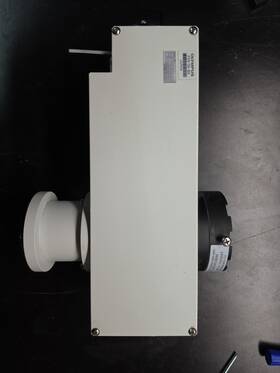
( Brand: Olympus ), ( Manufacturer Part Number: 7F07297 ), ( Model: FVX-TD-BX ), ( Part Type: Light Detector )
Review OLYMPUS Fvx td bx Transmitted Light Detector Fluoview
The Olympus FVX-TD-BX Transmitted Light Detector (model 7F07297) is a high-performance, versatile accessory designed to enhance the functionality of the Fluoview confocal laser scanning microscope system, enabling advanced imaging capabilities in transmitted light microscopy. This detector is engineered to provide superior optical clarity and sensitivity, making it an indispensable tool for researchers and scientists working in fields such as cell biology, histology, and materials science. By capturing transmitted light signals that pass through the sample, the FVX-TD-BX detector complements the existing fluorescence detection pathways, allowing for the simultaneous acquisition of both fluorescence and brightfield images. Its robust construction and precision-engineered components ensure minimal signal loss and maximum resolution, delivering crisp, high-contrast images that reveal fine structural details within biological tissues or synthetic materials. The detector features a high-efficiency photomultiplier tube (PMT) or complementary metal-oxide-semiconductor (CMOS) sensor, depending on the configuration, which is optimized to detect low-intensity light signals with exceptional sensitivity. This capability is particularly valuable for applications requiring the visualization of thin or transparent samples, where traditional fluorescence alone may not provide sufficient contrast. The FVX-TD-BX is seamlessly integrated with the Fluoview software suite, enabling intuitive control over detection parameters such as gain, offset, and exposure time, allowing users to fine-tune image acquisition for optimal results. Its modular design ensures compatibility with a wide range of Olympus confocal microscopes, making it a flexible solution for both research and clinical environments. Whether used for live-cell imaging, tissue section analysis, or material characterization, the FVX-TD-BX detector elevates the performance of the Fluoview system, offering researchers a powerful tool to unlock new insights from their samples.
### Pros and Cons of buying a Olympus FVX-TD-BX Transmitted Light Detector for the Fluoview System
#### **Pros**
1. **Enhanced Imaging Capabilities** The FVX-TD-BX detector improves the Fluoview system s ability to capture transmitted light signals, which is particularly useful for applications requiring high sensitivity in fluorescence imaging, such as live-cell imaging, calcium imaging, or low-fluorescence signal detection.
2. **Compatibility with Fluoview Systems** Designed specifically for Olympus Fluoview confocal microscopes, this detector ensures seamless integration without compatibility issues, allowing users to leverage existing hardware and software optimizations.
3. **Improved Signal Detection** Transmitted light detection complements standard fluorescence detection, enabling better visualization of sample autofluorescence, scattered light, or weak signals that may otherwise be obscured in standard epifluorescence or confocal modes.
4. **Versatility in Research Applications** Useful for experiments requiring both transmitted and fluorescence imaging, such as studying cell morphology alongside fluorescent markers, or for techniques like TIRF (Total Internal Reflection Fluorescence) where background signal reduction is critical.
5. **High Sensitivity and Low Noise** Olympus detectors are generally engineered for low noise and high sensitivity, which helps in capturing clearer images even in low-light conditions, improving the signal-to-noise ratio.
6. **Support for Advanced Imaging Techniques** The detector can be utilized in advanced imaging modalities like FRET (F rster Resonance Energy Transfer), FLIM (Fluorescence Lifetime Imaging), or other quantitative fluorescence techniques where transmitted light information adds value.
7. **Future-Proofing** Investing in a high-quality detector like this can extend the lifespan of your Fluoview system, allowing for upgrades or expansions in functionality without needing a complete overhaul of the setup.
---
#### **Cons**
1. **High Cost** Specialized detectors like the FVX-TD-BX are expensive, which may be a significant investment for researchers or labs with limited budgets. The price could be prohibitive for smaller institutions or individual users.
2. **Limited Use Case Specificity** While versatile, the detector is optimized for transmitted light detection. If your primary work does not heavily rely on transmitted light imaging, the added cost may not justify the purchase.
3. **Maintenance and Calibration Requirements** High-sensitivity detectors require regular maintenance, calibration, and potentially specialized training to operate effectively. This can add ongoing costs and technical overhead.
4. **Complexity in Workflow** Integrating transmitted light detection may require adjustments to imaging protocols, software settings, or sample preparation, which could introduce a learning curve for users unfamiliar with the technique.
5. **Potential Overlap with Existing Hardware** Some Fluoview systems may already include basic transmitted light capabilities (e.g., differential interference contrast or brightfield). If these are sufficient for your needs, the FVX-TD-BX may offer marginal improvements at a high cost.
6. **Vendor Lock-In** Olympus-specific detectors may limit flexibility if you ever consider switching to alternative microscope systems or detectors from other manufacturers in the future.
7. **Space and Logistical Constraints** Adding a transmitted light detector may require adjustments to your microscope setup, such as additional space for the detector or modifications to the optical path, which could be challenging in compact lab environments.
---
### **Conclusion**
The Olympus FVX-TD-BX transmitted light detector is a powerful tool for researchers who rely on high-sensitivity fluorescence imaging with transmitted light capabilities. Its strengths lie in its ability to enhance signal detection, improve imaging versatility, and support advanced techniques that benefit from transmitted light data. However, the high cost, potential overkill for non-specialized applications, and maintenance requirements must be carefully considered before purchasing.
If your work involves live-cell imaging, low-fluorescence signal detection, or techniques where transmitted light provides critical information (e.g., calcium imaging, FRET, or TIRF), the FVX-TD-BX is a valuable investment. Conversely, if your existing Fluoview system already meets your imaging needs without transmitted light detection, the added expense may not be justified.
---
### **Recommendation**
**Purchase the FVX-TD-BX if:**- Your research requires transmitted light detection for improved sensitivity or specificity (e.g., live-cell imaging, weak fluorescence signals, or combined fluorescence/brightfield studies).
- You are working on advanced imaging techniques (e.g., FLIM, FRET) where transmitted light data adds significant value.
- Your budget allows for the investment, and you anticipate long-term use of the Fluoview system.
**Avoid purchasing the FVX-TD-BX if:**- Your current Fluoview setup already satisfies your imaging needs without transmitted light detection.
- The cost is prohibitive relative to your lab s budget or the frequency of use.
- You lack the technical resources or expertise to maintain and optimize the detector effectively.
- Your primary applications do not benefit from transmitted light imaging (e.g., standard fixed-sample fluorescence imaging).
For labs on a tight budget or those unsure about the detector s necessity, consider renting or borrowing the equipment first to test its utility before committing to a purchase. Additionally, consult with colleagues or Olympus representatives to assess whether alternative detectors or configurations might better suit your specific needs.
Details:
Working well. The item has been cleaned and handled in accordance with the manufacturers instructions.
part #: 7f07297 prices
- $199.95-$395.00
specifications microscopepartzo:
- brand: Olympus
- mpn: 7f07297
- model: Fvx-td-bx
- part type: Light Detector
returns microscopepartzo:
- method: Money back
- policy: Returns Accepted
- time: 30 Days
- paid by: Buyer
payments microscopepartzo:
- wallet: Google-pay
- other
- credit card: Mastercard
offer microscopepartzo:
- availability: In Stock
- sold: 0
- started: April 27, 2026
- quantity: 1
- best offers: True
- options: Ship-to-home
shipping microscopepartzo:
- cost: $0.00
- carrier: USPS
- type: Calculated
- transit: 4-10 Days
- service: USPS Ground Advantage
- class: Standard
general microscopepartzo:
- condition: Used
- Medical/Lab Equipment Attachments Accessories > Microscope Parts Accessories > Other Microscope Parts Accessories
seller microscopepartzo:
- # reviews: 3305
- city: Miami, Florida
- rating: 99.7%
Olympus 7F07297 Is Similar To:
- 1-25p-ahlx-4 Arcturus Labs Iphone Microscope Adapter For Photoport Leitz Nikon Olympus (9.3% similar) They clamp on to the viewing ocular but this prevents microscope from being used with your camera in position these inclined oculars. This one unit is for the iPhone 4 or 4S. Be sure it is 1x without an optic. Also works on microscopes usually inverted type with side camera ports and 1x c-mount ...(April 30th, 2018)
- 1-u2b527 Uplfln40x Olympus Plan Fluorite Objective For Microscope (26.2% similar) 51MM new Olympus part number 1-U2B527 current list price, Ed. Olympus u plan fluorite 4x objective for microscope new UPLFLN40X 40X Na...(July 2nd, 2018)
- 1-u2c227 Pln40xph Olympus Plan Achro Phase Objective For Microscope (36.4% similar) 065 PH2 infinity corrected. Olympus plan achoo 40X phase objective for microscope new 17 FN22 new Olympus part number 1-U2C227 PLN40XPH current list price 747...(June 27th, 2018)
- 1-ub053 Olympus Plc10x-2 Objective For (36.9% similar) 5MM new designed for the Olympus ch microscope part number 1-UB053 list price, Ed. Olympus PLC10X plan achromatic 10X objective, Na...(April 1st, 2017)
- 1-ub135 Ach100xo Olympus Achromat 100x Objective For (30.8% similar) 13MM new Olympus part number 1-UB135 current list price, Ed. Olympus 100X achromatic oil objective for microscope new 1-UB135 ACH100XO objective, Na...(December 28th, 2016)
- 1-uc351 Olympus Lcplanfl Phase Objective For The Ix Ckx Series Inverteds (33.6% similar) Olympus 60X phase contrast long working distance objective for the ix, IX2, IX3 ck series inverted microscopes...(July 21st, 2018)
- 100303 Olympus Lot Of Endoscopy Biopsy Valve Irrigator For Endoscopes (32.8% similar) If the item is shipped to a us. Once it is signed for by the us. Items being sold as for parts only are final sale. Flat rate fees are for continental us shipping only. Up for sale. Exporter only...(September 5th, 2018)
- 2-u710 Olympus Pe Projection Lens For Microscope Phototube (34.1% similar) Olympus pe 2XVIDEO photo projection lens 2x 125 used good condition part number 2-U710 list price 743...(February 4th, 2019)
- Daylight Lbd Filter 20lb03 Olympus Light Bh2 Balancing (28.3% similar) See photographs. Slight discoloration in of filter. Light balancing daylight filter lbs 20LB03 w for use with BH2 um universal vertical Illuminati attachment for color temperature conversion to daylight quality. Not tested however the 20LB03 w filter was inspected thoroughly and appear in good ...(February 17th, 2015)
- 260300 Olympus Base For Microscope Boomstand (33% similar) Most questions are answered in less than 24 hours. To place an order for procurement, please the button. There may be rigging, crating or pelleting charges depending upon the item purchased. Larger capital equipment which requires crating may require a longer time to build the crate...(February 15th, 2017)
- 32lbd Olympus Light Balancing Filter Bx (36.5% similar) Power cords and adapters are never included unless specifically mentioned. Warranty this item is guaranteed to be as described. Good luck buying. This unit will arrive in the condition shown. It comes with a 14 day guarantee against being DOA from receipt. On the ask a question link at bottom of ...(October 7th, 2018)
