SUTTER INSTRUMENT / HORIBA SCIENTIFIC 840-070800 Motorized Filter Wheel Automated Polarizer Mount
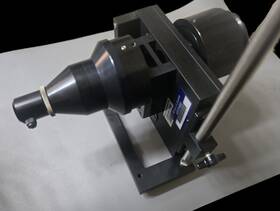
( Brand: Sutter Instrument / Horiba Scientific ), ( Manufacturer Part Number: 840-070800 ), ( Part Type: Instrument Filter Wheel Mount ), ( Country Of Origin: United States ), ( Intended Use/discipline: Biological Laboratory, Medical Laboratory, Microbiological Laboratory, Fluorescence Microscopy, Automated Imaging, Spectroscopy / Spectrophotometry, Machine Vision, Laser System Tuning, Photometry Color Photography, Materials Science )
Review SUTTER INSTRUMENT / HORIBA SCIENTIFIC Motorized Filter Wheel And Automated Polarizer Mount
The **Sutter Instrument (Horiba Scientific) 840-070800 Motorized Filter Wheel with Automated Polarizer Mount** is a high-performance, precision-engineered optical component designed to elevate the capabilities of fluorescence microscopy, confocal imaging, and other advanced light-based research applications. Engineered for seamless integration into automated imaging systems, this filter wheel combines robust mechanical reliability with exceptional optical clarity, ensuring consistent and reproducible results across a wide range of experimental setups. The motorized design eliminates manual adjustments, enabling fully automated control of filter changes and polarizer positioning through software interfaces such as MetaMorph, Manager, or other lab automation platforms. This feature is particularly valuable for time-lapse imaging, multi-channel fluorescence studies, and high-throughput screening, where precision and speed are critical.
Constructed with a durable aluminum housing, the filter wheel is built to withstand rigorous laboratory conditions while maintaining minimal vibration and backlash, which is essential for maintaining image stability during long acquisition sessions. The automated polarizer mount, a standout feature, allows for precise and repeatable adjustments of polarization angles, a capability that is indispensable for studies involving birefringence, circular dichroism, or polarized light microscopy. The mount s smooth, low-friction mechanism ensures that polarizer orientation can be fine-tuned with micrometer-level accuracy, while the motorized control allows for seamless synchronization with filter changes, streamlining complex imaging protocols.
Optically, the filter wheel is designed to accommodate a variety of standard filter cubes, including excitation, emission, and dichroic filters, with a clear aperture that maximizes light transmission and minimizes signal loss. The use of high-quality, low-scatter materials in the wheel s construction further enhances image quality by reducing stray light and ghosting artifacts. The automated nature of the system also facilitates the implementation of sophisticated imaging workflows, such as rapid switching between multiple fluorescence channels or dynamic polarization studies, where real-time adjustments are necessary. Whether used in conjunction with widefield, confocal, or total internal reflection fluorescence (TIRF) microscopy, this filter wheel ensures that researchers can achieve the highest resolution and contrast with minimal operational complexity.
Ideal for both academic and industrial research environments, the Sutter Instrument 840-070800 is compatible with a broad spectrum of microscope models, making it a versatile addition to any imaging laboratory. Its seamless integration with existing automation systems, combined with its precision engineering and reliability, positions it as an indispensable tool for researchers seeking to push the boundaries of optical imaging. By automating what would otherwise be labor-intensive processes, this filter wheel not only saves valuable time but also reduces the potential for human error, ultimately contributing to more consistent and reproducible scientific outcomes.
**Pros and Cons of buying a Sutter Horiba Scientific 840-070800 Motorized Filter Wheel with Automated Polarizer Mount**
### **Pros**
1. **Precision and Automation** The motorized filter wheel allows for precise, automated control of filter changes, reducing manual errors and improving consistency in experiments. This is particularly useful in fluorescence microscopy, where quick and accurate filter switching is critical.
2. **Compatibility with Microscopes** Designed for integration with Sutter and Horiba Scientific microscopes, this filter wheel ensures seamless compatibility with existing setups. It is also compatible with other systems that support standard filter cube dimensions, expanding its utility.
3. **Automated Polarizer Mount** The inclusion of an automated polarizer mount enhances flexibility in experiments requiring polarization control (e.g., birefringence studies, polarized light microscopy). This feature streamlines workflows that would otherwise require manual adjustments.
4. **High Durability and Reliability** Sutter and Horiba Scientific are reputable brands known for high-quality optical and imaging equipment. This unit is likely built to withstand frequent use in laboratory settings, reducing downtime due to mechanical failure.
5. **Software Integration** The motorized operation is likely controlled via software (e.g., MetaMorph, Micro-Manager, or LabVIEW), enabling synchronization with other microscope components (e.g., shutters, cameras, and stage motors). This integration simplifies complex imaging protocols.
6. **Reduced User Fatigue** Manual filter wheel operation can be tedious, especially during long imaging sessions. The motorized version eliminates the need for constant manual intervention, improving efficiency and reducing operator strain.
7. **Versatility in Applications** Suitable for a wide range of microscopy techniques, including fluorescence, confocal, and polarized light microscopy. Researchers working in biology, materials science, or physics may find this tool valuable for their specific needs.
8. **Long-Term Cost Efficiency** While the initial investment is higher than manual alternatives, the automation and precision offered can save time and resources in the long run, particularly in high-throughput or large-scale research projects.
---
### **Cons**
1. **High Initial Cost** Motorized filter wheels and automated mounts are significantly more expensive than manual alternatives. This may be a barrier for smaller labs, students, or researchers on tight budgets.
2. **Maintenance and Calibration** Motorized components require periodic maintenance, including cleaning, lubrication, and potential recalibration to ensure accurate and reliable performance. This adds to the long-term operational costs.
3. **Complexity in Setup** Integrating a motorized filter wheel into an existing microscope system may require technical expertise, especially if software configuration or hardware modifications are needed. This could involve additional time and support from technicians.
4. **Potential for Mechanical Issues** Like any motorized device, there is a risk of mechanical failures (e.g., motor burnout, misalignment, or electronic malfunctions). These issues could disrupt experiments and require repairs or replacements.
5. **Learning Curve** Users unfamiliar with automated microscopy systems may need training to operate the filter wheel effectively, particularly in controlling software and troubleshooting issues. This could slow down initial adoption.
6. **Power Dependency** The motorized function relies on a power source (e.g., USB or external power supply). Power outages or equipment malfunctions could temporarily disable the system, requiring manual fallback options.
7. **Limited Customization** While the unit is versatile, it may not support custom filter configurations or non-standard filter sizes without additional adapters or modifications, which could incur extra costs.
8. **Compatibility Limitations** Although designed for Sutter/Horiba systems, compatibility with third-party microscopes may vary. Users should verify compatibility with their specific setup before purchasing to avoid compatibility issues.
---
### **Conclusion**
The Sutter Horiba Scientific 840-070800 motorized filter wheel with automated polarizer mount is a high-quality tool that significantly enhances precision, automation, and versatility in microscopy applications. Its advantages in terms of speed, consistency, and integration with advanced imaging techniques make it a valuable investment for research labs engaged in complex or high-volume experiments. However, the high cost, maintenance requirements, and potential complexity of setup may pose challenges, particularly for smaller labs or individual researchers.
### **Recommendation**
**Purchase this unit if:**- You work in a research environment where automation, precision, and efficiency are critical (e.g., fluorescence imaging, polarized light microscopy, or high-throughput screening).
- Your budget allows for the initial investment, and you can account for long-term maintenance costs.
- Your microscope setup is compatible with Sutter/Horiba systems, or you are willing to verify compatibility with your existing equipment.
- You have access to technical support or personnel with experience in setting up automated microscopy systems.
**Avoid purchasing this unit if:**- Your budget is constrained, and a manual filter wheel or a lower-cost automated alternative would suffice for your needs.
- Your experiments do not require the advanced features (e.g., polarization control) offered by this specific model.
- You lack the technical resources to integrate or maintain the system, as this could lead to operational disruptions.
- You anticipate minimal use of the motorized features, making a manual filter wheel a more cost-effective choice.
For researchers who prioritize performance and automation, this filter wheel is a strong recommendation. For those with simpler needs or limited resources, exploring alternative options (e.g., manual filter wheels or lower-end motorized alternatives) may be more practical.
Details:
Key Features. High-Speed Switching: designed for rapid transition between optical filters or polarization states typically. Up for sale is a high-precision Motorized Filter Wheel Assembly, commonly utilized in fluorescence microscopy, spectroscopy, and advanced imaging applications. This unit features a robust stepper motor drive and is mounted on stable dual-rod support system for seamless integration into an optical bench or microscope light path.
part #: 840070800 price
- $412.00
specifications microscopepartzo:
- brand: Sutter Instrument / Horiba Scientific
- mpn: 840-070800
- part type: Instrument Filter Wheel Mount
- country of origin: United States
- intended use/discipline: Biological Laboratory, Medical Laboratory, Microbiological Laboratory, Fluorescence Microscopy, Automated Imaging, Spectroscopy / Spectrophotometry, Machine Vision, Laser System Tuning, Photometry Color Photography, Materials Science
returns microscopepartzo:
- policy: No Returns
payments microscopepartzo:
- other
- credit card: Discover
- wallet: Google-pay
general microscopepartzo:
- Medical/Lab Equipment Attachments Accessories > Microscope Parts Accessories > Other Microscope Parts Accessories
- condition: Used
offer microscopepartzo:
- started: March 14, 2026
- sold: 0
- best offers: True
- availability: In Stock
- quantity: 1
- options: Ship-to-home
seller microscopepartzo:
- city: Folsom, California
- rating: 100.0%
- # reviews: 85
shipping microscopepartzo:
- transit: 5-11 Days
- class: Standard
- service: USPS Ground Advantage
- carrier: USPS
- cost: $8.81
- type: Calculated
Sutter Instrument / Horiba Scientific 840-070800 Is Similar To:
- 10-n27-lh Sutter Instruments Lamphouse Adapter For Nikon Microscope Instrument (36.5% similar) ...(April 3rd, 2018)
- Parts Lambda-10 Controller Optical Axon Wheel Sutter Lab Changer Filter (27.6% similar) Do not lift up on the top plastic sheet or it'll make a mess. Please review images thoroughly before purchasing. Save packaging for carrier claim. Display turns on but no digits appear on screen, just blocks. All parts, including accessories and cables are only included if pictured or listed in the...(January 28th, 2015)
- Lambda 10-b-iq Sutter Instruments Filter (33.6% similar) The serial port accepts RS232 level signals through a DB-9 connector. Please be advised this is used item cosmetic condition could estimated as both serial and USB input ports are provided to allow complete easy control from a remote computer. USB input is made through a standard connector and can ...(September 23rd, 2017)
- Lb-ls-30 Sutter Instrument Lambda Ls (30.2% similar) Info: the shipping price is only for us 48 contiguous states...(April 4th, 2017)
- Lb10 Sutter Dual 10 Filter (27.9% similar) Equipment is tested to power up and basic functions only. Photos accurately show the condition of item. Sutter dual 10 filter wheels w IQ shutter, Zeus's flanges, LB10 WDIQ-118 new: new, see pictures for condition dual stack 18 positions. We combine shipping charges when possible. Some equipment is ...(December 14th, 2017)
- Lbls-30 Sutter Instrument Lambda Xenon Arc Lamp (37.3% similar) The lambda ls utilizes a compact design, which places power supply, lamp house, arc lamp, and cold mirror in single enclosure. An optional enhanced UV bulb produces output much lower into the cut off near 200NM. In the standard configuration, lambda ls bulb is capable of producing light output from ...(March 4th, 2018)
- Mp-225 Sutter Intruments Instrument Company Controller For Micromanipulator (39.3% similar) Sutter Instrument company MP-225 w controller for micro manipulator...(May 14th, 2018)
- Mp-85 Sutter Instrument Company Style Micromanipulator (42% similar) Further testing may be possible on request. All testing that misdone, is done to the best of our capabilities. Item MP-85 Huxley-wall micro manipulator this unit is in nice, working condition. Please pay close attention to the listing for information regarding any warranty. Power supply cable is not...(March 2nd, 2018)
- Dg4 Dg5 Dg-4 Sutter Instrument Company Lambda W Light Guide Microscope Adapter (35.4% similar) The dual galvanometer design of the lambda dag 4 dag 5 plus allows tuning of the relative intensities at each wave length . New bulbs are direct insertion of neutral density optical filters is also possible in the filter holders at any of the four optical channels. 2MSEC vertical retrace period of a...(December 26th, 2015)
- Sutter Instrument Co Lb10w-1945 Filter Wheel (47.6% similar) Stepper motor rotates to suit a selection of filters 10 positions caps on both sides open with coin and permit changing. From flange. Filters can be rotated manually on face opposite motor. Gross dimensions: 5 x 5IN.BY 1 thickness, bore of flange is 32MM...(August 1st, 2024)
- Sutter Lb10w-1811 Electrical 10-slot Filter Wheel Optical Microscope (40.9% similar) Sutter LB10W-1811 filter wheel optical 10 slots microscope electrical adjust used, see photos. Wheel spins freely...(August 8th, 2024)
