NIKON 99020 Fluorescence Filter Cube Microscope Block 801234541693 1FW
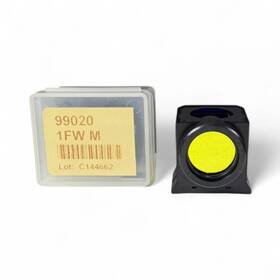
( Brand: Nikon ), ( Manufacturer Part Number: 99020 ), ( Model: 99020 1FW ), ( Part Type: Filter Block ), ( Country Of Origin: Japan ), ( Unit Type: Unit ), ( Intended Use/discipline: Biological Laboratory, Dental Laboratory, Medical Laboratory, Microbiological Laboratory, Physical Laboratory ), ( UPC: 801234541693 )
Review NIKON 1fw Fluorescence Filter Cube Microscope Block
The **Nikon 99020 1FW Fluorescence Filter Cube** is a high-performance optical accessory meticulously designed for advanced fluorescence microscopy, offering unparalleled precision and versatility for researchers and scientists working in biological, medical, and materials science disciplines. Engineered to meet the rigorous demands of modern fluorescence imaging, this filter cube block integrates a sophisticated combination of excitation, emission, and dichroic filters within a robust, durable housing, ensuring optimal light separation and minimal signal loss. The 1FW designation signifies its compatibility with a broad spectrum of fluorescence applications, particularly those involving far-red and near-infrared fluorophores, making it an ideal choice for studying deep-tissue imaging, live-cell tracking, or multi-channel experiments where high sensitivity and reduced phototoxicity are critical. Constructed with Nikon s signature attention to optical clarity, the filter cube employs precision-machined glass elements and high-quality dielectric coatings to maximize light transmission while maintaining sharp, high-contrast imaging. Its modular design allows for easy installation into Nikon s range of inverted and upright fluorescence microscopes, including the Ti-E, Ti2, Eclipse, and Ti-S series, ensuring seamless integration with existing setups. The robust mechanical construction, combined with a durable aluminum frame, protects the delicate optical components from mechanical stress and environmental fluctuations, guaranteeing long-term reliability and consistent performance. Whether used for single-channel imaging of GFP, RFP, or Cy5 dyes, or for complex multi-label experiments requiring precise spectral separation, the 99020 1FW filter cube delivers exceptional optical performance, enabling researchers to capture high-resolution, low-noise fluorescence signals with confidence. Its compatibility with Nikon s advanced imaging technologies, such as perfect focus systems and high-speed cameras, further enhances its utility in dynamic imaging applications, making it an indispensable tool for pushing the boundaries of fluorescence microscopy.
### **Pros and Cons of buying a Nikon 99020 1FW Fluorescence Filter Cube for a Microscope Block**
#### **Pros:**1. **Compatibility with Nikon Microscopes** This filter cube is specifically designed for Nikon fluorescence microscopes, ensuring seamless integration with models like the Eclipse, Ti, or Ti2 series. It reduces the risk of compatibility issues that may arise with third-party or generic filter cubes.
2. **High-Quality Optics** Nikon is known for precision engineering, and this filter cube is built to maintain optical clarity and minimize light loss, which is crucial for fluorescence imaging where signal strength is critical.
3. **Standardized Fluorescence Filters** The 1FW (1x Fluorescence Wideband) configuration is a common choice for general fluorescence applications, including DAPI, FITC, and TRITC staining. This makes it versatile for a wide range of biological and medical research tasks.
4. **Durability and Reliability** Nikon components are generally built to last, with sturdy construction that resists wear and tear over extended use. This reduces the likelihood of frequent replacements or malfunctions.
5. **Easy Installation and Replacement** The design is standardized for Nikon microscopes, making installation straightforward. If maintenance is needed, replacements are readily available from Nikon or authorized dealers.
6. **Support for Multiple Fluorescent Dyes** While optimized for certain wavelengths, the 1FW cube can accommodate a broad spectrum of fluorescent markers, making it adaptable for various staining techniques without requiring multiple filter cubes.
7. **Warranty and Customer Support** Purchasing directly from Nikon or an authorized reseller typically includes warranty coverage and access to technical support, which can be invaluable for troubleshooting or repairs.
---
#### **Cons:**1. **Cost** Nikon products, especially high-quality optical components like filter cubes, are often more expensive than generic or third-party alternatives. This may be a significant investment for researchers or institutions on a tight budget.
2. **Limited Customization** Unlike some third-party filter cubes that offer adjustable or modular designs, the 1FW cube is a fixed configuration. If your research requires highly specialized or narrowband filters, you may need additional cubes or modifications.
3. **Compatibility Restrictions** While designed for Nikon microscopes, it will not work with non-Nikon systems (e.g., Leica, Zeiss, or Olympus). If you plan to upgrade or use multiple microscope brands, this could become a limitation.
4. **Potential for Obsolete Parts** Older Nikon microscope models may not support newer filter cube designs, and vice versa. Ensure that the 99020 model is compatible with your specific microscope model to avoid future upgrades being hindered.
5. **Maintenance and Cleaning Challenges** Fluorescence filter cubes can accumulate dust or debris over time, which may affect performance. Cleaning them requires careful handling to avoid scratching optical surfaces, and improper cleaning can void warranties.
6. **Dependence on Nikon Ecosystem** If you rely on Nikon for accessories, consumables, or software, you may find yourself locked into their ecosystem. This can be less flexible than using open-standard or multi-brand compatible equipment.
7. **Learning Curve for Fluorescence Imaging** Even with the right filter cube, mastering fluorescence microscopy requires understanding excitation/emission spectra, filter alignment, and sample preparation. The filter cube alone does not compensate for poor technique or suboptimal staining.
---
### **Conclusion:**The **Nikon 99020 1FW Fluorescence Filter Cube** is a high-quality, reliable choice for researchers using Nikon microscopes who require a versatile and standardized fluorescence solution. Its strengths lie in compatibility, durability, and optical performance, making it ideal for general fluorescence applications in biological and medical research. However, its higher cost, limited customization, and brand-specific restrictions may not suit all users, particularly those with budget constraints or diverse microscope setups.
If your primary microscope is a Nikon system and you need a dependable, off-the-shelf fluorescence solution, this filter cube is a strong recommendation. For users requiring specialized filters, broader compatibility, or cost-effective alternatives, exploring third-party options or consulting with a microscope specialist may be advisable.
### **Recommendation:** **Buy the Nikon 99020 1FW Fluorescence Filter Cube if:**- You own a Nikon microscope (e.g., Eclipse, Ti, or Ti2 series).
- You need a reliable, standardized filter cube for general fluorescence imaging (DAPI, FITC, TRITC).
- You prioritize long-term durability and Nikon s optical quality.
- You are willing to invest in a premium, brand-specific solution with warranty support.
**Consider alternatives if:**- You are working with a non-Nikon microscope and need cross-brand compatibility.
- Your budget is limited, and you are open to third-party filter cubes with similar specifications.
- You require highly specialized or narrowband filters not covered by the 1FW configuration.
- You plan to frequently upgrade or switch microscope brands in the future.
Details:
The Nikon 99020 1FW M Fluorescence Filter Cube is a microscope filter block designed for fluorescence imaging applications. The protective plastic case displays light handling marks and minor scuffs. Brand: Nikon model: 99020 1FW M Fluorescence Filter Cube model Number/MPN: Includes: One filter cube in a protective case Country of Manufacture: Japan Functional Testing: Tested and fully functional, The microscope exhibits excellent cosmetic condition with minimal signs use. It contains the necessary optical filters and dishrag mirror to enable specific wave length excitation emission, making it suitable for fluorescence microscopy setups requiring precise separation.
part #: 99020 price
- $224.10
specifications microscopepartzo:
- brand: Nikon
- mpn: 99020
- model: 99020 1fw
- part type: Filter Block
- country of origin: Japan
- unit type: Unit
- intended use/discipline: Biological Laboratory, Dental Laboratory, Medical Laboratory, Microbiological Laboratory, Physical Laboratory
- upc: 801234541693
general microscopepartzo:
- Medical/Lab Equipment Attachments Accessories > Microscope Parts Accessories > Other Microscope Parts Accessories
- condition: Used
shipping microscopepartzo:
- service: UPS Ground, Expedited
- transit: 3-7 Days
- type: Fixed
- class: Standard, Expedited
- cost: $0.00
- carrier: UPS
offer microscopepartzo:
- options: Ship-to-home
- best offers: True
- started: March 31, 2026
- quantity: 1
- sold: 0
- availability: In Stock
payments microscopepartzo:
- credit card: Mastercard
- other
- wallet: Google-pay
returns microscopepartzo:
- policy: Returns Accepted
- time: 30 Days
- paid by: Buyer
- method: Money back
seller microscopepartzo:
- city: Fairfield, California
- rating: 99.9%
- # reviews: 2116
Nikon 99020 Is Similar To:
- Mrd00100 Nikon Eclipse Microscope Plan Apo Dic Infinity Objective (38.4% similar) Original, new MRD00100. Working distance. List price: 1, comes with original capsule for protection when stored...(March 11th, 2018)
- 0.001mm Micrometer Microscope Vernier Nikon (43.1% similar) Received as surplus manufacturer Nikon vernier model could not find one do not know much about microscopes it moves back and forth and the rod goes in and out I am unable to test any further that is why I have to sell for parts or repair I only have what is pictured if you would like more pictures ...(February 2nd, 2015)
- 0.075 Nikon Optiphot Objective Plan Lens 2.5x 210 0 Microscope (41.3% similar) Posted with mobile. Nikon m plan 5x objective used for uptight and other microscopes. Beautiful clear, clean optics, no scratches on the tube...(January 18th, 2015)
- Adaptor Lens 0.55x Relay Tv Microscope Brand Nikon mount (36.2% similar) 55X c mount adapter for Nikon e2 e4 e8 50 55, ci, ts, LV150 series MQD42055 Nikon oem LV100 LV150 L200 300MM 800 400 microscope...(January 4th, 2015)
- 0.8-3.5x Stereo Zoom Sell Body Priced Microscope Smz-445 Nikon 45 Whs5 (30.5% similar) 5x 45 body great deal new in box priced to sell. Nikon DMZ 445 zoom stereo microscope...(January 21st, 2015)
- 0.27x Nikon Objective Lens For Microscope (46% similar) No manuals,no standard power cords, even if it appears in the photo, accessories, software etc are included unless pictured and noted. You can also after a sale if have return issues or any other concerns. All equipment is sold-as-is. All statements regarding products and their configurations are ...(February 9th, 2017)
- 021659 Nikon Binocular Teaching Microscope Head (43.4% similar) Nikon binocular teaching microscope head...(December 3rd, 2018)
- 032043 And 032061 Nikon Double Trinocular Head For Microscope Good Cosmetic Condition (33.3% similar) As shown in the photos. Shipping: if there is a shipping cost shown in the offer, it for continental us 48 states. Please look closely at the pictures. The lens appear to be scratch free. This item is in good cosmetic condition. Unable to test due lack of necessary equipment needed. Item is sold as ...(May 23rd, 2018)
- 05labonikon Nikon Labophot Microscope Camera Kit Lens Dx Apophot Opti Alp (30.3% similar) A Nikon t2 bayonet and to c mount with. 5x lens for SLR or milch cameras. Camera model's adapter attached to Nikon with an AP's-c sensors in particular the DX. This allows you to use. See example pictures below. 2 no adapter used ,30, and 30. If your microscope has this tube inside you can use the ...(April 9th, 2018)
- Adapter 0.5x Leica 1.0xlens Leitz Microscope 3 2 Camera Iso38 Olympus Nikon M4 (27.7% similar) Assembly pieces minus. The adapter uses a standard ISO 38MM x c mount LTZ Leila wild ISO 38. The device is designed to insert into any microscope which contains a 38MM photo port bottom lower portion of picture. 0x port adapter see picture below for separate parts. 0x with f mount. 54 5, 31, 6, 49 ...(February 13th, 2015)
- 1-25p-ahlx-4 Arcturus Labs Iphone Microscope Adapter For Photoport Leitz Nikon Olympus (23.4% similar) They clamp on to the viewing ocular but this prevents microscope from being used with your camera in position these inclined oculars. This one unit is for the iPhone 4 or 4S. Be sure it is 1x without an optic. Also works on microscopes usually inverted type with side camera ports and 1x c-mount ...(April 30th, 2018)
