OLYMPUS A432S Panametrics Ndt Standard Angle Beam Ultrasonic Transducer
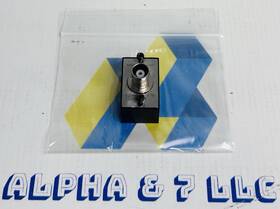
( Brand: Olympus ), ( Manufacturer Part Number: A432S ), ( Part Type: Angle )
Review OLYMPUS Panametrics Ndt Standard Angle Beam Ultrasonic Transducer
The **Olympus A432S Panametrics NDT Standard Angle Beam Ultrasonic Transducer** is a high-performance, precision-engineered tool designed for non-destructive testing (NDT) applications, particularly in the inspection of welds, castings, forgings, and other critical components where flaw detection and material integrity are paramount. This transducer operates on the principle of angle beam ultrasonics, utilizing a shear wave that propagates at a precisely calibrated angle typically 45 degrees, though variations may be available depending on the specific model variant to penetrate and reflect off internal discontinuities within the test material. The A432S series is renowned for its reliability, durability, and consistency, making it an indispensable asset in industries such as aerospace, oil and gas, power generation, and heavy manufacturing, where even the smallest defects can compromise structural integrity.
Constructed with meticulous attention to detail, the A432S features a robust, corrosion-resistant design that ensures longevity in demanding environments, including exposure to moisture, chemicals, and extreme temperatures. The transducer incorporates a high-quality piezoelectric crystal element, which converts electrical pulses from the ultrasonic testing (UT) instrument into mechanical vibrations, generating the shear wave that travels through the test material. The wave s angle is maintained through the use of a precisely machined wedge, often made from materials like epoxy or acrylic, which directs the sound energy at the desired angle while minimizing signal attenuation. This design not only enhances the transducer s sensitivity but also reduces the risk of signal distortion, providing clearer and more accurate readings of internal flaws such as cracks, voids, or inclusions.
One of the standout features of the A432S is its versatility, as it is compatible with a wide range of Olympus and third-party ultrasonic testing instruments, including the industry-standard Panametrics EPOCH 5, OmniScan, and other advanced flaw detection systems. The transducer s standardized design adheres to international NDT standards, including those set forth by the American Society for NDT (ASNT), the International Institute of Welding (IIW), and other regulatory bodies, ensuring that inspections meet or exceed industry requirements for quality assurance. Additionally, the A432S is often equipped with a durable, waterproof boot and a flexible cable connection, allowing for easy handling and integration into automated or manual scanning setups, including manual probes, scanning dollies, or robotic inspection systems.
For users seeking precision and repeatability, the A432S delivers exceptional performance through its consistent frequency output, typically ranging around 2.25 MHz, which balances resolution and penetration depth to effectively detect flaws in a variety of materials, including steel, aluminum, and titanium. The transducer s calibration is factory-tuned to minimize signal loss and maximize sensitivity, reducing the likelihood of false readings and improving the overall efficiency of the inspection process. Whether used in field applications or within controlled laboratory settings, the A432S provides operators with the confidence that their NDT evaluations are both thorough and reliable, contributing to enhanced safety, reduced downtime, and improved product quality across critical infrastructure and manufacturing operations.
**Pros and Cons of buying a Olympus A432S Panametrics NDT Standard Angle Beam Ultrasonic Transducer**
The Olympus A432S is a widely used angle beam ultrasonic transducer in nondestructive testing (NDT), particularly for applications requiring precise flaw detection in materials like welds, castings, and forgings. Below is a detailed analysis of its advantages and limitations.
---
### **Pros**
1. **High Sensitivity and Reliability**
The A432S is designed for high-resolution flaw detection, making it suitable for detecting small discontinuities such as cracks, inclusions, and voids in metallic and some non-metallic materials. Its consistent performance is backed by Olympus reputation for quality in NDT equipment.
2. **Standardized Design for Common Applications**
As a "standard" angle beam transducer, it is optimized for common testing angles (typically 45 or 60 depending on the probe variant) and frequencies (often 2.25 MHz). This makes it a versatile choice for general-purpose NDT work, including weld inspection, plate testing, and structural integrity assessments.
3. **Compatibility with Olympus and Third-Party Ultrasonic Flaw Detectors**
The A432S is designed to work seamlessly with Olympus Panametrics NDT systems (e.g., OmniScan, Flownode, or handheld flaw detectors like the UTG-80). While it may also interface with other brands equipment, compatibility should be verified with the specific flaw detector being used.
4. **Durability and Longevity**
Olympus transducers are built to withstand rigorous field conditions, including exposure to moisture, temperature fluctuations, and mechanical stress. The A432S is no exception, offering reliable performance over extended use with proper maintenance.
5. **Calibration and Traceability**
Olympus provides calibration certificates and traceability to international standards (e.g., ISO, ASTM), ensuring that the transducer meets regulatory and industry requirements for NDT applications. This is critical for compliance in industries like aerospace, oil and gas, and pressure vessel manufacturing.
6. **Wide Range of Probe Variants**
The A432S series includes multiple probe designs (e.g., contact, immersion, or delay line variants), allowing users to select the most appropriate configuration for their specific testing needs. For example, delay line probes can reduce surface roughness effects, improving signal clarity.
7. **Support and Documentation**
Olympus offers extensive technical support, user manuals, and training resources for the A432S. This includes guidance on probe selection, calibration procedures, and troubleshooting common issues, which can be invaluable for operators and inspectors.
8. **Cost-Effective for Standard Applications**
While not the cheapest option on the market, the A432S offers a balanced combination of performance and affordability for standard angle beam testing. Its longevity and reliability can reduce long-term costs associated with equipment replacement or downtime.
---
### **Cons**
1. **Limited to Specific Frequencies and Angles**
The A432S is optimized for a narrow range of frequencies (typically 2.25 MHz) and standard angles (e.g., 45 or 60 ). For applications requiring higher or lower frequencies (e.g., 5 MHz for thin materials or 1 MHz for deep penetration), alternative transducers may be necessary. This can limit its versatility in specialized testing scenarios.
2. **Requires Proper Coupling and Technique**
Like all angle beam transducers, the A432S relies on effective coupling (e.g., gel or water) to transmit ultrasound waves into the test material. Poor coupling or improper probe placement can lead to signal attenuation or false readings, requiring skill and experience to operate effectively.
3. **Dependence on Material Properties**
The performance of angle beam transducers is influenced by the acoustic properties of the material being tested (e.g., grain size, density, and surface finish). In materials with coarse grain structures or rough surfaces, the A432S may produce less clear or more scattered signals, reducing detection sensitivity.
4. **Learning Curve for Operators**
Mastering the use of angle beam ultrasonic testing, including probe positioning, angle selection, and signal interpretation, requires training. Inexperienced operators may struggle to achieve consistent or accurate results with the A432S, potentially leading to missed defects or false alarms.
5. **Potential for Wear and Tear**
While durable, the probe s active element (the crystal) and coupling surfaces can degrade over time with frequent use or improper handling. This may necessitate periodic recalibration or replacement, adding to maintenance costs.
6. **Size and Portability Limitations**
The A432S is not designed for extremely compact or portable applications. Larger probes may be cumbersome in tight spaces or field environments where mobility is critical. For such cases, smaller or handheld transducers might be more practical.
7. **Cost of Replacement Parts**
While the transducer itself is relatively affordable, replacement parts (e.g., delay lines, crystals, or cables) can add up over time. Olympus may charge premium prices for authorized replacement components, increasing long-term expenses.
8. **Compatibility Issues with Non-Olympus Equipment**
While the A432S is designed for Olympus systems, compatibility with third-party flaw detectors may vary. Users must ensure that the specific model of their ultrasonic tester supports the A432S s electrical and signal characteristics to avoid performance issues.
---
### **Conclusion**
The Olympus A432S Panametrics NDT Standard Angle Beam Ultrasonic Transducer is a robust, reliable, and widely trusted tool for standard angle beam ultrasonic testing. Its strengths lie in its sensitivity, compatibility with Olympus systems, durability, and support resources, making it an excellent choice for general-purpose NDT applications such as weld inspection, plate testing, and structural integrity assessments. However, its limitations such as fixed frequency and angle options, dependence on material properties, and the need for skilled operators may restrict its use in highly specialized or thin-material testing scenarios.
For users who require a versatile, high-performance transducer for common NDT tasks and can invest in proper training and maintenance, the A432S is a sound investment. Conversely, those working with non-standard materials, frequencies, or in highly portable environments may need to consider alternative transducers or complementary testing methods.
---
### **Recommendation**
**Buy the Olympus A432S if:**- You are working in a standard NDT application (e.g., weld inspection, plate testing) where 2.25 MHz or 5 MHz angle beam testing is sufficient.
- You are using Olympus Panametrics NDT equipment or have verified compatibility with your existing flaw detector.
- You prioritize reliability, durability, and support from a reputable manufacturer.
- Your team is trained or willing to undergo training in angle beam ultrasonic testing techniques.
**Consider alternatives if:**- You require testing at non-standard frequencies (e.g., 1 MHz for deep penetration or 10 MHz for thin materials).
- Your applications involve highly specialized materials (e.g., composites, non-metallics) where angle beam testing may be less effective.
- Portability or compactness is a critical factor in your workflow.
- You are on a tight budget and can find equally capable transducers from other manufacturers at a lower cost.
For most industrial NDT professionals working within the scope of the A432S s capabilities, this transducer remains a highly recommended choice due to its balance of performance, compatibility, and long-term value. Pairing it with proper training and maintenance will ensure optimal results.
Details:
Please look at the pictures. Location: F2S10 Red Box 13. Normal signs of shelf wear. Pulled out from a working environment.
Up for sale is a Preowned Olympus Panametrics NDT standard Angle Beam Ultrasonic Transducer A432S.
part #: a432s price
- $275.00
specifications microscopepartzo:
- brand: Olympus
- mpn: A432s
- part type: Angle
payments microscopepartzo:
- credit card: Visa
- wallet: Google-pay
- other
general microscopepartzo:
- Medical/Lab Equipment Attachments Accessories > Microscope Parts Accessories > Other Microscope Parts Accessories
- condition: Used
seller microscopepartzo:
- # reviews: 1095
- city: Apopka, Florida
- rating: 98.8%
offer microscopepartzo:
- sold: 0
- best offers: True
- quantity: 1
- started: April 14, 2026
- options: Ship-to-home
- availability: In Stock
returns microscopepartzo:
- time: 30 Days
- paid by: Buyer
- policy: Returns Accepted
- method: Money back
shipping microscopepartzo:
- class: Standard, Expedited
- service: USPS Ground Advantage, USPS Priority Mail
- type: Calculated
- transit: 3-9 Days
- carrier: USPS
- cost: $11.05
Olympus A432S Is Similar To:
- U-sdo Olympus Beam Splitter (34.7% similar) Certification this is a genuine product from manufacturer. Warranty 30 day. Condition used nice. Includes 1 Olympus u-sod beam splutter. Clean optics. Olympus u-sod beam splutter web information. Fully functional...(December 13th, 2017)
- Uycp-11 Olympus Brand New Power Cable For Microscope Components Standard (30.8% similar) Item is in the original packaging. Open box item - only for the purpose of taking photos free shipping in USA. This listing includes the following: one 1 new power cable UYCP-11 for microscope components standard 3-PRONGBRAND: Olympus condition: brand. Please with any questions...(December 11th, 2018)
- Z-89031 Olympus Nosepiece Dustplugs For Standard Rms (37.4% similar) Each this is for 15 list 60. Olympus dust plugs for standard RMS nose piece new quantity 15 each part number z current list price...(July 27th, 2018)
- Olympus Ad4935 Standard Arm With Head Mount For Bx41 Microscope (49.3% similar) Whether you're a seasoned microscopes or just getting started, this Olympus AD4935 standard arm with head and turret mount is the perfect addition to your microscope setup. Crafted with high-quality materials, this arm is built to last and withstand the rigors of daily use. This Olympus AD4935 ...(August 8th, 2024)
- Olympus U-mdo10b3 Microscope Multi Observation Body Beam Splitter (33.8% similar) I will not under any circumstances ship the item to other address you provide me. This can be easily seen in the listing by looking for term boomed tested header of. Regardless of the origin equipment, documentation provided or identification appearing upon equipment described and offered here is in...(April 28th, 2025)
- Olympus A408s-sb Panametrics Ndt Standard Angle Beam Ultrasonic Transducer A408s-sb (89.6% similar) Location: F2S10 red box 13. Please look at the pictures. Pulled out from a working environment. Up for sale is a preowned Olympus panametrics ndt standard angle beam ultrasonic transducer A408S-SB. Normal signs of shelf wear...(April 14th, 2026)
