JEOL EM-ACD10 Anti Contamination Device Trap Sem
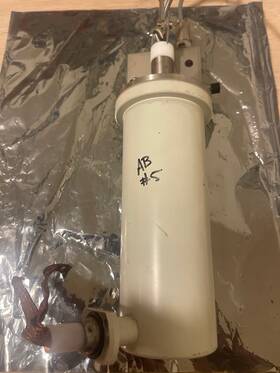
( Brand: Jeol ), ( Manufacturer Part Number: EM-ACD10 ), ( Model: JEOL EM-ACD10 ), ( Part Type: Device Trap ), ( Intended Use/discipline: Physical Laboratory, Biological Laboratory, Medical Laboratory, Dental Laboratory, Microbiological Laboratory )
Review JEOL Anti Contamination Device Cold Trap Sem Tem Assembly
The **JEOL EM-ACD10 Anti-Contamination Device Trap for Scanning Electron Microscopes (SEM)** is a precision-engineered accessory designed to significantly enhance the reliability, accuracy, and longevity of high-resolution electron microscopy operations. Specifically tailored for JEOL s advanced SEM systems, this device serves as a critical barrier against environmental contaminants such as hydrocarbons, water vapor, and particulate matter that can compromise imaging quality, degrade sample integrity, or even damage the microscope s internal components. The ACD10 employs a sophisticated cryogenic cooling mechanism, utilizing a compact, high-efficiency cold trap that operates at temperatures as low as **-196 C**, effectively freezing and immobilizing volatile contaminants before they can enter the specimen chamber. This cryogenic trapping process prevents the accumulation of organic residues on the sample surface, the column, or the detector, which are common culprits for image artifacts, beam drift, and reduced resolution in sensitive applications such as material science, nanotechnology, or biological research.
Beyond its primary contamination mitigation function, the EM-ACD10 is engineered with modular flexibility to integrate seamlessly into existing JEOL SEM setups, including models like the JSM-IT500, JSM-7800F, or JSM-7000F. Its compact yet robust design minimizes spatial interference within the microscope s chamber, while its low-maintenance operation reduces downtime for users. The device is constructed from high-purity materials, ensuring compatibility with ultra-high vacuum (UHV) environments and minimizing the risk of outgassing or secondary contamination. Additionally, the ACD10 incorporates a user-friendly control interface, allowing operators to monitor and adjust cooling parameters remotely, thereby optimizing performance for different sample types and experimental conditions. Whether employed in routine analytical work or high-stakes research requiring sub-nanometer resolution, this anti-contamination device elevates the performance of JEOL SEM systems by maintaining pristine imaging conditions, extending the lifespan of critical components, and ensuring reproducible, high-fidelity results.
### **Pros and Cons of buying a JEOL EM-ACD10 Anti-Contamination Device Trap for SEM (Scanning Electron Microscope)**
#### **Pros**
1. **Reduced Sample Contamination**
- The EM-ACD10 is specifically designed to minimize carbon and hydrocarbon contamination, which is a common issue in SEM analysis. Contamination can degrade image quality, alter surface morphology, and introduce artifacts, making this device particularly valuable for high-resolution and long-duration imaging sessions.
2. **Improved Image Clarity and Accuracy**
- By reducing contamination, the device enhances the precision of structural and compositional analysis. This is critical in fields such as materials science, nanotechnology, and biological research where surface details must be accurately captured.
3. **Extended Sample Lifespan**
- Contamination can degrade sensitive samples over time, especially in vacuum environments. The ACD10 helps preserve the integrity of delicate specimens, such as polymers, biological tissues, or thin films, by reducing exposure to residual gases and particles.
4. **Compatibility with JEOL SEM Systems**
- As an official accessory for JEOL SEM systems, the EM-ACD10 is engineered to integrate seamlessly with existing setups. This ensures minimal installation complexity and optimized performance without requiring significant modifications to the microscope.
5. **Versatility Across Applications**
- The device is useful for a wide range of SEM applications, including:- **Material Science:** Analyzing surface properties of metals, ceramics, and composites.
- **Nanotechnology:** Studying nanoparticles and nanostructures without degradation.
- **Biomedical Research:** Imaging biological samples (e.g., cells, tissues) with minimal alteration.
- **Forensic and Failure Analysis:** Examining fracture surfaces or corrosion without introducing artifacts.
6. **Reduced Maintenance and Cleaning Requirements**
- Contamination buildup on the sample stage or chamber walls can require frequent cleaning, disrupting workflow. The ACD10 reduces the need for such maintenance, saving time and resources.
7. **Enhanced Reproducibility**
- Consistent image quality across multiple sessions improves the reliability of experimental results, which is essential for research and quality control in industrial settings.
---
#### **Cons**
1. **Additional Cost**
- The EM-ACD10 is an optional accessory, meaning it adds to the initial and ongoing expenses of operating an SEM system. While it improves performance, the investment may be prohibitive for smaller labs or budget-constrained facilities.
2. **Space and Installation Constraints**
- The device requires additional space within the SEM chamber or nearby. If the existing setup is compact or lacks dedicated space for accessories, installation may be challenging. Some SEM models may also require modifications to accommodate the ACD10.
3. **Potential Learning Curve**
- Operators may need training to fully utilize the device s capabilities, especially in optimizing its settings for different types of samples. This could temporarily reduce productivity while staff adapt to the new system.
4. **Limited Effectiveness for Extreme Conditions**
- While the ACD10 significantly reduces contamination, it may not eliminate it entirely in highly aggressive environments (e.g., samples outgassing heavily or chambers with poor vacuum integrity). In such cases, additional measures (e.g., cryo-SEM or specialized sample preparation) may still be necessary.
5. **Dependence on Proper Maintenance**
- Like any precision instrument, the ACD10 requires regular maintenance to ensure optimal performance. Neglecting cleaning or calibration could lead to reduced effectiveness over time, negating its benefits.
6. **Compatibility Limitations with Non-JEOL Systems**
- The device is designed specifically for JEOL SEM platforms. Users of other SEM manufacturers (e.g., FEI/Thermo Fisher, Zeiss, or Hitachi) would need to explore alternative anti-contamination solutions, which may not offer the same level of integration or performance.
7. **Upfront Investment vs. Long-Term Savings**
- While the device saves time and resources in the long run by reducing contamination-related issues, the upfront cost may not be justified for labs with infrequent or low-resolution SEM use. A cost-benefit analysis is essential to determine whether the investment is worthwhile.
---
### **Conclusion**
The JEOL EM-ACD10 Anti-Contamination Device Trap is a highly effective solution for labs requiring high-resolution SEM imaging with minimal sample contamination. Its ability to enhance image clarity, preserve sample integrity, and reduce maintenance demands makes it a valuable addition for research-intensive environments, particularly in materials science, nanotechnology, and biomedical fields. However, the decision to purchase should consider factors such as budget constraints, existing SEM setup compatibility, and the frequency of use. For labs where contamination is a recurring issue and image quality is critical, the EM-ACD10 offers significant long-term benefits. Conversely, smaller or less specialized labs may find the cost and complexity unjustified.
---
### **Recommendation**
**Purchase the EM-ACD10 if:**- Your lab frequently encounters contamination issues in SEM imaging.
- High-resolution or long-duration imaging is a priority (e.g., nanoscale or biological samples).
- You are already using a JEOL SEM system and can justify the additional cost.
- The improved sample integrity and reduced maintenance will outweigh the initial investment over time.
**Avoid purchasing the EM-ACD10 if:**- Your SEM usage is infrequent or low-resolution, making contamination less of a concern.
- Your budget is limited, and alternative solutions (e.g., better vacuum systems or sample preparation techniques) could achieve similar results at a lower cost.
- Your SEM system is from a non-JEOL manufacturer, as compatibility may not be guaranteed.
- You lack the space or technical expertise to integrate and maintain the device effectively.
For labs on the fence, a trial period or consultation with JEOL support could help assess whether the device aligns with your specific needs. Ultimately, the EM-ACD10 is best suited for advanced research applications where contamination control is non-negotiable.
Details:
Includes exactly what is shown in the photos. JEOL EM-ACD10 Anti-Contamination Device / Cold Trap Assembly Made in Japan by. Model: EM-ACD10 This appears to be a vacuum microscope anti-contamination / cold trap assembly used with SEM/TEM electron microscopy equipment. Untested due to lack of compatible system.
Condition: Used surplus from laboratory / semiconductor environment. Features ceramic insulated body, vacuum fittings, control box, cabling, and integrated probe assembly as shown. Cosmetic wear from normal industrial use.
part #: emacd10 price
- $1799.00
specifications microscopepartzo:
- brand: Jeol
- mpn: Em-acd10
- model: Jeol Em-acd10
- part type: Device Trap
- intended use/discipline: Physical Laboratory, Biological Laboratory, Medical Laboratory, Dental Laboratory, Microbiological Laboratory
payments microscopepartzo:
- other
- credit card: Diners-club
- wallet: Apple-pay
general microscopepartzo:
- condition: Used
- Medical/Lab Equipment Attachments Accessories > Microscope Parts Accessories > Other Microscope Parts Accessories
returns microscopepartzo:
- policy: No Returns
shipping microscopepartzo:
- type: Calculated
- transit: 4-10 Days
- service: FedEx Ground / FedEx Home Delivery
- class: Standard
- cost: $22.55
- carrier: FedEx
seller microscopepartzo:
- city: Rancho Cordova, California
- # reviews: 86
- rating: 100.0%
offer microscopepartzo:
- availability: In Stock
- best offers: True
- quantity: 1
- sold: 0
- options: Ship-to-home
- started: May 12, 2026
Jeol EM-ACD10 Is Similar To:
- Electron 542-3191 Microscope Jeol Rotating Transmission Tem Specimen Holder (34% similar) Jeol transmission electron microscope tem rotating specimen holder in excellent condition with minimal signs of wear. Please bid accordingly. Comes with everything pictured. Wood case is also in excellent condition. Right next to the plug in area is marked 'sh 1...(February 9th, 2015)
- 780141849 Jeol Tem Strip Aperture Micron Unused (21.2% similar) All listings only include what is pictured, unless specifically mentioned. Jeol tem strip aperture 30, 60 micron unused aperture sizes are 30. These are original Jeol components, not after market. In some rare cases, items may need an export license. For this and other tem's. If you want some more ...(December 11th, 2018)
- 810284898 Jeol Scintillator For Secondary Emission Detector Sem (37.2% similar) Will enhance all of your listings. Everything for sale is available inspection so if you are local come on by. All listings only include what is pictured, unless specifically mentioned. Need just one part from a listing. Let us know. These are original Jeol components, not after market. In some rare...(December 11th, 2018)
- Em-31630 Jeol Tem Double Tilt (23.2% similar) The bureaus of us. This item is guaranteed to be as described. We service and sell systems, parts consumables for fie, Hitachi Jeol electron ion microscopes. Tass microscopy may be interested in purchasing your microscope instrument. Company unfits microscopy formerly technical sales solutions ...(December 22nd, 2017)
- 35mm 100cx Tem Em-a35 Carmera Jeol Electron Adapter Microscope (28.1% similar) Should be with this item, and it is not pictured or not mentioned, it is not included. Please refer to pictures. This unit has been used. Brand Jeol ltd model em A35ACTUAL unit pictured. Instead reject the package and asap. Never accept a damaged package. Digital intl store. No other accessories ...(March 6th, 2015)
- Display Em-asid10 Vintage Em-dsc10 Assembly Image Jeol Device Desiccator (37.7% similar) Our jobs depend on it. Our testing the unit is untested. Sale does not include the plug, owners manual and anything not seen in the pics. There must be no illegal export or dumping of the material, and all guidelines found at R2SOLUTIONS. Item id large area. Overall not in bad shape for its age. If ...(February 20th, 2015)
- Jl18 Jeol Esr Unit Sem (25% similar) Guaranteed against. Same day processing. Please see the pictures carefully. The unit for sale is one such item. Unit net wt. The pictures are not generic. Unit is in good cosmetic condition. Pictures are not generic...(January 22nd, 2015)
- Mc07230-4 Jeol Digi Scan Pb Board Assembly (40.7% similar) width in inches: 10. Standard shipping prices are only good for the lower 48 states. Do not discard the packaging. If in doubt, please before purchasing. All parts, accessories, cables, etc. Save packaging for carrier claim. Our contact: Rodney Wang SC asset management, inc. Please by sending a ...(April 16th, 2019)
- Pe1148-22 Philips Jeol Sem Eds Adapter Or Connector Electron Microscope Replacement (18.8% similar) Everything for sale is available inspection so if you are local come on by. If you want some more pictures just ask. Need just one part from a listing. Let us know. In some rare cases, items may need an export license. Jeol sem eds adapter or connector 6100 electron microscope replacement partied ...(July 19th, 2018)
- Camera Sm-45020 Jl14 Jeol Sem Crt Image (21% similar) Same day processing. Please see the pictures carefully. The unit for sale is one such item. Unit is in good cosmetic condition. Unit net wt. Pictures are not generic. Guaranteed against. The pictures are not generic. This is not a refurbished equipment...(January 22nd, 2015)
- Nm-eclipse Cu Jeol Scanning Electron Microscope Sem Eclipse (37.8% similar) Jeol scanning electron microscope sem NM-eclipse CV eclipse cuing excellent good cosmetic condition. Inventory id: wharf, hiya. Comes as pictured. Due to the size and weight untested nature of units in full scale, it is being sold as whit no return right. See the pictures. We acquired the unit in a ...(February 27th, 2021)
