PHYSIK INSTRUMENTE P.721.07 Piezo Flexure Nanopositioner Microscopy
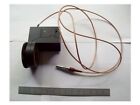
( Brand: Physik Instrumente ), ( Model: P.721.07 ), ( Country/region Of Manufacture: Germany )
Review PHYSIK INSTRUMENTE Piezo flexure Nanopositioner Microscopy Germany 721.07
Piezo-Flexure Nanopositioner (Model 721.07) by Physik Instrumente (PI)
Embark on a new dimension of microscopy precision with the Piezo-Flexure Nanopositioner (Model 721.07) from Physik Instrumente (PI). This state-of-the-art device is a testament to PI's commitment to delivering high-quality, innovative solutions for the scientific community.
The Model 721.07 is a versatile, piezo-electrically actuated nanopositioner designed specifically for demanding precision motion applications in microscopy. It offers an exceptional travel range of 200 m, ensuring versatility in various microscopic study fields.
The heart of this device is its unique piezo-flexure design. This combination delivers a remarkable stiffness-to-weight ratio, ensuring rapid, stable, and highly accurate positioning. The piezo-flexure design also offers a significant advantage in terms of vibration suppression, making it ideal for use in noisy environments or with sensitive instruments.
The Model 721.07 is equipped with a built-in temperature control system, ensuring stable performance even under varying temperature conditions. This feature is crucial in maintaining the high precision required for nanoscale motion.
The device is also characterized by its user-friendly control software, which allows for easy integration with various microscopy systems. The software provides real-time feedback and advanced control features, enabling users to optimize their microscopy setup for maximum performance.
In conclusion, the Piezo-Flexure Nanopositioner (Model 721.07) by Physik Instrumente (PI) is a powerful tool for microscopy applications, offering unparalleled precision, stability, and versatility. Whether you're a researcher studying cellular dynamics, a materials scientist investigating nanostructures, or a microscopy enthusiast, this device is an invaluable addition to your laboratory.
Analysis of the Piezo-Flexure Nanopositioner Microscopy (P-721.07) by Physik Instrumente (PI)
Pros:1. High Precision: The P-721.07 offers nanometer-scale positioning accuracy, making it ideal for high-resolution research and industrial applications.
2. Multi-Axis Control: It supports multi-axis motion, enabling complex 3D sample manipulation and scanning.
3. Fast Response: The piezo-flexure design ensures fast response times, reducing waiting periods in repetitive scanning or positioning tasks.
4. Robustness: The device is built for durability, capable of handling heavy loads and performing well under various temperature and humidity conditions.
5. Software Compatibility: The P-721.07 is compatible with various control software packages, allowing for seamless integration with existing systems.
Cons:1. High Cost: The P-721.07 is a high-end nanopositioning system, and its price may be prohibitive for some researchers or institutions with limited budgets.
2. Complexity: The system's advanced functionality can make it challenging for users without extensive experience in microscopy and nanopositioning.
3. Power Consumption: The piezo-flexure design consumes more power compared to other nanopositioning technologies, which may be a concern for battery-powered or mobile applications.
4. Calibration Requirements: Regular calibration is necessary to maintain the system's high precision, which can be time-consuming and require specialized knowledge.
Conclusion:The Piezo-Flexure Nanopositioner Microscopy (P-721.07) by Physik Instrumente (PI) is a high-quality, versatile nanopositioning system suitable for various research and industrial applications. Its precision, multi-axis control, fast response, and robustness make it an excellent choice for researchers and institutions working in fields such as materials science, biology, and nanofabrication.
However, its high cost, complexity, power consumption, and calibration requirements may make it less accessible for beginners or those with limited resources. It is essential to carefully consider these factors and weigh them against the system's benefits before making a purchasing decision.
Recommendation:For researchers and institutions with the necessary resources and expertise, the P-721.07 by PI is a strong recommendation. For those with limited resources, it may be worth considering alternative, less expensive nanopositioning systems that still meet their research or application needs. In all cases, it is essential to evaluate the specific requirements of the project and choose a nanopositioning system accordingly.
Details:
The thread for microscope objective is m 25 x. Resolution: sub-nanometer, in open or closed-loop. 75mm and the inner one has m 22 x. In open-loop the nanopositioner needs a positive drive voltage , up to 120 v, from Physik Instrumente pi germany.
The item is an early model, used, but in very good condition. The cable to driver or stabilized power supply ends with a Elmo-type, single-pin, male connector. 5mm unsure for the latter pitch.
Fast piezo nanopositioner and scanner for microscope objectives, type PO. Can be mounted in vertical or horizontal position. Attachment to the microscope turret can be made via one of two threads: outer has m 26 x 0.
specifications microscopepartzo:
- brand: Physik Instrumente
- model: P.721.07
- country/region of manufacture: Germany
Shipping microscopepartzo:
- type: Flat
- handling: 2 days
- cost: $10.0
Ratings:
- I hope to be doing business again soon with you guys. 08-26-17
- Great seller. Just as described. Thank you! 09-03-17
- Quality item shipped very quickly and packaged well. Seller was very informative 08-11-17
- Great product and great price! 08-12-17
- Item exactly as described. Shipped quickly and packaged well.Great communication 08-11-17
Offer microscopepartzo:
- Sold: 0
- quantity: 1
- best offer: true
- bids: 0
- Started: November 4, 2017, 9:06 pm
General microscopepartzo:
- in stock: Yes
- condition: Used
- business industrial > healthcare lab life science lab equipment business industrial > microscope parts lab equipment
Seller microscopepartzo:
- zipcode: 95610
- city: Citrus height, California
Payments microscopepartzo:
- PayPal
Returns microscopepartzo:
- time: 14 Days
- paid by: Buyer
- policy: returns accepted
- type: Money Back
Physik Instrumente P.721.07 Is Similar To:
- C-862 Physik Instrumente Microscope Objective (55.4% similar) Items listed as new or used are guaranteed to arrive in the condition described listing. Please before buying if you require a shipping method that is not listed. Warranty items listed as-is do not include any...(December 11th, 2017)
- P-721k004 Physik Instrumente Pi Pifoc Amat Each (58.3% similar) All others e-mail for shipping costs. Shipping, and handling. If there is a return involved, customer pays shipping charges. Texans add the pi P-721 series PFC is a high precision fast nanopositioner and scanner for microscope objectives. This component is in good condition there one scrape plus ...(November 30th, 2018)
- P-910.680 Physik Instrumente Microscope Camera Optic Phase Shift Interferometer (44.4% similar) All parts, including accessories and cables are only included if pictured or listed in the. Please by sending a message through or calling. Please review images thoroughly before purchasing. All pictures are taken in house. This unit has been used. Minimum handling charge is 75 onto a standard ...(March 31st, 2018)
