JEOL PS40-102V-NAM Wafer Loader Transport Robot Defect Sem JWS-2000
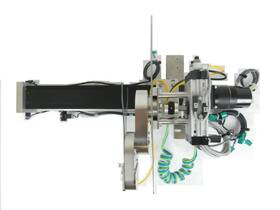
( Brand: Jeol ), ( Manufacturer Part Number: PS40-102V-NAM ), ( Part Type: Loader Robot ), ( Category: Lasers Photonics And Optics )
Review JEOL Wafer Loader Transport Robot Assembly Defect Sem Working
The **JEOL PS40-100V-NAM Wafer Loader Transport Robot (JWS-2000) for Defect Scanning Electron Microscopy (SEM)** is a high-precision, automated solution engineered to seamlessly integrate with JEOL s advanced nanoscale analysis platforms, particularly those used in semiconductor inspection, materials research, and defect characterization. Designed with cutting-edge robotics and intelligent control systems, this wafer loader transport robot is specifically optimized for high-throughput, low-defect environments where precision, reliability, and efficiency are paramount. The system employs a **multi-axis robotic arm** with sub-micron positioning accuracy, ensuring flawless alignment and transfer of delicate wafers ranging from standard 200mm to larger 300mm substrates between the SEM chamber and external handling stations, such as cassette loaders, metrology tools, or automated inspection systems. Its **vacuum-compatible interface** and **nanometer-level repeatability** eliminate the risk of contamination or misalignment, which is critical for maintaining the integrity of sensitive semiconductor structures during defect analysis. The JWS-2000 is equipped with **real-time monitoring and feedback mechanisms**, allowing for adaptive control of wafer positioning, tilt adjustments, and automated focus optimization, thereby reducing operator intervention and minimizing human error. Additionally, its **modular design** enables seamless integration with JEOL s **PS40-100V Nanometer Analysis Microscope (NAM)**, a high-resolution SEM capable of sub-nanometer imaging and elemental analysis, making it an ideal companion for defect inspection, failure analysis, and material characterization in R&D and manufacturing settings. The robot s **user-friendly interface** and **programmable automation** features allow for customizable workflows, enabling researchers and engineers to streamline repetitive tasks such as wafer staging, sample exchange, and automated defect mapping. With its **compact yet robust construction**, the JWS-2000 is engineered for both laboratory and cleanroom environments, ensuring durability in high-precision applications while maintaining a minimal footprint. Whether used for semiconductor defect inspection, thin-film analysis, or advanced materials research, this wafer loader transport robot represents a pivotal advancement in automated SEM workflows, enhancing productivity, accuracy, and consistency in nanoscale characterization.
### **Pros and Cons of purchasing a JEOL PS40-100V-NAM Wafer Loader Transport Robot (JWS-2000 Defect SEM)**
#### **Pros**
1. **Automation and Efficiency**
The JWS-2000 is designed to automate wafer handling, reducing manual intervention in semiconductor inspection processes. This minimizes human error, speeds up throughput, and improves consistency in defect detection, particularly in high-volume production environments.
2. **Integration with SEM Systems**
The robot is specifically engineered to work with JEOL s PS40-100V NAM (Nano Analyzer Microscope), ensuring seamless compatibility for automated defect inspection, metrology, and material analysis. This integration streamlines workflows by eliminating the need for manual stage adjustments or sample repositioning.
3. **Precision and Repeatability**
The robot s design likely incorporates high-precision motion control, ensuring accurate placement of wafers under the SEM s field of view. This is critical for tasks requiring sub-micron alignment, such as defect analysis or critical dimension (CD) measurement.
4. **Reduced Operator Fatigue**
Automated wafer loading reduces the physical strain on operators, particularly in environments where manual handling of multiple wafers is required. This can lower workplace injuries and improve productivity over long shifts.
5. **Compatibility with Wafer Formats**
The system is likely designed to handle standard wafer sizes (e.g., 200mm, 300mm), making it versatile for various semiconductor fabrication processes. This adaptability ensures long-term usability as industry standards evolve.
6. **Data Collection and Traceability**
Automated systems often include logging and tracking capabilities, allowing for better traceability of defects and process variations. This is valuable for quality control, root cause analysis, and compliance with industry standards.
7. **Scalability for High-Volume Production**
In semiconductor manufacturing, where throughput is critical, the JWS-2000 can significantly reduce bottlenecks by continuously feeding wafers into the inspection system without downtime.
8. **Support for Advanced Inspection Techniques**
The combination of the SEM and automated wafer loader enables advanced inspection methods, such as automated defect review (ADR), particle analysis, or failure analysis, which are essential for modern chip manufacturing.
---
#### **Cons**
1. **High Initial Cost**
Automated wafer handling systems, especially those integrated with high-end SEM equipment, represent a substantial capital investment. The upfront cost may be prohibitive for smaller labs, startups, or research facilities with limited budgets.
2. **Maintenance and Downtime Risks**
Like any automated system, the JWS-2000 requires regular maintenance, calibration, and potential repairs. Mechanical or software failures could lead to unexpected downtime, disrupting production schedules. Reliability may depend on the vendor s support and spare parts availability.
3. **Complexity in Setup and Training**
Implementing an automated system requires technical expertise for installation, programming, and troubleshooting. Operators may need extensive training to effectively use the robot, adding time and cost to the transition from manual processes.
4. **Potential for System Integration Challenges**
While the robot is designed for the PS40-100V NAM, integrating it into an existing workflow especially in a facility with legacy equipment may require additional software or hardware modifications. Compatibility issues could arise if the system is not fully backward-compatible with older tools.
5. **Limited Flexibility for Non-Standard Applications**
The JWS-2000 is optimized for defect inspection and SEM applications. If the facility requires the robot for unrelated tasks (e.g., handling non-semiconductor samples or performing non-inspection operations), its utility may be limited, leading to underutilization.
6. **Dependency on Vendor Support**
JEOL s proprietary systems may require ongoing support, software updates, or hardware upgrades. Dependency on a single vendor could pose risks if they discontinue support or if alternative solutions become more cost-effective over time.
7. **Space and Infrastructure Requirements**
Automated wafer loaders require dedicated space for installation, including proper ventilation, electrical connections, and environmental controls (e.g., temperature, cleanroom standards). Facilities with limited space may struggle to accommodate the system without modifications.
8. **Potential for Overautomation**
In some cases, automated systems may introduce unnecessary complexity where manual inspection is still sufficient. For low-volume or research-oriented labs, the cost-benefit ratio of automation may not justify the investment.
---
### **Conclusion**
The JEOL PS40-100V-NAM Wafer Loader Transport Robot (JWS-2000) is a specialized tool designed to enhance efficiency, precision, and automation in semiconductor defect inspection. Its strengths lie in its seamless integration with JEOL s SEM systems, high repeatability, and potential to reduce operator fatigue and human error. These advantages make it particularly valuable for high-volume production environments where throughput and consistency are critical.
However, the system s high cost, maintenance requirements, and complexity pose significant challenges, particularly for smaller labs or facilities with limited resources. The decision to purchase should be based on a thorough assessment of the facility s needs, budget, and long-term goals. If the primary objective is to improve defect detection in a high-throughput SEM workflow, the JWS-2000 can be a worthwhile investment. Conversely, if the facility lacks the infrastructure, expertise, or volume to justify automation, alternative solutions such as manual inspection, semi-automated systems, or third-party robotics may be more practical.
---
### **Recommendation**
1. **Assess Workload and Needs**
Before purchasing, evaluate whether the facility s current and projected wafer inspection volume justifies automation. If defect inspection is sporadic or low-volume, the cost of the JWS-2000 may not be cost-effective.
2. **Budget and ROI Analysis**
Conduct a detailed cost-benefit analysis, including upfront expenses, maintenance costs, and potential savings in labor and downtime. Compare this against the expected return on investment (ROI) over the system s lifespan. Consider leasing or financing options if the budget is constrained.
3. **Vendor and Support Evaluation**
Research JEOL s reputation for customer support, warranty terms, and availability of spare parts. Ensure that the vendor offers adequate training and technical assistance to minimize operational disruptions.
4. **Pilot or Trial Period**
If possible, request a demonstration or trial period to test the system s performance in the facility s specific environment. This will help identify any integration challenges or operational issues before committing to a purchase.
5. **Alternative Solutions**
Explore alternative automated or semi-automated systems from other manufacturers that may offer similar functionality at a lower cost. Open-source or modular robotics platforms could also provide flexibility for customization.
6. **Long-Term Scalability**
Consider whether the system can scale with future needs, such as handling larger wafer sizes (e.g., 450mm) or integrating with additional inspection tools. Future-proofing the investment will ensure its relevance over time.
**Final Verdict:**The JWS-2000 is best suited for **high-volume semiconductor inspection facilities** where automation is critical for efficiency, traceability, and defect detection. For **smaller labs, research environments, or low-volume operations**, the investment may not be justified, and alternative solutions should be prioritized. Always align the purchase with the facility s strategic goals and financial constraints.
Details:
Removed from a JEOL JWS-2000 Wafer Defect Review SEM Scanning Electron Microscope System Installed Components. Pictured test equipment is not included or available for sale. Opal Electronics Part No: PS40-102V-NAM. Serial numbers or country of manufacture may vary.
Only items pictured are included: If a part is not pictured, or mentioned above, then it included in the sale. Logan Part No: 030E1-PSL. Sale Details. JEOL Wafer Loader Transport Robot Assembly JWS-2000 Defect SEM Working.
The physical condition is good, but there are signs of previous use and handling. Part No: Wafer Loader Transport Assembly. This is used working surplus.
part #: ps40102v prices
- $609.19-$903.26
specifications microscopepartzo:
- brand: Jeol
- mpn: Ps40-102v-nam
- part type: Loader Robot
- category: Lasers Photonics And Optics
seller microscopepartzo:
- # reviews: 10176
- city: Albuquerque, New Mexico
- rating: 99.8%
general microscopepartzo:
- condition: Used
- Medical/Lab Equipment Attachments Accessories > Microscope Parts Accessories > Other Microscope Parts Accessories
payments microscopepartzo:
- other
- credit card: Discover
- wallet: Paypal
shipping microscopepartzo:
- type: Calculated
- cost: $0.00
- transit: 4-7 Days
- carrier: FedEx
- class: Standard
- service: FedEx Ground / FedEx Home Delivery
returns microscopepartzo:
- paid by: Buyer
- policy: Returns Accepted
- time: 60 Days
- method: Money back
offer microscopepartzo:
- started: March 5, 2026
- quantity: 1
- sold: 0
- availability: In Stock
- best offers: True
- options: Ship-to-home
Jeol PS40-102V Is Similar To:
- 810284898 Jeol Scintillator For Secondary Emission Detector Sem (35.4% similar) Will enhance all of your listings. Everything for sale is available inspection so if you are local come on by. All listings only include what is pictured, unless specifically mentioned. Need just one part from a listing. Let us know. These are original Jeol components, not after market. In some rare...(December 11th, 2018)
- Display Em-asid10 Vintage Em-dsc10 Assembly Image Jeol Device Desiccator (29.5% similar) Our jobs depend on it. Our testing the unit is untested. Sale does not include the plug, owners manual and anything not seen in the pics. There must be no illegal export or dumping of the material, and all guidelines found at R2SOLUTIONS. Item id large area. Overall not in bad shape for its age. If ...(February 20th, 2015)
- Jl18 Jeol Esr Unit Sem (26.4% similar) Guaranteed against. Same day processing. Please see the pictures carefully. The unit for sale is one such item. Unit net wt. The pictures are not generic. Unit is in good cosmetic condition. Pictures are not generic...(January 22nd, 2015)
- Mc07230-4 Jeol Digi Scan Pb Board Assembly (31.7% similar) width in inches: 10. Standard shipping prices are only good for the lower 48 states. Do not discard the packaging. If in doubt, please before purchasing. All parts, accessories, cables, etc. Save packaging for carrier claim. Our contact: Rodney Wang SC asset management, inc. Please by sending a ...(April 16th, 2019)
- Pe1148-22 Philips Jeol Sem Eds Adapter Or Connector Electron Microscope Replacement (14.4% similar) Everything for sale is available inspection so if you are local come on by. If you want some more pictures just ask. Need just one part from a listing. Let us know. In some rare cases, items may need an export license. Jeol sem eds adapter or connector 6100 electron microscope replacement partied ...(July 19th, 2018)
- Camera Sm-45020 Jl14 Jeol Sem Crt Image (17.9% similar) Same day processing. Please see the pictures carefully. The unit for sale is one such item. Unit is in good cosmetic condition. Unit net wt. Pictures are not generic. Guaranteed against. The pictures are not generic. This is not a refurbished equipment...(January 22nd, 2015)
- Nm-eclipse Cu Jeol Scanning Electron Microscope Sem Eclipse (24.8% similar) Jeol scanning electron microscope sem NM-eclipse CV eclipse cuing excellent good cosmetic condition. Inventory id: wharf, hiya. Comes as pictured. Due to the size and weight untested nature of units in full scale, it is being sold as whit no return right. See the pictures. We acquired the unit in a ...(February 27th, 2021)
- 6320f Jeol Sem Video Cont Pb (19.6% similar) May be compatible with other Jeol seams or deg. Jeol sem video cont 3 Pb AP001743-02 in excellent condition, no signs of over heating or lamination. All listings only include what is pictured, unless specifically mentioned. Need just one part from a listing. Let us know. If you want some more ...(July 5th, 2021)
- Jeol Jsm-6300f Sem Scanning Electron Microscope Column Assembly Working Surplus (38% similar) Pictured test equipment is not included or available for sale. Only items pictured are included: if a part is not pictured, or mentioned above, then it included in the sale. Model no: JSM-6300F column. Sale details. Removed from a Jeol JSM-6300F sem scanning electron microscope system this is ...(August 1st, 2024)
- Jeol Ap002179 Microscope Control Panel And Joystick Set Jsm-6300 6400 Working (28.6% similar) Part no: AP002179. Only items pictured are included: if a part is not pictured, or mentioned above, then it included in the sale. Jeol AP002179 microscope control panel joystick set JSM-6300 6400 working. Sale details. The physical condition is good, but there are signs of previous use and handling...(April 2nd, 2025)
- Jeol Jem-2010 Condenser Lens Aperture Assembly From Jem 2010 Tem Electron Microscope em1 (40.5% similar) Unit is used and working. Jeol condenser lens aperture assembly. Was removed from a Jeol hem 2010 team electron microscope. See pictures, comes as shown...(April 3rd, 2025)
