OLYMPUS U-MNIBA2 Fluorescence Reflector Filter Cube Ix Microscope
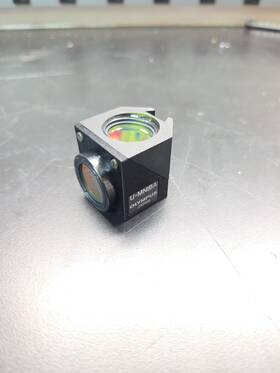
( Brand: Olympus ), ( Manufacturer Part Number: U-MNIBA2 ), ( Part Type: Reflector Filter )
Review OLYMPUS Fluorescence Reflector Filter Cube Bx And Ix Microscope
The **Olympus U-MNIBA2 Fluorescence Reflector Filter Cube** is a high-performance, precision-engineered optical component designed exclusively for Olympus IX-series inverted fluorescence microscopes, offering researchers and scientists an unparalleled solution for multi-channel fluorescence imaging. Engineered with meticulous attention to detail, this filter cube is optimized for the simultaneous excitation and emission of multiple fluorophores, enabling the visualization of complex biological samples with exceptional clarity and color separation. Its robust construction incorporates high-quality, durable materials, including precision-machined glass substrates and specialized dichroic mirrors, ensuring long-term stability and minimal signal degradation over extended use. The U-MNIBA2 is particularly well-suited for applications requiring the excitation of blue and green fluorophores, such as DAPI (4 ,6-diamidino-2-phenylindole) for nuclear staining, FITC (Fluorescein Isothiocyanate), GFP (Green Fluorescent Protein), and other common fluorescent markers, while efficiently blocking autofluorescence and cross-talk between channels. This filter cube features a compact yet versatile design, seamlessly integrating into Olympus modular fluorescence systems to enhance imaging versatility without compromising optical performance. Whether used in cell biology, molecular imaging, or high-content screening, the U-MNIBA2 delivers consistent, high-resolution fluorescence signals, making it an indispensable tool for laboratories demanding both precision and reliability in their microscopy workflows.
The Olympus U-MNIBA2 fluorescence reflector filter cube is a specialized component designed for use with Olympus IX series microscopes, particularly for applications involving fluorescence imaging with specific excitation and emission wavelengths. Below is a detailed analysis of its pros and cons, followed by a conclusion and recommendation.
---
**Pros:**1. **Compatibility with Olympus IX Microscopes:** The U-MNIBA2 is specifically engineered for Olympus IX series microscopes, ensuring seamless integration with the optical path, illumination systems, and software. This compatibility minimizes the risk of misalignment or functionality issues that can arise with third-party or generic filter cubes.
2. **Optimized for DAPI Staining:** The filter cube is designed to excite and emit fluorescence from DAPI (4 ,6-diamidino-2-phenylindole), a common nuclear stain used to visualize DNA in cells. This makes it highly effective for applications in cell biology, histology, and genetic research where nuclear localization is critical. The excitation and emission ranges are finely tuned to maximize signal clarity and minimize background noise for DAPI-labeled samples.
3. **Durability and Quality:** Olympus is known for producing high-quality optical components with precise manufacturing tolerances. The U-MNIBA2 is likely built to withstand regular use in laboratory settings, including exposure to UV light, which can degrade some materials over time. The use of high-quality glass and coatings ensures long-term performance and reduces the need for frequent replacements.
4. **Consistent Performance:** Because the filter cube is part of a standardized product line for Olympus microscopes, it provides consistent performance across different setups within the same lab or between labs. This consistency is valuable for reproducibility in research and diagnostic applications.
5. **Support and Warranty:** Purchasing from Olympus or an authorized distributor typically comes with access to technical support, warranty coverage, and potential upgrades or replacements if issues arise. This can be particularly valuable in research environments where downtime is costly.
6. **Integration with Olympus Imaging Software:** The filter cube works harmoniously with Olympus imaging software, such as cellSens or Olympus proprietary systems, allowing for automated filter switching, image acquisition, and analysis. This integration streamlines workflows and reduces manual errors.
---
**Cons:**1. **Limited to DAPI Fluorescence:** The U-MNIBA2 is specialized for DAPI fluorescence and may not be suitable for other fluorophores. If your research involves multiple stains (e.g., FITC, Texas Red, or Cy3), you would need additional filter cubes, which can increase costs and complexity. This limitation may require additional investments in other filter cubes or a multi-channel system.
2. **Cost:** High-quality filter cubes like the U-MNIBA2 are not inexpensive. The cost may be prohibitive for small labs, students, or researchers on tight budgets. Additionally, purchasing multiple filter cubes to cover a range of fluorophores can quickly add up.
3. **Compatibility with Non-Olympus Components:** While the cube is designed for Olympus IX microscopes, compatibility with non-Olympus illumination sources, cameras, or other peripherals may not be guaranteed. This could require additional adapters or modifications, adding to the complexity and cost.
4. **Potential for Obsolete or Discontinued Models:** Olympus occasionally updates or discontinues products. There is a risk that the U-MNIBA2 may become obsolete over time, making it difficult to find replacements or spare parts. Always verify the current availability and compatibility before purchasing.
5. **Maintenance and Cleaning:** Fluorescence filter cubes can accumulate dust, fingerprints, or other contaminants over time, which may degrade image quality. Cleaning these components requires care to avoid scratching the optical surfaces, and improper handling can shorten their lifespan.
6. **Learning Curve:** While the integration with Olympus software is a pro, it may also introduce a learning curve for users unfamiliar with the system. Proper setup, calibration, and troubleshooting may require training or consultation with technical support.
---
**Conclusion:**The Olympus U-MNIBA2 fluorescence reflector filter cube is an excellent choice for researchers and laboratories that rely heavily on DAPI staining and are already invested in Olympus IX series microscopes. Its precision, durability, and seamless integration with Olympus systems make it a reliable tool for nuclear imaging applications. However, its specialized nature and relatively high cost may not justify its purchase for users with diverse fluorescence needs or limited budgets. Additionally, the potential for obsolescence and the need for complementary filter cubes for other fluorophores should be considered.
---
**Recommendation:** Purchase the Olympus U-MNIBA2 if:- You are using an Olympus IX microscope and primarily work with DAPI staining.
- Your budget allows for the investment, and you do not require additional fluorophores.
- You value long-term compatibility, support, and consistency in your imaging workflows.
- You are part of a research or clinical environment where nuclear imaging is a critical component of your work.
Consider alternatives if:- Your research involves multiple fluorophores, and you would need to purchase additional filter cubes to cover all your needs. In this case, a multi-channel filter cube or a filter wheel that accommodates multiple cubes may be more cost-effective.
- You are working with a limited budget or need a more versatile solution. Third-party filter cubes or universal filter systems (e.g., from Chroma or Semrock) may offer broader compatibility at a lower cost.
- You are unsure about the long-term availability of the product. Verify with Olympus or a distributor that the model is still in production and supported.
For users who need flexibility, investing in a high-quality filter wheel or a microscope with built-in multi-channel capabilities (if available) could provide better long-term value. Always weigh the immediate needs of your project against the broader requirements of your research to make the most cost-effective and practical decision.
Details:
The item has been cleaned and handled in accordance with the manufacturers instructions. Good condition.
part #: umniba2 prices
- $145.00-$161.00
specifications microscopepartzo:
- brand: Olympus
- mpn: U-mniba2
- part type: Reflector Filter
shipping microscopepartzo:
- carrier: USPS
- service: USPS Ground Advantage
- class: Standard
- transit: 4-10 Days
- cost: $0.00
- type: Calculated
seller microscopepartzo:
- # reviews: 3316
- rating: 99.7%
- city: Miami, Florida
returns microscopepartzo:
- policy: Returns Accepted
- method: Money back
- time: 30 Days
- paid by: Buyer
payments microscopepartzo:
- credit card: Diners-club
- wallet: Apple-pay
- other
offer microscopepartzo:
- quantity: 1
- best offers: True
- sold: 0
- availability: In Stock
- options: Ship-to-home
- started: April 28, 2026
general microscopepartzo:
- condition: Used
- Medical/Lab Equipment Attachments Accessories > Microscope Parts Accessories > Other Microscope Parts Accessories
Olympus U-MNIBA2 Is Similar To:
- Fn22 Uis2 Tirf 60x Microscope 1.49 0.13-0.19 Apo Olympus Objective (26.8% similar) Mechanically and optically in excellent condition. Small cosmetic dent on metal housing see last photo but this has no affect on function. RMS threads. Beautiful piece. 14 day money back guarantee if you're not satisfied for any reason...(February 17th, 2015)
- Olympus Optics Objective Microscope 75x 0.75x Vm 0 Stereo (40.6% similar) Olympus objective. Used but in great condition...(February 16th, 2015)
- 001270 Olympus Microscope Objective Set (31.3% similar) The unit appears in good condition with no apparent scratches. Device was acquired with other surplus equipment. No documentation available...(April 17th, 2017)
- 00a J71510-1 Dv3385-00 Olympus Arcturus Microscope Power Distribution Circuit Board Pcb (29.4% similar) I combine shipping where practical. They are not included in the items sale price or shipping cost. 95 only what is described as included or shown in the photos. Sorry, no local pick-up for this item. Power control PCB removed from an Olympus IX50 Arcturus pix cell ii - PXL-200 microscope model: Si-...(January 29th, 2019)
- 044550 Olympus Microscope Bh Dual Observation Attachment (27.3% similar) Olympus microscope bah BH2 dual observation attachment w 9B2652 physical condition: this unit has some minor scuffing on casing from average use. Unit looks to be in great condition. Lens look clean...(June 15th, 2018)
- Adapter 0.5x Leica 1.0xlens Leitz Microscope 3 2 Camera Iso38 Olympus Nikon M4 (26% similar) Assembly pieces minus. The adapter uses a standard ISO 38MM x c mount LTZ Leila wild ISO 38. The device is designed to insert into any microscope which contains a 38MM photo port bottom lower portion of picture. 0x port adapter see picture below for separate parts. 0x with f mount. 54 5, 31, 6, 49 ...(February 13th, 2015)
- 1-25p-ahlx-4 Arcturus Labs Iphone Microscope Adapter For Photoport Leitz Nikon Olympus (23.5% similar) They clamp on to the viewing ocular but this prevents microscope from being used with your camera in position these inclined oculars. This one unit is for the iPhone 4 or 4S. Be sure it is 1x without an optic. Also works on microscopes usually inverted type with side camera ports and 1x c-mount ...(April 30th, 2018)
- Cx Planapo Microscope Olympus 1.25x Bx Infinity Series Ix Objective 04 (20.4% similar) Made for Olympus bx, CZ and ix series microscope model's, also usable with other infinity corrected microscope brands with standard RMS threads from Nikon, LTZ, Leila or Zeus's. 04STANDARD RMS thread achromatic lenses provide the highest possible color correction, sharpness, resolution and numerical...(January 1st, 2015)
- 160 A100po 1.30oil Olympus Objective 0.17 Microscope (40.6% similar) In an excellent cosmetic and optical condition. 30OIL microscope objective. See pictures for details. Olympus A100PO sold as is...(January 3rd, 2015)
- Objective 100x Microscope 160 Olympus 0.17 1.3na Dplanapo Uv (29.4% similar) This objective fits Olympus bah series microscopes or any other microscope or optical system with RMS thread and 160MM tube length . The objective has an internal iris diaphragm, which moves smoothly. 17MM cover glass thickness. The objective is used, but in very good condition. The body is clean ...(January 20th, 2015)
- 1-lb190 Olympus Microscope Objective Lens (30.8% similar) Brand new Olympus ea 100 objectives shipped with case...(June 30th, 2017)
