LEICA 11504117 Microscope Lightguide Collimating Adapter Coupler
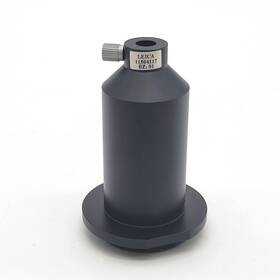
( Brand: Leica ), ( Manufacturer Part Number: 11504117 ), ( Part Type: Adapter ), ( Country Of Origin: Germany )
Review LEICA Microscope Lightguide Collimating Adapter Coupler Inch
The **Leica 11504117 Microscope Lightguide Collimating Adapter Coupler** is a precision-engineered optical accessory designed to enhance the performance and versatility of Leica microscope illumination systems, particularly those utilizing fiber-optic or lightguide-based light sources. This high-precision coupler serves as a critical interface between the microscope s illumination pathway and external light sources, ensuring optimal light transmission, minimal distortion, and consistent illumination across the entire field of view. Crafted from durable, high-quality materials, the adapter is meticulously constructed to maintain alignment and reduce internal reflections, which is essential for achieving sharp, even, and high-contrast imaging in both brightfield and specialized microscopy techniques. Its collimating function helps to direct light into a parallel beam, reducing aberrations and improving the uniformity of illumination critical for applications requiring precise optical performance, such as fluorescence microscopy, confocal imaging, or high-magnification studies. The adapter is engineered to seamlessly integrate with Leica s modular illumination systems, including fiber-optic lightguides, LED-based illuminators, and other advanced light sources, ensuring compatibility with a wide range of microscope models. Whether used in research laboratories, clinical diagnostics, or industrial inspection, this coupler enhances the reliability and efficiency of the microscope s light delivery system, allowing users to achieve superior image quality and consistency in their observations. Its robust design and precision engineering make it an indispensable component for professionals who demand the highest standards of optical performance in their microscopy workflows.
The Leica 11504117 Microscope Lightguide Collimating Adapter Coupler is a specialized optical component designed to improve light transmission and alignment in fluorescence microscopy setups. Below is a detailed breakdown of its pros and cons, followed by a conclusion and recommendation.
---
**Pros:**1. **Enhanced Light Transmission and Collimation**
The adapter is engineered to minimize light loss by ensuring that light from the light source is efficiently collimated and directed into the microscope objective. This is particularly useful in fluorescence microscopy, where maximizing light throughput is critical for capturing high-quality images with minimal signal degradation.
2. **Compatibility with High-End Microscopes**
Leica microscopes are known for their precision and advanced optical systems. This adapter is designed to integrate seamlessly with Leica s fluorescence and confocal microscopes, ensuring optimal performance without compromising image quality. It is particularly useful for systems that rely on fiber-optic light guides, such as those in research or clinical settings.
3. **Reduction of Aberrations**
Proper collimation of light reduces spherical and chromatic aberrations, which can distort images and reduce resolution. The adapter helps maintain the integrity of the light path, leading to sharper and more accurate images, especially in high-magnification applications.
4. **Versatility in Setup**
The adapter can be used to connect various light sources, including mercury, xenon, LED, or laser-based systems, to the microscope s light path. This flexibility allows researchers to adapt the setup to different experimental requirements without significant modifications.
5. **Durability and Precision Engineering**
Leica components are built to high standards, ensuring durability and long-term reliability. The adapter is likely constructed from high-quality materials that resist wear and maintain optical performance over extended use.
6. **Compatibility with Advanced Imaging Techniques**
In fluorescence microscopy, techniques such as TIRF (Total Internal Reflection Fluorescence) or confocal microscopy benefit from precise light control. The adapter helps achieve the necessary light alignment for these techniques, improving sensitivity and specificity.
---
**Cons:**1. **High Cost**
Leica products are generally expensive, and this adapter is no exception. The price may be prohibitive for individuals, small labs, or educational institutions with limited budgets. The cost must be justified by the specific needs of the application and the potential improvements in image quality.
2. **Specialized Use Case**
This adapter is not a universal solution. It is specifically designed for fluorescence microscopy setups with fiber-optic light guides and may not be necessary or compatible with other types of microscopes or imaging applications. Users without advanced fluorescence setups may find little use for it.
3. **Potential for Misalignment**
While the adapter is designed to improve collimation, improper installation or alignment could lead to light loss or aberrations. Users must have a good understanding of optical alignment or access to technical support to ensure it is installed correctly.
4. **Limited Availability of Spare Parts**
As with many Leica components, finding replacement parts or technical support may be challenging outside of authorized service centers. This could pose a problem if the adapter requires maintenance or calibration over time.
5. **Learning Curve**
Integrating this adapter into an existing setup may require adjustments to the light path, filter cubes, or other components. Users unfamiliar with fluorescence microscopy or optical alignment may need to invest time in training or consulting with experts to achieve optimal results.
6. **Overkill for Basic Applications**
For routine brightfield or phase-contrast microscopy, the benefits of this adapter may not justify its cost. Researchers or users working with simpler imaging tasks might find more cost-effective alternatives elsewhere.
---
**Conclusion:**The Leica 11504117 Microscope Lightguide Collimating Adapter Coupler is a high-quality, precision-engineered component that offers significant advantages for advanced fluorescence microscopy setups. Its ability to enhance light transmission, reduce aberrations, and improve image quality makes it invaluable in research environments where high-resolution imaging is critical. However, its high cost, specialized nature, and the need for proper installation and maintenance limit its applicability to specific use cases. It is best suited for laboratories or researchers working with Leica fluorescence microscopes and fiber-optic light sources, where maximizing light efficiency is a priority.
---
**Recommendation:** Purchase the Leica 11504117 adapter if:- You are working with a Leica fluorescence microscope that uses a fiber-optic light guide.
- Your research or imaging applications require high-quality, high-resolution fluorescence imaging.
- You have the budget to invest in a high-end optical component that will significantly improve your imaging performance.
- You have access to technical support or expertise to ensure proper installation and alignment.
Avoid purchasing this adapter if:- Your microscope setup does not require advanced fluorescence imaging or fiber-optic light guides.
- You are working within a tight budget and can achieve similar results with more affordable alternatives.
- You lack the technical knowledge or resources to install and maintain the adapter correctly.
- Your imaging needs are basic and do not demand the precision offered by this specialized component.
For users on a budget or with simpler imaging needs, consider exploring alternative solutions such as third-party collimating adapters or consulting with Leica representatives to determine if a less expensive or modified version of this adapter would suffice. Always weigh the long-term benefits against the initial cost to ensure it aligns with your project s requirements.
Details:
Leica Microscope Lightguide Coupler 1, Article No. 11504117 Exterior has some minor cosmetic wear. This product is offered by Microscope Marketplace, a Monday Scientific Company. Lens is in good condition.
part #: 11504117 prices
- $150.00-$494.10
specifications microscopepartzo:
- brand: Leica
- mpn: 11504117
- part type: Adapter
- country of origin: Germany
general microscopepartzo:
- Medical/Lab Equipment Attachments Accessories > Microscope Parts Accessories > Other Microscope Parts Accessories
- condition: Used
payments microscopepartzo:
- wallet: Paypal
- credit card: Diners-club
- other
offer microscopepartzo:
- quantity: 1
- options: Ship-to-home
- started: February 11, 2026
- sold: 0
- availability: In Stock
- best offers: True
returns microscopepartzo:
- paid by: Buyer
- method: Money back
- time: 14 Days
- policy: Returns Accepted
shipping microscopepartzo:
- transit: 3-9 Days
- service: UPS Ground
- type: Fixed
- cost: $15.00
- class: Standard
- carrier: UPS
seller microscopepartzo:
- rating: 100.0%
- city: Sanford, North Carolina
- # reviews: 4195
Leica 11504117 Is Similar To:
- Microscope Plan Long-barrel 1x Achromat 0.025 Iris Infinity Leica Objective (31.5% similar) Make sure your microscope will truly accommodates very long lens that measures 55MM vertically. 706, conforming to the RMS standard, with aperture iris, and is infinity corrected. The objective has a mounting thread 20. Leica 1x plan achromatic iris infinity long barrel microscope objective Leica 1x...(January 25th, 2015)
- Leica Microscope Tube Photo 0.66x mount 2 35mm Trinocular Efocus Adapter Port (47% similar) This adapter is suited for 1/2 and 1/3 image sensor chips microscope picture using is capture. 66X Leica ex focus microscope camera port para focal adapter to 35MM photo tube c mount. The head attached to a modified microscope base. The device is designed to insert to any microscope which contains a...(January 26th, 2015)
- 4x Parts 0.67x Head Leica Block Microscope Gz6 Focus Repair (31.8% similar) ...(February 12th, 2015)
- 0.502.29553 Leica New Microscope Pressure Plate (42.4% similar) O microscope pressure plate b: RP inventory location: MF3 6-2 this offer is for a new Leica. A non-paying bidder case will automatically be initiated after this time. Please prior to sale for an accurate shipping quote. A credit card purchase is only shipped when the money transferred from ...(November 20th, 2018)
- 020-507.010 Leitz Leica Biomed Microscope Includes Objectives (31.8% similar) Leica LTZ boomed. 90 condenser eff LTZ OBJECTIVE4. 17 eff LTZ OBJECTIVE10 microscope wit Periclean 10X 18 eyepiece objective includes everything you see in the listing. 17 eff LTZ OBJECTIVE40 oil microscope pair of 10X 18 Periclean eyepieces stage with A0. You are buying on a working great condition...(April 2nd, 2018)
- 020-654.092-000 Leica Microsystems Microscope Beamsplitter (38.8% similar) Leica micro systems microscope misapplied...(July 18th, 2017)
- 090-132.103 Leica Dm Irb Microscope Frame Sold For Parts As Is (43.6% similar) This is my: a Leica Dem orb microscope frame sold for parts as. Pin to plug into the power supply are bent and receptacle is missing gone. Cases count against me even if they are resolved. Didn't try to power this up. Sold as is for parts. I am not overjoyed with whats happening, but have to roll it...(April 8th, 2018)
- 373450 Camera Heerbrugg Wild Leica Microscope 093-032.010 Film Leitz (27.3% similar) 010 film back cosmetic 8 as pictured. You are purchasing exactly what you see in the pictures. Glass optic clean glass with some minor cleaning marks. Mechanical problem none offer includes LTZ microscope camera...(February 9th, 2015)
- Adapter 0.5x Leica 1.0xlens Leitz Microscope 3 2 Camera Iso38 Olympus Nikon M4 (37.6% similar) Assembly pieces minus. The adapter uses a standard ISO 38MM x c mount LTZ Leica wild ISO 38. The device is designed to insert into any microscope which contains a 38MM photo port bottom lower portion of picture. 0x port adapter see picture below for separate parts. 0x with f mount. 54 5, 31, 6, 49 ...(February 13th, 2015)
- 10246634 Leica Wild 246634 Coaxial Microscope Illuminator (43.8% similar) 25X when installed. I will describe the item best as can based on visual inspection and my knowledge of. This unit is in excellent cosmetic and working condition has been tested on my microscope. The wild coaxial Illuminati has a magnification factor of a lamp is included. Cosmetics are clean and ...(February 26th, 2018)
- 10319449 Leica Wild Beam Splitter Tv Tube Camera Adapter (31.5% similar) Leica misapplied, TV tube, and c-mount camera adapter the splutter sends 50 of light to each two ports, allowing user. The housings have minor scuffs, well-documented in photos. One port has a plastic insert, the other TV tube part which will fold image to of four 90 degree positions, depending on ...(December 7th, 2018)
