LEICA 11555039 Microscope Dic Ict Nomarski Prism Slider
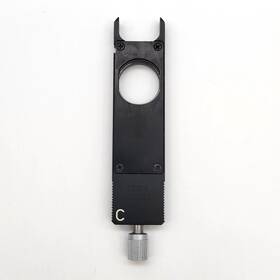
( Brand: Leica ), ( Manufacturer Part Number: 11555039 ), ( Country Of Origin: Germany )
Review LEICA Microscope Dic Ict Nomarski Prism Slider 555039
The **Leica 11555039 DIC (Differential Interference Contrast) Nomarski Prism Slider** is a precision-engineered optical component designed to elevate the performance of high-end microscopy systems, particularly those used in life sciences, materials research, and advanced biological studies. This meticulously crafted accessory is integral to Leica s line of advanced microscopes, offering researchers and scientists an unparalleled ability to visualize transparent and unstained specimens with remarkable depth, contrast, and three-dimensional clarity. The Nomarski prism slider operates on the principles of differential interference contrast (DIC), a technique that enhances the visibility of fine structural details by converting phase shifts in light passing through transparent specimens into visible contrast variations. This is achieved through the use of a Wollaston prism, which splits the incoming light into two orthogonally polarized beams that travel through the specimen at slightly different angles. Upon recombination, any phase differences introduced by the specimen such as variations in refractive index are converted into intensity differences, resulting in a pseudo-three-dimensional image that reveals subtle structural nuances with exceptional precision.
Crafted with Leica s signature attention to optical excellence, the 11555039 DIC prism slider is built to exacting standards, ensuring minimal aberrations and optimal light transmission across the visible spectrum. The slider mechanism allows for seamless integration into Leica s modular microscope systems, enabling users to switch between brightfield, phase contrast, and DIC modes with ease. Its robust construction, often featuring high-quality optical glass and precision-machined components, guarantees long-term stability and reliability, even under demanding laboratory conditions. Whether used in conjunction with Leica s advanced fluorescence systems, confocal microscopes, or high-resolution research microscopes, this prism slider enhances the diagnostic power of the instrument, making it an indispensable tool for applications ranging from cell biology and histology to materials science and semiconductor inspection.
For researchers who demand the highest standards of optical performance, the Leica 11555039 DIC Nomarski Prism Slider represents a fusion of cutting-edge technology and meticulous craftsmanship. Its ability to transform phase-contrast images into high-contrast, depth-rich visualizations without the need for staining or labeling makes it a versatile and indispensable component in any advanced microscopy workflow. By leveraging the principles of Nomarski interference, this prism slider not only simplifies the observation of delicate biological structures but also provides a deeper understanding of their spatial relationships, ultimately contributing to more accurate and insightful scientific discoveries.
The Leica DM 11555039 microscope, specifically the **Leica DM 11555039 with Nomarski (DIC) Prism Slider (555039)**, is a high-end inverted microscope designed for advanced biological and medical research. Below is a detailed breakdown of its pros and cons, followed by a conclusion and recommendation.
---
### **Pros**
1. **Superior Optical Performance**
The Leica DM series is renowned for its exceptional optics, including high-resolution imaging, minimal chromatic aberration, and precise light control. The inclusion of a **Nomarski (DIC) prism slider** enhances contrast for transparent specimens, making it ideal for live-cell imaging and detailed structural studies.
2. **Versatility and Modularity**
The microscope is modular, allowing for the addition of various attachments (e.g., fluorescence, phase contrast, or additional DIC configurations) as research needs evolve. The DIC slider specifically enables quick switching between brightfield and differential interference contrast, expanding its utility.
3. **High-Quality Components**
Leica uses precision-engineered parts, including high-grade optics, stable mechanical construction, and durable illumination systems (e.g., halogen or LED). This ensures long-term reliability and consistent performance.
4. **Compatibility with Advanced Imaging**
The DM 11555039 is designed to integrate seamlessly with **Leica s camera systems (e.g., DFC series)** and software (e.g., LAS X), enabling high-resolution digital imaging, time-lapse recording, and automated analysis. This is critical for modern research workflows.
5. **Ergonomic and User-Friendly Design**
The inverted design allows for easy sample access and manipulation, while the intuitive controls and modular layout reduce setup time. The DIC slider is particularly user-friendly, enabling quick adjustments without complex alignment.
6. **Durability and Longevity**
Leica microscopes are built to last, with robust construction that minimizes drift and maintains alignment over extended use. This is especially valuable in research settings where equipment must perform reliably for years.
7. **Support and Service Network**
Leica has a strong global service and support network, offering training, maintenance, and spare parts. This reduces downtime and ensures that technical issues are resolved promptly.
8. **Research-Grade Precision**
The microscope s stability and precision make it suitable for demanding applications such as **cell biology, developmental biology, and neuroscience**, where fine structural details are critical.
---
### **Cons**
1. **High Initial Cost**
The Leica DM 11555039 is an expensive investment, often costing **$50,000 $100,000 ** depending on configurations and accessories. This can be prohibitive for smaller labs, startups, or educational institutions with limited budgets.
2. **Maintenance and Repair Expenses**
While Leica microscopes are durable, they require **regular maintenance and calibration** to maintain peak performance. Repair costs can be high, especially if parts need to be sourced from Leica or authorized dealers.
3. **Complexity for Beginners**
The advanced features (e.g., DIC, fluorescence integration) may require **training** to operate effectively. Novice users might struggle with setup, alignment, or troubleshooting without proper guidance.
4. **Dependence on Leica Ecosystem**
The microscope is optimized for **Leica-specific cameras, software, and consumables**. Switching to third-party alternatives (e.g., other camera brands or imaging software) may not be seamless, adding to long-term costs.
5. **Bulk and Space Requirements**
The microscope is a **large, heavy instrument** that requires dedicated space. In labs with limited bench area, this could be a logistical challenge.
6. **Limited Upgrade Path for Older Models**
While modular, some components may become outdated over time, requiring **full or partial replacement** rather than simple upgrades. This can lead to additional costs as technology evolves.
7. **Competitive Alternatives**
Other high-end brands (e.g., **Zeiss Axio Observer, Nikon Ti2, Olympus IX83**) offer comparable or superior features in some areas, sometimes at slightly lower prices. Labs should compare specifications carefully before committing.
8. **Software Dependency**
Leica s imaging software (e.g., LAS X) is powerful but can be **resource-intensive** and may require high-end computers for optimal performance. This adds to the overall IT infrastructure costs.
---
### **Conclusion**
The **Leica DM 11555039 with DIC Prism Slider** is one of the best inverted microscopes for **advanced biological and medical research**, particularly in fields requiring high-resolution imaging, contrast enhancement (via DIC), and integration with digital imaging systems. Its **optical excellence, modularity, and durability** make it a top choice for labs prioritizing performance and long-term reliability.
However, the **high upfront and maintenance costs**, along with the complexity of operation, may not justify the investment for **smaller labs, teaching institutions, or applications with less demanding requirements**. If budget is a constraint, alternatives like **Zeiss Axio Observer or Nikon Ti2** might offer a balanced combination of performance and cost.
---
### **Recommendation**
**Buy the Leica DM 11555039 if:**- You are in a **research-intensive lab** (e.g., university department, pharmaceutical company, or biomedical research facility) where **high-resolution imaging, DIC contrast, and digital integration** are critical.
- Your budget allows for a **premium investment** in equipment that will serve you for **10 years** with minimal downtime.
- You require **Leica s ecosystem** (cameras, software, and support) and are willing to commit to its proprietary solutions.
- Your workflow involves **live-cell imaging, developmental biology, or neuroscience**, where the microscope s stability and precision are non-negotiable.
**Consider alternatives if:**- You are working in a **budget-conscious environment** (e.g., small lab, startup, or educational setting) where cost-effective options like **Zeiss Axio Observer, Nikon Ti2, or Olympus IX83** may suffice.
- You need **broader compatibility** with third-party imaging software or cameras.
- Your primary use cases do not require **DIC or advanced fluorescence**, in which case a simpler inverted microscope (e.g., Leica DM IL LED) might be more appropriate.
Ultimately, the Leica DM 11555039 is a **superior choice for high-end research**, but its value depends on aligning its capabilities with your specific needs and financial capacity. If the investment is justified by your research goals, it remains one of the most reliable and capable microscopes available.
Details:
Prism adjusts properly. Leica Microscope DIC ICT Nomarski Prism Slider C, Item is in excellent condition.
part #: 11555039 price
- $795.00
specifications microscopepartzo:
- brand: Leica
- mpn: 11555039
- country of origin: Germany
offer microscopepartzo:
- availability: In Stock
- started: February 9, 2026
- quantity: 1
- sold: 0
- options: Ship-to-home
shipping microscopepartzo:
- transit: 3-9 Days
- class: Standard
- cost: $15.00
- carrier: UPS
- type: Fixed
- service: UPS Ground
payments microscopepartzo:
- other
- credit card: Mastercard
- wallet: Google-pay
seller microscopepartzo:
- rating: 100.0%
- # reviews: 2876
- city: Sanford, North Carolina
general microscopepartzo:
- Medical/Lab Equipment Attachments Accessories > Microscope Parts Accessories > Other Microscope Parts Accessories
- condition: Used
returns microscopepartzo:
- policy: No Returns
Leica 11555039 Is Similar To:
- Microscope Plan Long-barrel 1x Achromat 0.025 Iris Infinity Leica Objective (34.5% similar) Make sure your microscope will truly accommodates very long lens that measures 55MM vertically. 706, conforming to the RMS standard, with aperture iris, and is infinity corrected. The objective has a mounting thread 20. Leica 1x plan achromatic iris infinity long barrel microscope objective Leica 1x...(January 25th, 2015)
- Leica Microscope Tube Photo 0.66x mount 2 35mm Trinocular Efocus Adapter Port (36.6% similar) This adapter is suited for 1/2 and 1/3 image sensor chips microscope picture using is capture. 66X Leica ex focus microscope camera port para focal adapter to 35MM photo tube c mount. The head attached to a modified microscope base. The device is designed to insert to any microscope which contains a...(January 26th, 2015)
- 4x Parts 0.67x Head Leica Block Microscope Gz6 Focus Repair (38.4% similar) ...(February 12th, 2015)
- 0.502.29553 Leica New Microscope Pressure Plate (41.4% similar) O microscope pressure plate b: RP inventory location: MF3 6-2 this offer is for a new Leica. A non-paying bidder case will automatically be initiated after this time. Please prior to sale for an accurate shipping quote. A credit card purchase is only shipped when the money transferred from ...(November 20th, 2018)
- 020-507.010 Leitz Leica Biomed Microscope Includes Objectives (38.4% similar) Leica LTZ boomed. 90 condenser eff LTZ OBJECTIVE4. 17 eff LTZ OBJECTIVE10 microscope wit Periclean 10X 18 eyepiece objective includes everything you see in the listing. 17 eff LTZ OBJECTIVE40 oil microscope pair of 10X 18 Periclean eyepieces stage with A0. You are buying on a working great condition...(April 2nd, 2018)
- 020-654.092-000 Leica Microsystems Microscope Beamsplitter (39.3% similar) Leica micro systems microscope misapplied...(July 18th, 2017)
- 090-132.103 Leica Dm Irb Microscope Frame Sold For Parts As Is (42.9% similar) This is my: a Leica Dem orb microscope frame sold for parts as. Pin to plug into the power supply are bent and receptacle is missing gone. Cases count against me even if they are resolved. Didn't try to power this up. Sold as is for parts. I am not overjoyed with whats happening, but have to roll it...(April 8th, 2018)
- 373450 Camera Heerbrugg Wild Leica Microscope 093-032.010 Film Leitz (28.8% similar) 010 film back cosmetic 8 as pictured. You are purchasing exactly what you see in the pictures. Glass optic clean glass with some minor cleaning marks. Mechanical problem none offer includes LTZ microscope camera...(February 9th, 2015)
- Adapter 0.5x Leica 1.0xlens Leitz Microscope 3 2 Camera Iso38 Olympus Nikon M4 (35.2% similar) Assembly pieces minus. The adapter uses a standard ISO 38MM x c mount LTZ Leica wild ISO 38. The device is designed to insert into any microscope which contains a 38MM photo port bottom lower portion of picture. 0x port adapter see picture below for separate parts. 0x with f mount. 54 5, 31, 6, 49 ...(February 13th, 2015)
- 10246634 Leica Wild 246634 Coaxial Microscope Illuminator (38% similar) 25X when installed. I will describe the item best as can based on visual inspection and my knowledge of. This unit is in excellent cosmetic and working condition has been tested on my microscope. The wild coaxial Illuminati has a magnification factor of a lamp is included. Cosmetics are clean and ...(February 26th, 2018)
- 10382162 Leica Microscope Objective Lens (42.3% similar) Priced for fast sale. 50 for continental USA. You are buying on a Leica microscope objective lens f 200MMPART 10382162THE is in new condition. Shipping and handling 18...(April 6th, 2018)
