LEICA 11555016 Microscope Dic Ict Condenser Prism K2
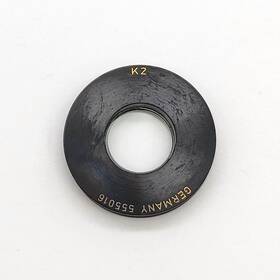
( Brand: Leica ), ( Manufacturer Part Number: 11555016 ), ( Part Type: Condenser ), ( Country Of Origin: Germany )
Review LEICA Microscope Dic Ict Condenser K2 Prism 555016
The **Leica 11555016 DIC (Differential Interference Contrast) Condenser K2 Prism** is a precision-engineered optical component designed to elevate the performance of high-end microscopy systems, particularly those requiring advanced contrast enhancement and three-dimensional visualization of transparent specimens. This condenser is a critical component in Leica s line of research-grade microscopes, where clarity, depth, and structural detail are paramount. The **K2 prism**, a hallmark of Leica s DIC technology, is meticulously crafted to split and recombine polarized light paths with exceptional precision, creating the characteristic "pseudo-3D" effect that reveals subtle variations in specimen thickness, refractive index, and texture. Unlike conventional brightfield microscopy, which often struggles to provide sufficient contrast for thin or transparent samples, the DIC condenser leverages the **Nomarski or Wollaston prism** principle to amplify contrast by introducing a phase shift between two orthogonal light beams. This technique highlights fine structural details such as cell membranes, intracellular organelles, or crystalline formations that might otherwise remain obscured, making it indispensable for applications in cell biology, materials science, and medical diagnostics.
Constructed with **high-quality optical glass** and coated with proprietary anti-reflective and anti-abrasion layers, the **11555016 condenser** ensures minimal light loss and maximum image fidelity across a broad spectrum of wavelengths, from ultraviolet to near-infrared. The **K2 prism assembly** is engineered for durability and alignment stability, featuring a robust mechanical design that accommodates precise adjustments for optimal DIC performance. The condenser s **aperture adjustment ring** allows users to fine-tune the numerical aperture (NA) to match the objectives in use, ensuring optimal resolution and contrast for both low- and high-magnification observations. Additionally, the **condenser s modular design** integrates seamlessly with Leica s microscope platforms, offering flexibility for researchers who require interchangeable components to adapt to different imaging modalities, such as phase contrast or fluorescence.
Beyond its technical sophistication, the **Leica 11555016 DIC Condenser K2 Prism** embodies the brand s commitment to ergonomic and intuitive usability. The **knurled adjustment knobs** and **precision-machined housing** provide tactile feedback, enabling researchers to make subtle yet critical modifications to the light path with confidence. When paired with a **Leica DIC microscope**, this condenser transforms routine observations into visually striking, high-contrast images that reveal the intricate architecture of biological tissues, mineral samples, or synthetic materials with unprecedented clarity. Whether used in academic research, pharmaceutical development, or industrial quality control, this component serves as a cornerstone for achieving **superior optical performance**, making it an essential investment for laboratories demanding the highest standards of microscopy.
The Leica DM 11555016 microscope with the DIC (Differential Interference Contrast) condenser and K2 prism (part number 555016) is a high-end optical instrument designed for advanced biological and medical research. Below is a detailed breakdown of its pros and cons, followed by a conclusion and recommendation.
---
### **Pros**
1. **Superior Optical Clarity and Contrast**
The DIC condenser enhances image contrast by converting phase differences in light waves into visible brightness variations. This is particularly useful for observing transparent or unstained specimens, such as live cells or thin tissue sections, where traditional brightfield microscopy fails to provide sufficient detail.
2. **High-Quality Prism System (K2)**
The K2 prism is part of Leica s high-performance DIC system, which ensures minimal light loss and distortion. This prism, combined with the condenser, delivers sharp, three-dimensional-like images that are critical for detailed morphological studies, such as cell structure analysis or embryology.
3. **Compatibility with Leica Microscope Series**
This condenser and prism are designed to integrate seamlessly with Leica s DM series microscopes, particularly those with phase-contrast or fluorescence capabilities. This modularity allows researchers to upgrade or customize their setup without significant compatibility issues.
4. **Durability and Precision Engineering**
Leica is known for building robust, long-lasting microscopes with precise mechanical and optical components. The DIC system is built to withstand frequent use in demanding laboratory environments, reducing the risk of misalignment or degradation over time.
5. **Versatility for Research Applications**
DIC microscopy is widely used in fields such as cell biology, histology, and developmental biology. The ability to visualize fine structural details without staining makes it invaluable for dynamic processes, such as cell migration or tissue differentiation.
6. **Minimal Sample Preparation Requirements**
Unlike fluorescence microscopy, which often requires labeling with dyes or antibodies, DIC microscopy works well with unstained or lightly stained samples. This reduces preparation time and potential artifacts introduced by staining agents.
7. **Compatibility with Digital Imaging**
The high contrast and resolution produced by DIC are well-suited for digital capture, allowing for detailed documentation and analysis of specimens. Many Leica microscopes in this series are compatible with advanced imaging software for further processing.
8. **Resale Value and Longevity**
Leica microscopes retain their value well due to their reputation for quality and performance. Investing in this system ensures a durable tool that can be relied upon for years, even as research needs evolve.
---
### **Cons**
1. **High Initial Cost**
The Leica DM 11555016 microscope with DIC condenser and K2 prism is a premium product, and the total cost including the microscope body, condenser, and accessories can be significantly higher than mid-range alternatives from other manufacturers (e.g., Nikon, Zeiss, or Olympus). This may be a barrier for smaller labs or individual researchers on a tight budget.
2. **Complex Setup and Maintenance**
DIC systems require precise alignment of the condenser, prism, and polarizers to achieve optimal contrast and image quality. This can be time-consuming for new users and may necessitate training or technical support from the manufacturer. Maintenance, such as cleaning optical components or realigning the system, also demands expertise to avoid damaging the equipment.
3. **Limited to Specific Applications**
While DIC is excellent for certain types of specimens (e.g., unstained biological samples), it may not be suitable for all research needs. For example, fluorescence microscopy or electron microscopy would require entirely different setups. Researchers must ensure that DIC aligns with their primary objectives before investing.
4. **Space and Workflow Considerations**
High-end microscopes like this one often require dedicated space with proper lighting, ventilation, and environmental control (e.g., temperature and humidity). The bulkiness of the equipment and associated accessories may also impact workflow efficiency in labs with limited bench space.
5. **Dependence on Leica s Ecosystem**
While Leica s compatibility within its own series is a strength, it can also be a limitation if researchers need to integrate the microscope with non-Leica components (e.g., cameras, filters, or automation systems). Cross-compatibility may require additional adapters or custom solutions, adding to the complexity and cost.
6. **Learning Curve for Users**
Mastering DIC microscopy involves understanding principles like Nomarski contrast, polarizer alignment, and specimen preparation. Users without prior experience may struggle initially, and full utilization of the system s capabilities may take time to achieve.
7. **Potential for Obsolescence**
While Leica microscopes are built to last, advancements in microscopy technology (e.g., super-resolution techniques, AI-assisted imaging) may render some features less relevant over time. However, the core optical principles of DIC remain foundational, so this is less of a concern for basic research.
---
### **Conclusion**
The Leica DM 11555016 microscope with DIC condenser (555016) and K2 prism is an exceptional tool for researchers who require high-contrast, three-dimensional-like imaging of transparent or unstained biological specimens. Its precision engineering, durability, and compatibility with Leica s ecosystem make it a reliable long-term investment for labs focused on cell biology, histology, or developmental studies. However, the high cost, complexity of setup, and specialized nature of DIC mean it is not a one-size-fits-all solution. It is best suited for established research environments where the budget and expertise are available to fully leverage its capabilities.
---
### **Recommendation**
**Buy this microscope if:**- Your research requires high-contrast imaging of unstained or lightly stained biological samples (e.g., live cells, tissue sections).
- You are part of a well-funded lab or institution that can justify the investment in premium optical equipment.
- You prioritize long-term durability, precision, and compatibility with Leica s broader microscope series.
- Your team has access to training or technical support to handle the setup and maintenance of the DIC system.
**Consider alternatives if:**- Your budget is constrained, and you can achieve similar results with a more affordable DIC microscope from another manufacturer (e.g., Nikon s Eclipse or Olympus s IX series).
- Your research primarily involves fluorescence, electron microscopy, or other specialized techniques that may not fully utilize DIC s strengths.
- Your lab lacks the space, expertise, or infrastructure to maintain high-end optical equipment effectively.
For most academic or industrial research labs with a focus on detailed biological imaging, the Leica DM 11555016 with DIC condenser is a strong recommendation due to its unmatched optical performance and reliability. However, weigh the pros and cons carefully against your specific needs and resources before making a purchase.
Details:
Leica Microscope DIC ICT Condenser K2 Prism, Item is in good condition.
part #: 11555016 price
- $795.00
specifications microscopepartzo:
- brand: Leica
- mpn: 11555016
- part type: Condenser
- country of origin: Germany
seller microscopepartzo:
- city: Sanford, North Carolina
- # reviews: 2876
- rating: 100.0%
general microscopepartzo:
- condition: Used
- Medical/Lab Equipment Attachments Accessories > Microscope Parts Accessories > Other Microscope Parts Accessories
offer microscopepartzo:
- availability: In Stock
- quantity: 1
- sold: 0
- started: February 9, 2026
- options: Ship-to-home
shipping microscopepartzo:
- carrier: UPS
- cost: $15.00
- class: Standard
- service: UPS Ground
- type: Fixed
- transit: 3-9 Days
returns microscopepartzo:
- policy: No Returns
payments microscopepartzo:
- other
- wallet: Paypal
- credit card: Discover
Leica 11555016 Is Similar To:
- Microscope Plan Long-barrel 1x Achromat 0.025 Iris Infinity Leica Objective (31.3% similar) Make sure your microscope will truly accommodates very long lens that measures 55MM vertically. 706, conforming to the RMS standard, with aperture iris, and is infinity corrected. The objective has a mounting thread 20. Leica 1x plan achromatic iris infinity long barrel microscope objective Leica 1x...(January 25th, 2015)
- Leica Microscope Tube Photo 0.66x mount 2 35mm Trinocular Efocus Adapter Port (39.4% similar) This adapter is suited for 1/2 and 1/3 image sensor chips microscope picture using is capture. 66X Leica ex focus microscope camera port para focal adapter to 35MM photo tube c mount. The head attached to a modified microscope base. The device is designed to insert to any microscope which contains a...(January 26th, 2015)
- 4x Parts 0.67x Head Leica Block Microscope Gz6 Focus Repair (31.7% similar) ...(February 12th, 2015)
- 0.502.29553 Leica New Microscope Pressure Plate (41.5% similar) O microscope pressure plate b: RP inventory location: MF3 6-2 this offer is for a new Leica. A non-paying bidder case will automatically be initiated after this time. Please prior to sale for an accurate shipping quote. A credit card purchase is only shipped when the money transferred from ...(November 20th, 2018)
- 020-507.010 Leitz Leica Biomed Microscope Includes Objectives (43.3% similar) Leica LTZ boomed. 90 condenser eff LTZ OBJECTIVE4. 17 eff LTZ OBJECTIVE10 microscope wit Periclean 10X 18 eyepiece objective includes everything you see in the listing. 17 eff LTZ OBJECTIVE40 oil microscope pair of 10X 18 Periclean eyepieces stage with A0. You are buying on a working great condition...(April 2nd, 2018)
- 020-654.092-000 Leica Microsystems Microscope Beamsplitter (37.6% similar) Leica micro systems microscope misapplied...(July 18th, 2017)
- 090-132.103 Leica Dm Irb Microscope Frame Sold For Parts As Is (41.3% similar) This is my: a Leica Dem orb microscope frame sold for parts as. Pin to plug into the power supply are bent and receptacle is missing gone. Cases count against me even if they are resolved. Didn't try to power this up. Sold as is for parts. I am not overjoyed with whats happening, but have to roll it...(April 8th, 2018)
- 373450 Camera Heerbrugg Wild Leica Microscope 093-032.010 Film Leitz (31.5% similar) 010 film back cosmetic 8 as pictured. You are purchasing exactly what you see in the pictures. Glass optic clean glass with some minor cleaning marks. Mechanical problem none offer includes LTZ microscope camera...(February 9th, 2015)
- Adapter 0.5x Leica 1.0xlens Leitz Microscope 3 2 Camera Iso38 Olympus Nikon M4 (36.5% similar) Assembly pieces minus. The adapter uses a standard ISO 38MM x c mount LTZ Leica wild ISO 38. The device is designed to insert into any microscope which contains a 38MM photo port bottom lower portion of picture. 0x port adapter see picture below for separate parts. 0x with f mount. 54 5, 31, 6, 49 ...(February 13th, 2015)
- 10246634 Leica Wild 246634 Coaxial Microscope Illuminator (36.2% similar) 25X when installed. I will describe the item best as can based on visual inspection and my knowledge of. This unit is in excellent cosmetic and working condition has been tested on my microscope. The wild coaxial Illuminati has a magnification factor of a lamp is included. Cosmetics are clean and ...(February 26th, 2018)
- 10382162 Leica Microscope Objective Lens (46.5% similar) Priced for fast sale. 50 for continental USA. You are buying on a Leica microscope objective lens f 200MMPART 10382162THE is in new condition. Shipping and handling 18...(April 6th, 2018)
