ZEISS 453653 Microscope Depolarizer Lens Axioplan
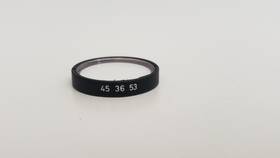
( Brand: Zeiss ), ( Manufacturer Part Number: 453653 ), ( Part Type: Len )
Review ZEISS Microscope Depolarizer Lens Insert Axioplan
The **Zeiss 453653 Depolarizer Lens (Axioplan)** is a precision-engineered optical accessory designed to enhance the performance of polarized light microscopy by effectively eliminating unwanted polarization artifacts and improving image clarity. Part of Zeiss s renowned Axioplan series, this depolarizer lens is crafted with meticulous attention to optical purity, ensuring minimal distortion and maximum contrast in polarized and interference microscopy applications. Constructed from high-quality optical glass and coated with proprietary multi-layer anti-reflective surfaces, the lens minimizes stray light and maximizes light transmission, which is critical for high-resolution imaging in biological, materials science, and medical research. Its compact yet robust design integrates seamlessly with the Axioplan microscope s optical path, allowing researchers to achieve superior depolarization of linearly polarized light without compromising the integrity of the specimen s structural details. Ideal for applications such as birefringence studies, stress analysis in materials, and the examination of crystalline structures, this depolarizer lens ensures consistent and reliable results by reducing glare and enhancing the visibility of subtle optical phenomena. Whether used in routine laboratory work or advanced scientific investigations, the Zeiss 453653 Depolarizer Lens exemplifies the brand s commitment to precision optics, delivering unparalleled performance for those who demand the highest standards in microscopy.
The Zeiss 453653 Depolarizer Lens (Axioplan) is a specialized optical accessory designed to reduce glare and improve contrast in polarized light microscopy. Below is a detailed analysis of its pros and cons, followed by a conclusion and recommendation.
---
### **Pros of the Zeiss 453653 Depolarizer Lens**
1. **Enhanced Contrast and Clarity**
The depolarizer lens helps mitigate glare and polarization artifacts, particularly in samples viewed under polarized light or when using phase contrast, differential interference contrast (DIC), or brightfield illumination with reflective specimens. This can significantly improve image quality for materials like minerals, biological tissues with birefringent properties, or samples with strong reflective surfaces.
2. **Compatibility with Zeiss Microscopes**
As a Zeiss-specific accessory, it is designed to integrate seamlessly with the Axioplan microscope series (and potentially other Zeiss models with similar optical paths). This ensures minimal light loss and optimal performance without requiring additional adjustments.
3. **Versatility in Polarized Light Applications**
Polarized light microscopy is used in fields such as mineralogy, materials science, and some biological studies (e.g., collagen fibers, muscle tissue). The depolarizer lens extends the utility of these techniques by reducing unwanted polarization effects that can obscure fine structural details.
4. **Durability and Precision Engineering**
Zeiss components are known for their high-quality craftsmanship and optical precision. The depolarizer lens is likely built to withstand regular use in laboratory settings, though this depends on maintenance and handling.
5. **Non-Invasive Modification**
Unlike replacing or modifying the condenser or objective lenses, the depolarizer lens is an add-on component that does not alter the core optical setup of the microscope. This makes it a reversible and low-risk upgrade.
---
### **Cons of the Zeiss 453653 Depolarizer Lens**
1. **Limited Use Case**
The depolarizer lens is not a universal solution. It is most beneficial in specific applications involving polarized light or highly reflective samples. For standard brightfield or fluorescence microscopy, it may not offer noticeable improvements and could introduce unnecessary complexity or cost.
2. **Cost**
Zeiss accessories, especially those with specialized functions, can be expensive. The depolarizer lens may not justify its price for users who do not frequently work with polarized light or reflective samples. The cost could be better allocated to other high-impact upgrades (e.g., higher-magnification objectives, better cameras, or illumination systems).
3. **Potential Light Loss**
While minimal, the addition of an extra optical element (even a thin depolarizer lens) can introduce slight light attenuation. This may not be critical for brightfield work but could be a minor drawback in low-light applications.
4. **Maintenance and Cleaning**
Like any optical component, the depolarizer lens requires careful handling to avoid scratches or dust accumulation, which could degrade performance. Users must adhere to proper cleaning protocols, adding a minor maintenance burden.
5. **Compatibility Limitations**
While designed for Zeiss Axioplan microscopes, the lens may not be compatible with other microscope brands or models without additional adapters. This could restrict its usefulness for users who own or plan to use non-Zeiss equipment.
6. **Learning Curve**
Users unfamiliar with polarized light microscopy may need to invest time in understanding how to optimize the use of the depolarizer lens. Improper setup could lead to suboptimal results or confusion about its benefits.
---
### **Conclusion**
The Zeiss 453653 Depolarizer Lens is a highly specialized and useful accessory for researchers and technicians who regularly work with polarized light microscopy or reflective samples. Its primary strength lies in its ability to enhance contrast and reduce glare in niche applications, particularly in fields like mineralogy, materials science, or specialized biological studies. However, its value is limited to specific use cases, and the cost may not be justified for general-purpose microscopy.
For users who frequently encounter polarization artifacts or work with birefringent materials, the depolarizer lens can be a worthwhile investment. Conversely, those whose work does not involve polarized light or reflective samples may find it unnecessary and could allocate the funds toward more broadly applicable upgrades.
---
### **Recommendation**
**Purchase the Zeiss 453653 Depolarizer Lens if:**- You regularly use polarized light microscopy or encounter glare/artifacts in reflective samples.
- Your workflow involves studying birefringent materials (e.g., minerals, collagen, muscle tissue).
- You are already invested in Zeiss microscopy and want to optimize your existing setup for specialized applications.
**Avoid purchasing it if:**- Your microscopy work primarily involves brightfield, fluorescence, or phase contrast without polarized light requirements.
- You are on a tight budget and could better spend the funds on more universally useful upgrades (e.g., higher-quality objectives, digital cameras, or illumination systems).
- You do not have experience with polarized light techniques and are unsure how to integrate the lens effectively into your workflow.
**Alternative Considerations:**If you are unsure whether the depolarizer lens is right for you, consider borrowing or renting one first to test its performance in your specific applications. Additionally, explore other Zeiss or third-party polarization correction solutions (e.g., polarizing filters or compensators) that may offer similar benefits at a lower cost.
Details:
Zeiss Microscope Depolarizer Lens Insert 453653 Axioplan.
part #: 453653 price
- $284.00
specifications microscopepartzo:
- brand: Zeiss
- mpn: 453653
- part type: Len
payments microscopepartzo:
- credit card: Discover
- other
- wallet: Paypal
returns microscopepartzo:
- method: Money back
- policy: Returns Accepted
- paid by: Buyer
- time: 30 Days
offer microscopepartzo:
- availability: In Stock
- sold: 0
- options: Ship-to-home
- quantity: 1
- started: February 4, 2026
general microscopepartzo:
- condition: Used
- Medical/Lab Equipment Attachments Accessories > Microscope Parts Accessories > Other Microscope Parts Accessories
shipping microscopepartzo:
- type: Fixed
- transit: 3-9 Days
- service: Standard
- cost: $0.00
- class: Standard
seller microscopepartzo:
- # reviews: 1796
- city: Alhambra, California
- rating: 100.0%
Zeiss 453653 Is Similar To:
- Carl Planapo Good Objective 4x 0.14 Rare Very Microscope Condition Zeiss (34.1% similar) 2MM thread sizes RMS royal microscope society standard. Made in west Germany. 14 numerical aperture microscope objective, part number. This objective designed for bright field and dark field applications for 160MM microscope tube. This is a rare Carl Zeiss Plano 4X. This Plano 4x microscope ...(February 1st, 2015)
- Zeiss Opmi Microscope 10x F170 0-180 Eyepieces Binocular Surgical (46.3% similar) Carl Zeiss binocular F170 with 10X eyepieces...(December 31st, 2014)
- Mag Stereo Oculars 2480 Zeiss Knob Si 0.63-6.3 10 P16x 12.5 Microscope Jena Aus (35.6% similar) It has the numbers 2480 Si 10 on the bottom. It was made in the German democratic republic you are buying on one rare vintage type 1970 'S AIs Jean stereo microscope with a pair of P16X 12. See photos overall good clean condition, only minor wear, and clean lenses no light source included. 5 ...(January 15th, 2015)
- 000000-1108-667 Carl Zeiss Microscope Lamp Power Supply Used Working (38.7% similar) For lift gate service and 45. The bureaus of us. Pictured test equipment is not included or available for sale. Specifications part no: 667 sale details item condition: used working, 90 day warranty estimated packed shipping dimensions: l x W14 X14 7 lbs. Only items pictured are included: if a part ...(April 26th, 2018)
- 000000-1170-901 Zeiss Microscope Dic Slider Ec Epn And Hr Objective (43.9% similar) 90 hr with plastic cover to protect slider. Unconditional money back guarantee item code: A338 Zeiss microscope Dick slider for EC Pen 50X. Condition: new. Zeiss microscope Dick slider for EC Pen 50X 100X. 90 hr objectives: Zeiss Dick slider item number: 901 compatible with these prisms: EC Pen 50X...(June 8th, 2018)
- 000000-1170-902 Zeiss Microscope Dic Slider Ec Epn (47.2% similar) Unconditional money back guarantee item code: A335 Zeiss microscope Dick slider EC Pen 100X condition: new. Zeiss microscope Dick slider for EC Pen 100X: item number: 902 compatible with these objectives prisms: and HX LED 50X fluorescence microscopes the solution to your microscopy needs. 80 HX LED...(June 15th, 2018)
- 000000-1374-896 Carl Zeiss Vg Green Filter Microscope (31.2% similar) New with no signs of normal wear and tear. Carl Zeiss VG 9 green FILTER32X2MM item number: 896 filter, 32X2MM for contrast enhancement phase and b w image recording unused - with box excellent condition. This item is unused and untested...(March 31st, 2018)
- 0428-273 Carl Zeiss Fluorescent Epi Illuminator Axiostar Fl Reflected Microscope (25% similar) Pei illumination attachment for Zeiss Acosta microscope excellent shape with all components polarizing filter included. Both sliders...(May 8th, 2018)
- 05-9902 Microscope Slider Axiomat 47 Zeiss Magazine Dic Phase 57 Adjustable (36.6% similar) USPS or ups ground. Save packaging for carrier claim. Standard shipping prices are only good for the lower 48 states. An image to Zeiss axiom at adjustable microscope magazine Dick phase slider P/N this unit appears to be fully functional knobs spin freely lens is in good condition scratches are ...(February 3rd, 2015)
- 1 6x 1072-464 Carl Zeiss Microscope Camera Assembly (43% similar) This is a Carl Zeiss 1,6X 457 microscope camera assembly unit was removed from service in good working and physical condition...(February 12th, 2019)
- 100370 Zeiss Olympus Oil Microscope Objective (41.6% similar) Olympus UVFL40 41. Review the pictures for included elements and condition of item...(July 12th, 2018)
