OLYMPUS IX81-ZDC2 Af Port Optics Microscope Focus Drift Compensator
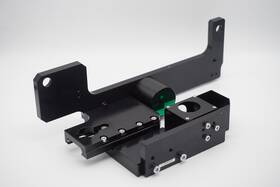
( Brand: Olympus ), ( Manufacturer Part Number: IX81-ZDC2 ), ( Country Of Origin: United States ), ( Intended Use/discipline: Biological Laboratory )
Review OLYMPUS Af Port Optics Ix81 Microscope Focus Drift Compensator
The **Olympus IX81-ZDC2 AF Port Optics with Focus Drift Compensator** represents a cutting-edge solution for researchers and microscopists seeking unparalleled precision, stability, and automation in their imaging workflows. Designed specifically for the Olympus IX81 inverted microscope platform, this advanced optical system integrates seamlessly with the microscope s high-resolution imaging capabilities while introducing a revolutionary **focus drift compensation mechanism** to eliminate the persistent challenge of sample drift over extended observation periods. The **AF (Autofocus) Port Optics** feature a high-precision, motorized focusing system that employs a **piezoelectric actuator** to achieve sub-micron accuracy, ensuring that delicate biological specimens such as living cells, tissue cultures, or delicate synthetic materials remain perfectly aligned with the optical axis throughout prolonged imaging sessions. This is particularly critical in long-term live-cell imaging, where even minor deviations can compromise the integrity of the data collected.
At the heart of the ZDC2 system lies its **automated focus drift compensation technology**, which continuously monitors and adjusts the focal plane in real time using a proprietary algorithm that analyzes image contrast or fluorescence intensity. By integrating with the microscope s existing control software, such as Olympus **cellSens** or third-party solutions like MetaMorph or Micro-Manager, the ZDC2 enables seamless automation, allowing researchers to maintain optimal focus without manual intervention. This is especially valuable in high-throughput screening, where consistency across thousands of fields of view is essential, or in experiments requiring continuous observation over hours or days, such as neuronal activity tracking or drug response assays. The system s **closed-loop feedback mechanism** ensures that any drift whether caused by thermal expansion, mechanical vibrations, or specimen movement is corrected dynamically, preserving the clarity and resolution of the captured images.
Beyond its core functionality, the **IX81-ZDC2 AF Port Optics** is engineered with durability and flexibility in mind. The optical components are housed in a robust, vibration-damped enclosure to minimize external interference, while the modular design allows for easy integration with a variety of detectors, including high-speed cameras, confocal modules, or advanced fluorescence systems. The system s compatibility with Olympus **IX81 s advanced illumination options**, such as **UIS2 optics** and **high-NA objectives**, further enhances its versatility, enabling researchers to push the boundaries of resolution and contrast in both brightfield and fluorescence applications. Whether used in academic laboratories, pharmaceutical research, or materials science, this focus drift compensator transforms the IX81 into a highly automated, reliable workhorse capable of delivering reproducible results with minimal user input.
For institutions investing in long-term microscopy infrastructure, the **IX81-ZDC2 AF Port Optics** offers a significant return on investment by reducing operator fatigue, minimizing data loss due to focus loss, and enabling more complex, multi-hour experiments. Its seamless integration with existing Olympus imaging ecosystems, combined with its precision engineering, makes it an indispensable tool for laboratories where accuracy, consistency, and automation are non-negotiable. By addressing one of the most persistent challenges in microscopy focus drift the ZDC2 elevates the IX81 platform to new heights of performance, ensuring that researchers can focus on discovery rather than technical adjustments.
The Olympus IX81-ZDC2 AF Port Optics for the Focus Drift Compensator is a specialized accessory designed to enhance the performance of the IX81 inverted microscope by compensating for focus drift over time. Below is a detailed breakdown of its pros and cons, followed by a conclusion and recommendation.
---
**Pros:**1. **Reduced Focus Drift:** The primary benefit of the ZDC2 system is its ability to automatically compensate for focus drift caused by thermal expansion, mechanical settling, or other environmental factors. This is particularly valuable for long-term imaging, live-cell studies, or experiments requiring precise focus stability over extended periods.
2. **Improved Imaging Consistency:** For applications such as time-lapse microscopy, fluorescence imaging, or high-resolution techniques like confocal microscopy, maintaining consistent focus is critical. The ZDC2 helps eliminate manual refocusing, reducing user intervention and potential errors.
3. **Compatibility with Olympus IX81:** The system is specifically designed for the IX81 microscope, ensuring seamless integration with its optics and control systems. It works in conjunction with the microscope s existing hardware, such as the ZDC2 controller and focus drive, to provide a cohesive solution.
4. **Minimized Sample Damage:** In live-cell imaging, prolonged exposure to light and environmental changes can stress or damage samples. By maintaining focus automatically, the ZDC2 reduces the need for frequent manual adjustments, which can disrupt the sample environment (e.g., CO2 levels, temperature) and minimize stress on live cells.
5. **Enhanced Productivity:** Researchers can focus on data acquisition rather than constantly monitoring and adjusting focus. This is especially beneficial in high-throughput or automated imaging setups where manual intervention would be impractical.
6. **Compatibility with Advanced Techniques:** The ZDC2 can be used alongside other advanced imaging modalities on the IX81, such as TIRF (Total Internal Reflection Fluorescence), spinning disk confocal, or structured illumination microscopy, where focus stability is paramount.
7. **Long-Term Stability:** The system is built to handle prolonged imaging sessions, making it ideal for experiments that require hours or even days of continuous observation without losing focus.
---
**Cons:**1. **High Cost:** The ZDC2 AF Port Optics is a specialized and high-precision component, and as such, it comes with a significant upfront cost. This may be a barrier for smaller labs, students, or researchers with limited budgets.
2. **Complex Setup and Calibration:** Installing and calibrating the ZDC2 system requires technical expertise. Users may need to spend additional time configuring the system to work optimally with their specific imaging setup, including alignment with the microscope s focus drive and software.
3. **Maintenance Requirements:** Like any precision optical or mechanical system, the ZDC2 may require periodic maintenance to ensure continued performance. Dust, misalignment, or wear on components could affect its accuracy over time, necessitating occasional servicing or adjustments.
4. **Limited to Olympus IX81:** The system is not compatible with other microscope models, even from Olympus. If a user later upgrades or switches to a different microscope platform, the ZDC2 will not be transferable, potentially rendering it obsolete.
5. **Software Dependency:** The ZDC2 relies on the microscope s control software (e.g., Olympus CellSense or similar) to function effectively. Issues with the software, such as updates or compatibility problems, could temporarily disrupt the system s operation until resolved.
6. **Space and Physical Constraints:** The AF Port Optics may require additional space on the microscope s stage or around the objective turret. Users with limited bench space or complex sample holders may find installation challenging.
7. **Learning Curve:** Researchers unfamiliar with focus drift compensation systems may need time to understand how to optimize the ZDC2 s settings for their specific application. Improper configuration could lead to suboptimal performance or even focus instability.
---
**Conclusion:**The Olympus IX81-ZDC2 AF Port Optics is a powerful tool for researchers who require precise, long-term focus stability in their microscopy applications. Its ability to compensate for drift automatically makes it invaluable for live-cell imaging, time-lapse studies, and high-resolution techniques where focus consistency is critical. However, the high cost, complexity of setup, and maintenance requirements may pose challenges, particularly for smaller labs or those with limited technical resources. The decision to invest in the ZDC2 should be based on the specific needs of the research, the frequency of long-term imaging, and the availability of technical support.
---
**Recommendation:**If your research involves prolonged imaging sessions where focus drift is a recurring issue such as live-cell imaging, long-term developmental studies, or high-precision fluorescence microscopy the Olympus IX81-ZDC2 AF Port Optics is a worthwhile investment. It will significantly enhance the quality and reliability of your data by reducing manual intervention and minimizing sample stress.
However, if your budget is constrained or your imaging needs do not frequently require long-term focus stability, you may consider alternative solutions such as:
- **Manual Focus Locks:** Mechanical or electronic focus locks that can hold the focus manually for shorter durations.
- **Software-Based Focus Stabilization:** Some imaging software packages offer basic focus stabilization features that may suffice for less demanding applications.
- **Alternative Microscopes with Built-In Stability:** If upgrading your microscope, consider models with inherent focus stability features or automated focus control systems.
For users already invested in the Olympus IX81 platform, the ZDC2 is the most robust solution for addressing focus drift. Ensure you have the technical support and resources to properly install and maintain the system to maximize its benefits.
Details:
For sale is a part of the IX81 ZDC Zero Drift Compensation unit. Untested and unknown if anything is missing. This is the dishrag mirror assembly that can be moved into and out of microscope stand to enable ZDC unit. Details: Only what is pictured included.
Optics are in good condition and ready for use.
part #: ix81zdc2 price
- $250.00
specifications microscopepartzo:
- brand: Olympus
- mpn: Ix81-zdc2
- country of origin: United States
- intended use/discipline: Biological Laboratory
payments microscopepartzo:
- other
- wallet: Paypal
- credit card: Mastercard
shipping microscopepartzo:
- carrier: USPS
- class: Expedited
- service: USPS Priority Mail
- type: Fixed
- transit: 4-9 Days
- cost: $21.95
seller microscopepartzo:
- # reviews: 1123
- rating: 100.0%
- city: Half Moon Bay, California
general microscopepartzo:
- condition: Used
- Medical/Lab Equipment Attachments Accessories > Microscope Parts Accessories > Other Microscope Parts Accessories
offer microscopepartzo:
- options: Ship-to-home
- started: April 29, 2026
- quantity: 1
- availability: In Stock
- sold: 0
- best offers: True
returns microscopepartzo:
- policy: Returns Accepted
- method: Money back
- paid by: Buyer
- time: 14 Days
Olympus IX81-ZDC2 Is Similar To:
- Fn22 Uis2 Tirf 60x Microscope 1.49 0.13-0.19 Apo Olympus Objective (32.4% similar) Mechanically and optically in excellent condition. Small cosmetic dent on metal housing see last photo but this has no affect on function. RMS threads. Beautiful piece. 14 day money back guarantee if you're not satisfied for any reason...(February 17th, 2015)
- Olympus Optics Objective Microscope 75x 0.75x Vm 0 Stereo (48.1% similar) Olympus objective. Used but in great condition...(February 16th, 2015)
- 001270 Olympus Microscope Objective Set (36.5% similar) The unit appears in good condition with no apparent scratches. Device was acquired with other surplus equipment. No documentation available...(April 17th, 2017)
- 00a J71510-1 Dv3385-00 Olympus Arcturus Microscope Power Distribution Circuit Board Pcb (40.5% similar) I combine shipping where practical. They are not included in the items sale price or shipping cost. 95 only what is described as included or shown in the photos. Sorry, no local pick-up for this item. Power control PCB removed from an Olympus IX50 Arcturus pix cell ii - PXL-200 microscope model: Si-...(January 29th, 2019)
- 044550 Olympus Microscope Bh Dual Observation Attachment (39.4% similar) Olympus microscope bah BH2 dual observation attachment w 9B2652 physical condition: this unit has some minor scuffing on casing from average use. Unit looks to be in great condition. Lens look clean...(June 15th, 2018)
- Adapter 0.5x Leica 1.0xlens Leitz Microscope 3 2 Camera Iso38 Olympus Nikon M4 (33.8% similar) Assembly pieces minus. The adapter uses a standard ISO 38MM x c mount LTZ Leila wild ISO 38. The device is designed to insert into any microscope which contains a 38MM photo port bottom lower portion of picture. 0x port adapter see picture below for separate parts. 0x with f mount. 54 5, 31, 6, 49 ...(February 13th, 2015)
- 1-25p-ahlx-4 Arcturus Labs Iphone Microscope Adapter For Photoport Leitz Nikon Olympus (33.3% similar) They clamp on to the viewing ocular but this prevents microscope from being used with your camera in position these inclined oculars. This one unit is for the iPhone 4 or 4S. Be sure it is 1x without an optic. Also works on microscopes usually inverted type with side camera ports and 1x c-mount ...(April 30th, 2018)
- Cx Planapo Microscope Olympus 1.25x Bx Infinity Series Ix Objective 04 (34% similar) Made for Olympus bx, CZ and ix series microscope model's, also usable with other infinity corrected microscope brands with standard RMS threads from Nikon, LTZ, Leila or Zeus's. 04STANDARD RMS thread achromatic lenses provide the highest possible color correction, sharpness, resolution and numerical...(January 1st, 2015)
- 160 A100po 1.30oil Olympus Objective 0.17 Microscope (37.5% similar) In an excellent cosmetic and optical condition. 30OIL microscope objective. See pictures for details. Olympus A100PO sold as is...(January 3rd, 2015)
- Objective 100x Microscope 160 Olympus 0.17 1.3na Dplanapo Uv (36.8% similar) This objective fits Olympus bah series microscopes or any other microscope or optical system with RMS thread and 160MM tube length . The objective has an internal iris diaphragm, which moves smoothly. 17MM cover glass thickness. The objective is used, but in very good condition. The body is clean ...(January 20th, 2015)
- 1-lb190 Olympus Microscope Objective Lens (42.7% similar) Brand new Olympus ea 100 objectives shipped with case...(June 30th, 2017)
